
Fungal Sexual Reproduction — Dikaryophase in Ascomycetes and Basidiomycetes
📚 Practice ConceptWhen a fungus reproduces sexually, two haploid hyphae of compatible mating types come together and fuse. In some fungi the fusion of two haploid cells immediately results in diploid cells (2n). However, in other fungi (ascomycetes and basidiomycetes), an intervening dikaryotic stage (n + n, i.e., two nuclei per cell) occurs; such a condition is called a dikaryon and the phase is called dikaryophase of fungus. Later, the parental nuclei fuse and the cells become diploid. The fungi form fruiting bodies in which reduction division occurs, leading to formation of haploid spores.
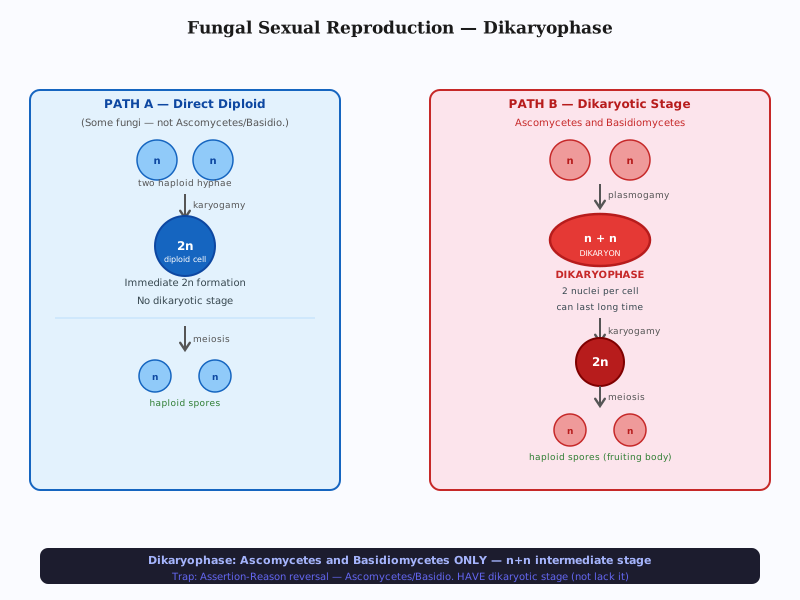
Ascomycetes and Basidiomycetes go directly from haploid to diploid without a dikaryotic stage.
Ascomycetes and Basidiomycetes specifically DO have the dikaryotic (n+n) stage — it is other simpler fungi that go directly to 2n.
Asco+Basidio = ADVANCED fungi = DIKARYON (n+n) stage present. Simple fungi = direct fusion to 2n.
- Dikaryophase: n+n state (two nuclei per cell) occurs in Ascomycetes and Basidiomycetes before karyogamy.
- Plasmogamy = cytoplasm fusion | Karyogamy = nuclear fusion | Meiosis = spore formation.
- Fruiting bodies in fungi are sites where reduction division (meiosis) occurs to form haploid spores.
- Lichen = Ascomycetes (mycobiont, usually) + green algae or cyanobacteria (phycobiont) in mutualism.
Regarding sexual reproduction in fungi, which of the following correctly describes the sequence and structures involved? 1. In some fungi, fusion of two haploid cells immediately produces a diploid cell without any intermediate stage. 2. The dikaryophase (n+n stage) is characteristic of Ascomycetes and Basidiomycetes. 3. A dikaryon is a cell containing two haploid nuclei that have not yet fused. 4. Karyogamy refers to the fusion of cytoplasm, while plasmogamy refers to nuclear fusion. 5. Fruiting bodies are structures in which meiosis occurs to produce haploid spores.
View bonus solution & explanation
Correct answer: C — 1, 2, 3 and 5
S1 CORRECT: Some simpler fungi do fuse haploid cells directly to form 2n without a dikaryotic intermediate. S2 CORRECT: Dikaryophase specifically characterises Ascomycetes and Basidiomycetes (NCERT exact). S3 CORRECT: Dikaryon = two haploid nuclei coexisting in one cell (n+n). S4 WRONG: This is REVERSED — Plasmogamy = cytoplasm fusion; Karyogamy = nuclear fusion. S5 CORRECT: Fruiting bodies are sites of meiosis producing haploid spores.
What is Fungal Sexual Reproduction?
What did NEET previous years ask on Fungal Sexual Reproduction?
What is the most common NEET trap on Fungal Sexual Reproduction?
How do you remember Fungal Sexual Reproduction for NEET?
What are the key components of Fungal Sexual Reproduction?
Through deep analysis of NEET and NTA, 176 of the 180 ReNEET 2026 (June 21) questions were already in the MedicNEET question bank before the exam.
176/180MedicNEET's Biology question bank is built from the same NCERT lines NTA picks repeatedly. Not random MCQs — questions crafted exactly like NTA crafts them.
You just learned this concept. The free app turns it into a daily goal built from your weak topics and brings it back just before you forget it — using active recall and spaced repetition — so it stays till exam day.