
Deuteromycetes — Imperfect Fungi: Only Asexual Phase Known, Conidia Reproduction
📚 Practice ConceptCommonly known as imperfect fungi because only the asexual or vegetative phases of these fungi are known. When the sexual forms of these fungi were discovered they were moved into classes they rightly belong to. It is also possible that the asexual and vegetative stage have been given one name (and placed under deuteromycetes) and the sexual stage another (and placed under another class). Later when the linkages were established, the fungi were correctly identified and moved out of deuteromycetes. Once perfect (sexual) stages of members of ductcromycetes were discovered, they were often moved to ascomycetes and basidiomycetes. The deuteromycetes reproduce only by asexual spores known as conidia. The mycelium is septate and branched. Some members are saprophytes or parasites while a large number of them are decomposers of litter and help in mineral cycling. Some examples are Alternaria, Colletotrichum and Trichoderma.
Deuteromycetes are called imperfect fungi because only their sexual reproductive phases are known.
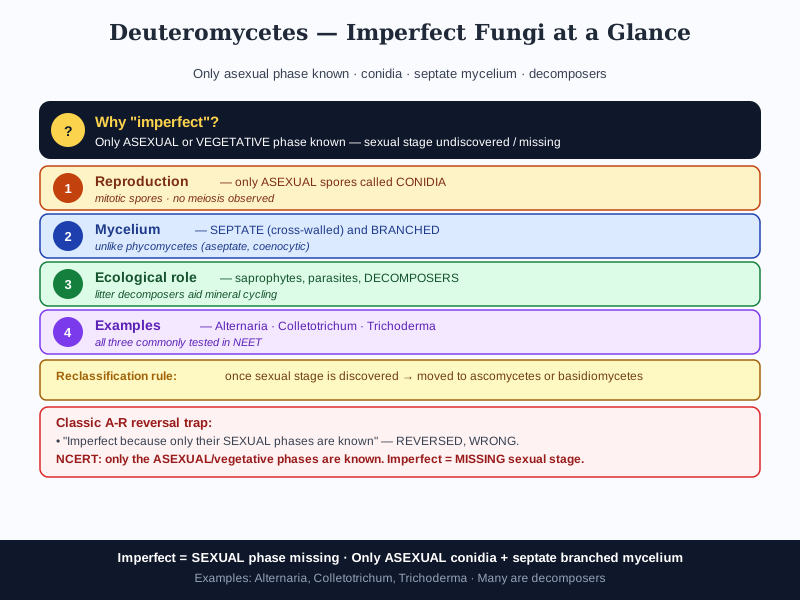
Deuteromycetes are imperfect fungi because only the ASEXUAL or VEGETATIVE phases are known — the sexual phase is unknown or undiscovered.
Imperfect = missing SEXUAL stage. Only ASEXUAL conidia known. Mycelium septate + branched. Examples: Alternaria, Colletotrichum, Trichoderma.
- Imperfect because only ASEXUAL/vegetative phases are known (sexual phase missing or undiscovered).
- Reproduce only by ASEXUAL spores called CONIDIA.
- Mycelium is SEPTATE (cross-walled) and BRANCHED.
- Examples: Alternaria, Colletotrichum, Trichoderma. Many are litter decomposers aiding mineral cycling.
Assertion (A): Some fungi are classified based on their reproductive characteristics. Reason (R): Deuteromycetes are called imperfect fungi because only their sexual reproductive phases are known.
View bonus solution & explanation
Correct answer: C — Assertion is true but reason is false.
Assertion TRUE: Fungi are classified by reproductive characteristics — phycomycetes, ascomycetes, basidiomycetes, deuteromycetes are all defined by their reproductive features. Reason FALSE: NCERT explicitly says deuteromycetes are imperfect because only the ASEXUAL or vegetative phases are known — NOT the sexual phases. The Reason REVERSES the actual NCERT statement. Answer: A true, R false → C. Memory hook: 'imperfect' = missing sexual stage; only asexual conidia and septate mycelium are known.
What is Deuteromycetes?
What did NEET previous years ask on Deuteromycetes?
What is the most common NEET trap on Deuteromycetes?
How do you remember Deuteromycetes for NEET?
What are the key components of Deuteromycetes?
Through deep analysis of NEET and NTA, 176 of the 180 ReNEET 2026 (June 21) questions were already in the MedicNEET question bank before the exam.
176/180MedicNEET's Biology question bank is built from the same NCERT lines NTA picks repeatedly. Not random MCQs — questions crafted exactly like NTA crafts them.
You just learned this concept. The free app turns it into a daily goal built from your weak topics and brings it back just before you forget it — using active recall and spaced repetition — so it stays till exam day.