
Plasma Proteins — Fibrinogen, Globulins and Albumins in Blood
✅ Asked in NEET 2018Match the items given in Column I with those in Column II and select the correct option given below. (NEET 2018) Column I (A) Fibrinogen (B) Globulin (C) Albumin Column II (i) Osmotic balance (ii) Blood clotting (iii) Defence mechanism
Match the items given in Column I with those in Column II and select the correct option given below. (NEET 2018) Column I (A) Fibrinogen (B) Globulin (C) Albumin Column II (i) Osmotic balance (ii) Blood clotting (iii) Defence mechanism
Serum differs from blood in (NEET 2016 Phase 2)
Answer & NCERT explanation
Correct answer: C — (iii), (ii), (i)
Fibrinogen is involved in blood clotting (ii), converting to fibrin during coagulation. Globulin includes antibodies and immune proteins for defense mechanism (iii). Albumin maintains osmotic balance (i) and prevents fluid loss from blood vessels. This matching follows NCERT principles of blood protein functions.
Read more NCERT concept on the PYQ
Fibrinogens are needed for clotting or coagulation of blood. Globulins primarily are involved in defense mechanisms of the body and the albumins help in osmotic balance. Plasma also contains small amounts of minerals like Na+, Ca++, Mg++, HCO3-, Cl-, etc. Glucose, amino acids, lipids, etc., are also present in the plasma as they are always in transit in the body. Factors for coagulation or clotting of blood are also present in the plasma in an inactive form. Plasma without the clotting factors is called serum.
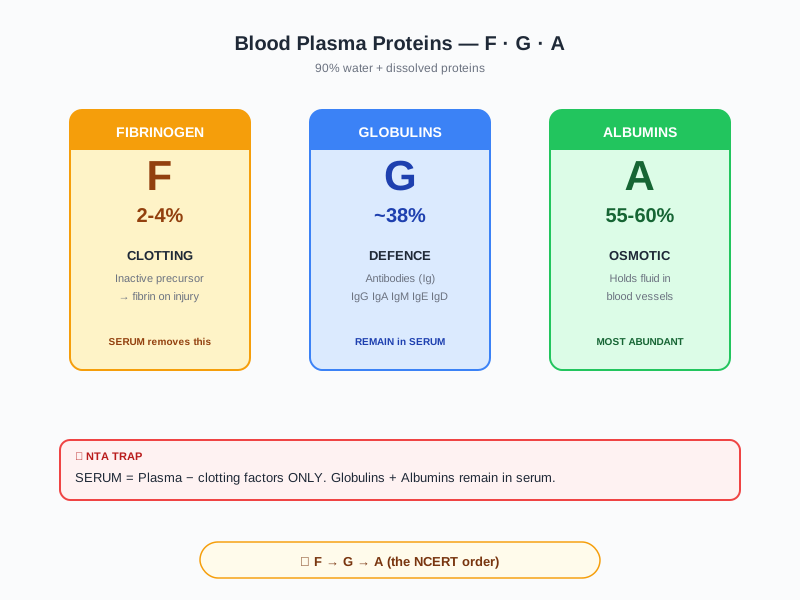
Blood plasma contains three major protein groups that perform completely distinct functions. Fibrinogen (2-4% of plasma) circulates in an INACTIVE form and only converts to fibrin clots when a blood vessel is injured — this is why blood does not clot inside healthy vessels. Globulins include all the immunoglobulins (IgG, IgA, IgM, IgE, IgD) that form the basis of your immune memory and antibody-based defence. Albumins are the MOST ABUNDANT plasma proteins (55-60%) and create the oncotic pressure that prevents plasma from leaking out of capillaries into surrounding tissues — low albumin leads to oedema (fluid accumulation in tissues).
NCERT mentions these functions briefly. Deeper understanding: Serum is specifically plasma from which fibrinogen and ALL clotting factors have been removed after clotting occurs. Serum therefore STILL contains globulins and albumins — a critical distinction NTA tests. Additionally, colostrum (first breast milk) contains IgA globulins providing passive immunity to newborns — this connects body fluids chapter to human reproduction chapter.
Serum lacks globulins and albumins because it lacks clotting factors
Serum = plasma minus clotting factors ONLY. Globulins and albumins remain in serum.
F-G-A = Fibrinogen(clot) → Globulins(defence) → Albumins(osmosis) — NCERT order
- Fibrinogen is the precursor — fibrin is the active clot form
- Plasma without clotting factors = SERUM (not just without fibrinogen)
- Albumin deficiency = hypoalbuminaemia → peripheral oedema
- IgG is the only immunoglobulin that crosses the placenta to foetus
What is Plasma Proteins?
Has Plasma Proteins been asked in NEET?
What is the most common NEET trap on Plasma Proteins?
How do you remember Plasma Proteins for NEET?
What are the key components of Plasma Proteins?
Through deep analysis of NEET and NTA, 176 of the 180 ReNEET 2026 (June 21) questions were already in the MedicNEET question bank before the exam.
176/180MedicNEET's Biology question bank is built from the same NCERT lines NTA picks repeatedly. Not random MCQs — questions crafted exactly like NTA crafts them.
You just learned this concept. The free app turns it into a daily goal built from your weak topics and brings it back just before you forget it — using active recall and spaced repetition — so it stays till exam day.