
Pyramid of Biomass in Sea is Inverted — Phytoplankton vs Fish
✅ Asked in NEET 2026Ecological pyramids are generally inverted for:
Ecological pyramids are generally inverted for:
(NEET 2021) Which of the following statements is not correct?
(NEET 2018) What type of ecological pyramid would be obtained with the following data? Secondary consumer: 120 g Primary consumer: 60 g Primary producer: 10 g
Answer & NCERT explanation
Correct answer: D — Pyramid of biomass in sea
The pyramid of biomass in a sea ecosystem is inverted because the standing crop of phytoplankton (producers) is much smaller than that of consumers at any given time. Pyramid of energy is always upright.
Read more NCERT concept on the PYQ
The pyramid of biomass in sea is generally inverted because the biomass of fishes far exceeds that of phytoplankton. Isn't that a paradox? How would you explain this?
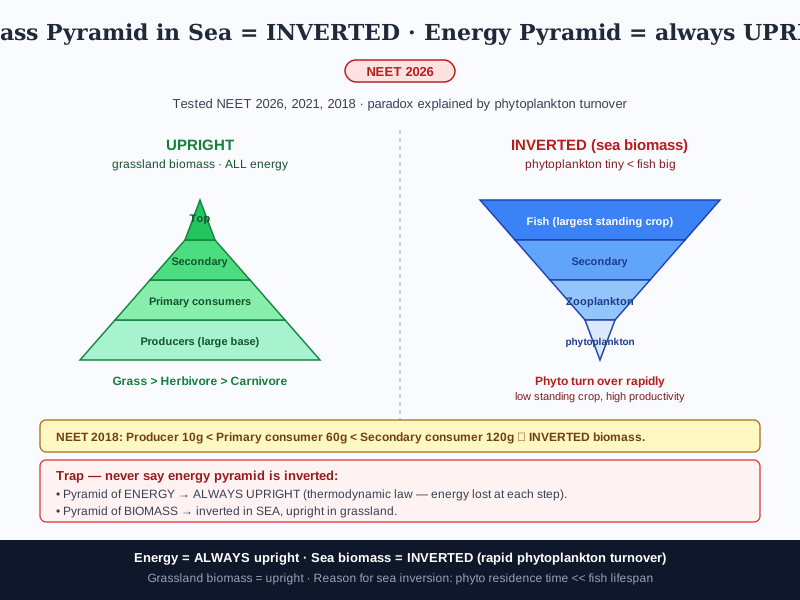
The pyramid of biomass in the sea is generally INVERTED because the biomass of fishes far exceeds that of phytoplankton at any given time. This seems paradoxical — how can fewer producers support more consumers? The explanation is rapid turnover: phytoplankton reproduce extremely rapidly and are continuously consumed, so their standing biomass remains low even though their productivity is high. In contrast, pyramid of ENERGY is ALWAYS upright (no exceptions) because energy is lost at each trophic level (10% law). In grassland, the biomass pyramid is upright — large grass biomass supports smaller animal biomass.
NEET has tested this across three years (2026, 2021, 2018). NEET 2018 gave numerical data: producer 10g, primary consumer 60g, secondary consumer 120g — this is an inverted pyramid of biomass. The paradox of the marine inverted biomass pyramid is explained by residence time/turnover: phytoplankton have a very short life cycle and rapid reproduction, so while standing crop is tiny at any moment, the flux (energy flowing through) is massive. Energy pyramid can NEVER be inverted — thermodynamics forbids it.
Pyramid of biomass in sea is generally upright. Pyramid of energy can sometimes be inverted.
Pyramid of BIOMASS in SEA is INVERTED (phytoplankton tiny, fish large). Pyramid of ENERGY is ALWAYS UPRIGHT — no exceptions.
Energy = ALWAYS up. Sea biomass = INVERTED. Grassland biomass = upright. Sea Numbers = upright (but not always tested).
- Marine inverted biomass: phytoplankton standing crop < fish biomass due to rapid phytoplankton turnover.
- Pyramid of energy: ALWAYS upright — thermodynamic law (energy lost at each level).
- NEET 2018: Producer 10g < PC 60g < SC 120g → inverted biomass pyramid.
- Grassland biomass pyramid: upright (large grass base supports smaller herbivore and carnivore mass).
Which of the following statements about ecological pyramids are CORRECT? S1: The pyramid of energy is always upright and can never be inverted. S2: The pyramid of biomass in a sea ecosystem is generally inverted because phytoplankton biomass exceeds fish biomass. S3: The pyramid of numbers in a grassland ecosystem is upright. S4: Data showing producer 10g, primary consumer 60g, secondary consumer 120g represents an inverted pyramid of biomass. S5: The inverted biomass in marine ecosystems is explained by the rapid turnover rate of phytoplankton.
View bonus solution & explanation
Correct answer: C — S1, S3, S4 and S5
S1 CORRECT: Energy pyramid is ALWAYS upright — no exceptions (10% energy transfer law). S2 WRONG: Marine biomass pyramid is inverted because FISH biomass EXCEEDS phytoplankton — not the other way around. S3 CORRECT: Grassland number pyramid is upright — many producers (grass) support fewer herbivores then carnivores. S4 CORRECT: 10g < 60g < 120g = producer less than consumers = inverted biomass pyramid (NEET 2018). S5 CORRECT: Rapid phytoplankton turnover explains why small standing crop supports large fish biomass.
What is Pyramid of Biomass in Sea is Inverted?
What did NEET 2026 ask on Pyramid of Biomass in Sea is Inverted?
What is the most common NEET trap on Pyramid of Biomass in Sea is Inverted?
How do you remember Pyramid of Biomass in Sea is Inverted for NEET?
What are the key components of Pyramid of Biomass in Sea is Inverted?
Through deep analysis of NEET and NTA, 176 of the 180 ReNEET 2026 (June 21) questions were already in the MedicNEET question bank before the exam.
176/180MedicNEET's Biology question bank is built from the same NCERT lines NTA picks repeatedly. Not random MCQs — questions crafted exactly like NTA crafts them.
You just learned this concept. The free app turns it into a daily goal built from your weak topics and brings it back just before you forget it — using active recall and spaced repetition — so it stays till exam day.