
Ophrys Orchid — Sexual Deceit and Co-evolution with Bees
✅ Asked in NEET 2026Which one of the following is an appropriate example of sexual deceit?
Which one of the following is an appropriate example of sexual deceit?
Match the Columns Column I A. Predator B. Mutualism C. Parasitism D. Sexual deceit Column II I. Ophrys II. Pisaster III. Female wasp and fig IV. Plasmodium Choose the correct answer from the options given below:
Answer & NCERT explanation
Correct answer: B — Ophrys and bumblebee
Ophrys orchids mimic the female bumblebee, attracting males that 'pseudocopulate' with the flower and inadvertently transfer pollen — a classic case of sexual deceit.
Read more NCERT concept on the PYQ
Orchids show a bewildering diversity of floral patterns many of which have evolved to attract the right pollinator insect (bees and bumblebees) and ensure guaranteed pollination by it. Not all orchids offer rewards. The Mediterranean orchid Ophrys employs 'sexual deceit' to get pollination done by a species of bee. One petal of its flower bears an uncanny resemblance to the female of the bee in size, colour and markings. The male bee is attracted to what it perceives as a female, 'pseudocopulates' with the flower, and during that process is dusted with pollen from the flower. When this same bee 'pseudocopulates' with another flower, it transfers pollen to it and thus, pollinates the flower. Here you can see how co-evolution operates. If the female bee's colour patterns change even slightly for any reason during evolution, pollination success will be reduced unless the orchid flower co-evolves to maintain the resemblance of its petal to the female bee.
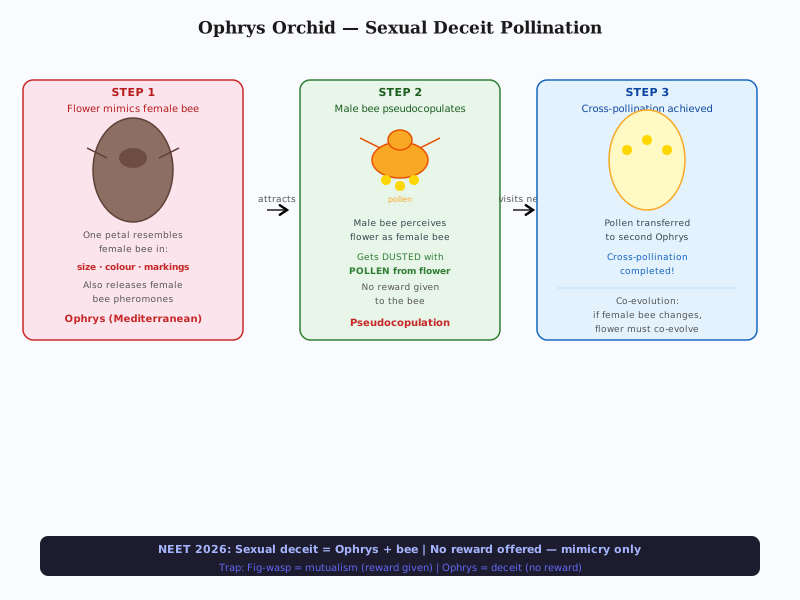
The Mediterranean orchid Ophrys employs sexual deceit to achieve pollination without offering any reward to its pollinator. One petal of the Ophrys flower bears an uncanny resemblance to a female bee in size, colour, and surface markings — and also releases chemical compounds mimicking female bee pheromones. Male bees are attracted and attempt to mate with the flower (pseudocopulation). During this process, pollen masses (pollinia) are transferred to the bee's body. When the deceived male visits another Ophrys flower and pseudocopulates again, cross-pollination is achieved. This is a textbook example of co-evolution — if the female bee changes its appearance during evolution, the orchid must co-evolve to maintain the deception.
NCERT describes Ophrys as a Mediterranean orchid that pollinates via bees, but NTA also tests this against mutualistic pollination systems. The critical distinction: in sexual deceit, NO REWARD is given to the pollinator — the bee gains nothing. This contrasts with fig-wasp mutualism where the fig provides the wasp with a breeding site (reward given). In NEET match columns, Ophrys = sexual deceit, Pisaster = predator (keystone starfish), female wasp + fig = mutualism, Plasmodium = parasitism.
Fig-wasp relationship is an example of sexual deceit like Ophrys.
Fig-wasp is MUTUALISM (fig provides breeding site for wasp, wasp pollinates fig). Ophrys uses DECEIT — no reward given.
Ophrys = deceit, no reward. Fig+wasp = mutualism, both benefit. Pisaster = predator (sea star).
- Pseudocopulation = male bee's attempted mating with the flower — achieves pollination without sexual reproduction between insect and flower.
- Ophrys pollinia (pollen masses) stick to the male bee and are transferred during the next pseudocopulation attempt.
- Co-evolution demonstrated: if female bee appearance changes, orchid must track that change or lose its pollinator entirely.
- Not all orchids use deceit — most offer nectar. Ophrys represents an extreme specialisation of floral mimicry.
Match Column I (Ecological Interaction) with Column II (Correct Example from NCERT): Column I A. Sexual deceit B. Mutualism C. Predation D. Parasitism Column II I. Pisaster (sea star) in rocky intertidal II. Ophrys and male bee III. Plasmodium and human RBCs IV. Female wasp laying eggs inside fig
View bonus solution & explanation
Correct answer: A — A-II, B-IV, C-I, D-III
A-II: Ophrys uses sexual deceit with male bee (pseudocopulation, no reward). B-IV: Female wasp-fig relationship is mutualism — wasp gets breeding site, fig gets pollinated. C-I: Pisaster is a predatory sea star (keystone predator in NCERT examples). D-III: Plasmodium causes malaria — obligate parasite of human RBCs. This is the standard NEET match column for ecological interactions.
What is Ophrys Orchid?
What did NEET 2026 ask on Ophrys Orchid?
What is the most common NEET trap on Ophrys Orchid?
How do you remember Ophrys Orchid for NEET?
What are the key components of Ophrys Orchid?
Through deep analysis of NEET and NTA, 176 of the 180 ReNEET 2026 (June 21) questions were already in the MedicNEET question bank before the exam.
176/180MedicNEET's Biology question bank is built from the same NCERT lines NTA picks repeatedly. Not random MCQs — questions crafted exactly like NTA crafts them.
You just learned this concept. The free app turns it into a daily goal built from your weak topics and brings it back just before you forget it — using active recall and spaced repetition — so it stays till exam day.