
Complex Polysaccharides — Chitin, Glucosamine, N-Acetyl Galactosamine vs Simple Inulin
✅ Asked in NEET 2024Which of the following is not a complex polysaccharide?
Which of the following is not a complex polysaccharide?
Answer & NCERT explanation
Correct answer: A — Inulin
Inulin is not a complex polysaccharide but a simple homopolysaccharide made only of fructose units. Chitin is complex (made of N-acetylglucosamine), and the other options are monosaccharide derivatives that form complex polysaccharides.
Read more NCERT concept on the PYQ
Plant cell walls are made of cellulose. Paper made from plant pulp and cotton fibre is cellulosic. There are more complex polysaccharides in nature. They have as building blocks, amino-sugars and chemically modified sugars (e.g., glucosamine, N-acetyl galactosamine, etc.). Exoskeletons of arthropods, for example, have a complex polysaccharide called chitin. These complex polysaccharides are mostly homopolymers.
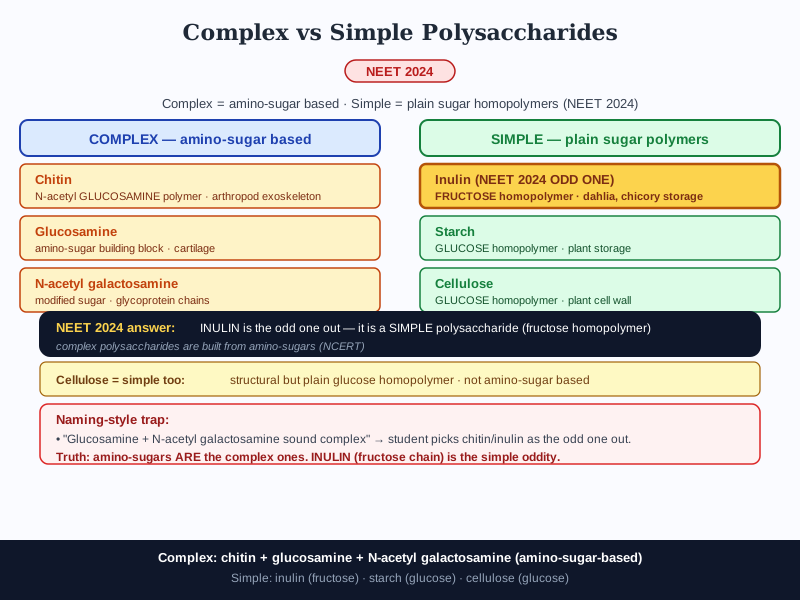
Plant cell walls are made of CELLULOSE — paper and cotton fibre are cellulosic. There are MORE COMPLEX POLYSACCHARIDES in nature. Their building blocks include AMINO SUGARS and CHEMICALLY MODIFIED SUGARS such as GLUCOSAMINE and N-ACETYL GALACTOSAMINE. EXOSKELETONS of ARTHROPODS contain a complex polysaccharide called CHITIN (made of N-acetylglucosamine units). These complex polysaccharides are mostly HOMOPOLYMERS. CONTRAST with simple polysaccharides like INULIN — a HOMOPOLYMER of FRUCTOSE found in plant storage organs (NOT a complex polysaccharide). So: complex = built from modified/amino sugars (chitin, glucosamine derivatives, N-acetyl galactosamine). Simple = built from plain sugars (inulin = fructose chain; starch = glucose chain; cellulose = glucose chain).
NEET 2024: 'Which is NOT a complex polysaccharide?' → INULIN. Inulin is a SIMPLE homopolymer of fructose (storage polysaccharide in plants like dahlia, chicory). The other options — chitin, glucosamine, N-acetyl galactosamine — are complex polysaccharide building blocks or molecules. Memory: chitin = arthropod exoskeleton + fungal cell wall, made of N-acetylglucosamine. Glucosamine and N-acetyl galactosamine are AMINO-SUGAR building blocks of complex polysaccharides (cartilage, glycoproteins). Cellulose = simple (glucose chain) despite being structural.
Inulin is a complex polysaccharide built from amino-sugar building blocks like N-acetyl galactosamine.
INULIN is a SIMPLE homopolymer of FRUCTOSE — NOT a complex polysaccharide. Complex polysaccharides use amino-sugars/modified sugars (e.g., chitin, glycoproteins).
Complex polysaccharides = chitin + glucosamine + N-acetyl galactosamine. Inulin = SIMPLE fructose homopolymer (NOT complex).
- Complex polysaccharides have building blocks of AMINO-SUGARS and chemically modified sugars.
- Chitin (arthropod exoskeleton, fungal cell wall) is made of N-acetylglucosamine — a COMPLEX polysaccharide.
- Glucosamine and N-acetyl galactosamine are amino-sugar building blocks of complex polysaccharides.
- Inulin = SIMPLE homopolymer of fructose (storage polysaccharide in plants) — NOT a complex polysaccharide (NEET 2024).
What is Complex Polysaccharides?
What did NEET 2024 ask on Complex Polysaccharides?
What is the most common NEET trap on Complex Polysaccharides?
How do you remember Complex Polysaccharides for NEET?
What are the key components of Complex Polysaccharides?
Through deep analysis of NEET and NTA, 176 of the 180 ReNEET 2026 (June 21) questions were already in the MedicNEET question bank before the exam.
176/180MedicNEET's Biology question bank is built from the same NCERT lines NTA picks repeatedly. Not random MCQs — questions crafted exactly like NTA crafts them.
You just learned this concept. The free app turns it into a daily goal built from your weak topics and brings it back just before you forget it — using active recall and spaced repetition — so it stays till exam day.