🪵
PYQ AnalysisMay 20, 2026

Anatomy of Flowering Plants NEET PYQ Analysis — 19 Questions Decoded (2015-2026)

Shahul Hameed

Shahul Hameed

NEET Expert · Founder & CEO, MedicNEET · 5 years mentoring experience

📊 NEET 2026 actual paper: 3 questions appeared from Anatomy of Flowering Plants — 1 match-the-column, 2 direct. Topics tested: regions of the root, bulliform cells, and the conjunctive tissue / Casparian strip / starch sheath cluster. See the full NEET 2026 Biology paper analysis.

Anatomy of Flowering Plants NEET PYQ Analysis — 19 Questions Decoded (2015-2026)

The "low priority" Class 11 chapter that still delivered 3 marks in NEET 2026.


Anatomy of Flowering Plants is the chapter most students skim and most students lose marks on. It looks like a memory dump of tissues, but NTA treats it as a reliable, year-after-year mark-maker. Across the PYQ record, this chapter has produced 19 NEET questions (2015-2026), with a Stable weightage trend.

Why does NTA keep returning to it? Because plant anatomy is full of precise, paired terms — meristematic versus permanent tissue, xylem versus phloem, subsidiary versus guard cells, conjunctive tissue versus pericycle — that slot perfectly into the match-the-column and direct-recall formats. NEET 2026 confirmed it: 3 questions, one of them a four-pair matching item.

This analysis breaks down exactly what NTA asks from this chapter, the NCERT lines behind those questions, the three questions from NEET 2026, and how to prepare it efficiently for NEET 2027.


Section 1 — What Anatomy of Flowering Plants Covers in NCERT

Anatomy of Flowering Plants is an NCERT Class 11 chapter in the Structural Organisation unit (Botany division). It covers the tissue systems — meristematic tissue (apical, intercalary, lateral) and permanent tissue (simple: parenchyma, collenchyma, sclerenchyma; complex: xylem and phloem) — along with the epidermal, ground and vascular tissue systems, the anatomy of dicot and monocot roots, stems and leaves, and secondary growth.

It is a foundational chapter. The xylem and phloem studied here connect directly to transport in plants, and root and leaf anatomy underpin water relations and photosynthesis. A strong grasp here also speeds up Morphology of Flowering Plants. Total PYQ count: 19 (2015-2026). Class: 11.


Section 2 — Weightage and Trend

No source dataset carries a reliable year-by-year split for this chapter, so rather than invent one, here is the official weightage profile from MedicNEET's chapter-weightage model:

MetricValue
Total PYQs (2015-2026)19
NEET 2026 actual paper3 questions
Weightage trendStable
Priority ratingLow

The signal is consistent: Anatomy of Flowering Plants is a steady contributor — roughly 2 questions in an average year, and 3 in NEET 2026. It is rated "Low" priority only because higher-weightage chapters demand attention first; it is never a chapter to skip. Cross-check it against the full NEET Biology chapter weightage analysis. Expect 2-3 questions in NEET 2027.


Section 3 — Topic-wise Breakdown

Across the PYQ set, NTA returns to a predictable set of topics. The highest-yield areas:

  • Meristematic versus permanent tissue — locations of apical, intercalary and lateral meristems, and how permanent tissues form from them.
  • Xylem and phloem — components of each (tracheids, vessels, xylem fibres, xylem parenchyma; sieve tube elements, companion cells, phloem fibres, phloem parenchyma) and protoxylem versus metaxylem.
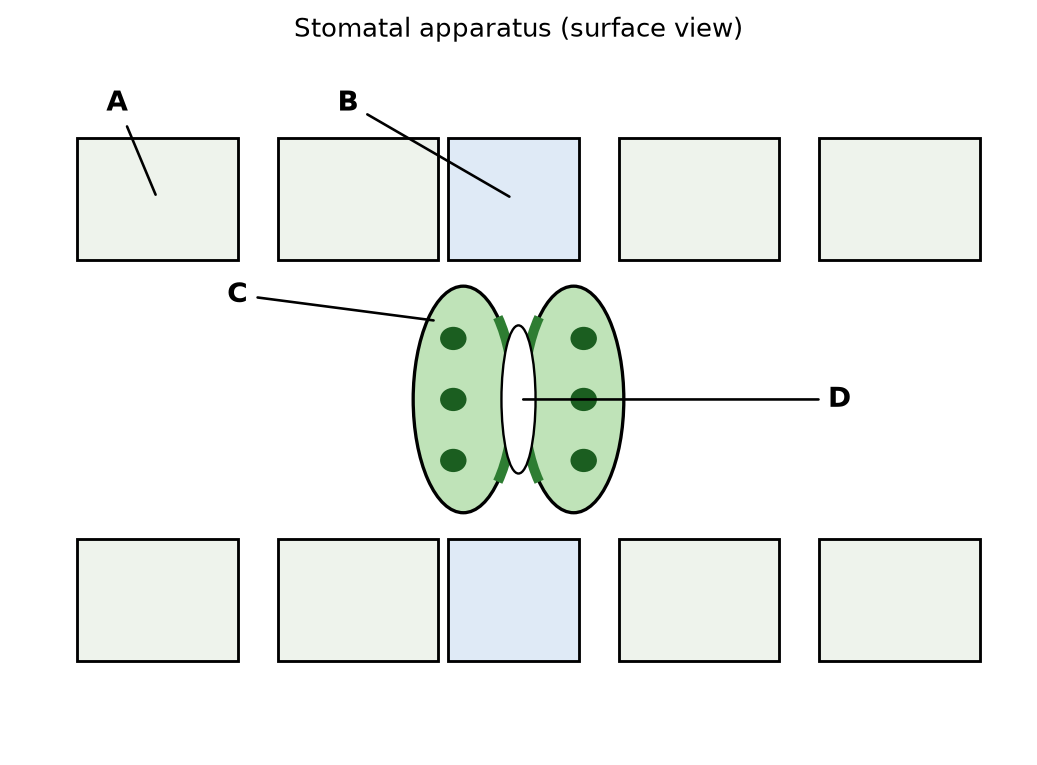
  • Leaf anatomy — bulliform cells, mesophyll, stomatal apparatus and the subsidiary cells around guard cells.
  • Root anatomy — regions of the root, Casparian strips of the endodermis, passage cells, conjunctive tissue and the pericycle.

Repeating NCERT concepts: root hairs arise from the region of maturation; the endodermis has Casparian strips of suberin; bulliform cells in grass leaves roll the leaf during water stress; conjunctive tissue lies between xylem and phloem patches in dicot roots.

Rarely or never asked — safe to deprioritise: exhaustive lists of secondary-growth cambial derivatives and detailed wood-anatomy terminology (heartwood/sapwood subtypes). Know the vascular cambium and cork cambium functions conceptually. Practise the full set on the Anatomy of Flowering Plants PYQ page.


Section 4 — Question Format Analysis

Pre-2026: questions from this chapter were largely direct single-fact recall — "Which tissue lacks intercellular spaces?", "Identify the tissue between xylem and phloem", "Where do root hairs originate?"

NEET 2026: the format mix held but tilted toward matching. Of the three questions, two were direct (regions of the root, function of bulliform cells) and one was a four-pair match-the-column linking conjunctive tissue, Casparian strips, subsidiary cells and starch sheath to their descriptions.

Going forward: expect a blend of direct recall and one matching item. Plant anatomy's paired terminology is ideal for List-I/List-II questions, so a single matching question per year is likely. If matching is your weak spot, read Match-the-Column Questions: The Format That Destroys NEET Scores.


Section 5 — NEET 2026 Decoded

Here are the exact three Anatomy of Flowering Plants questions from the NEET 2026 paper, decoded:

  1. Region where root hairs arise (direct) — "In angiosperms, root hairs arise from which one of the following regions of the root?" The answer is the region of maturation. The trap is the region of elongation — cells there are still elongating and have not yet differentiated; root hairs are unicellular outgrowths of mature epidermal cells in the maturation zone.
  2. Function of bulliform cells (direct) — "The main function of bulliform cells in grasses is..." The answer is to minimize water loss during water stress. The trap is "to perform photosynthesis" — bulliform cells are large, empty, colourless epidermal cells; when they lose turgor in dry conditions, the grass leaf rolls inward, reducing the exposed surface and curbing transpiration.
  3. Match-the-column: tissues and descriptions (match-the-column) — Conjunctive tissue, Casparian strips, subsidiary cells and starch sheath matched to their descriptions. The correct pairing is conjunctive tissue = tissue between xylem and phloem; Casparian strips = endodermal cells with suberin deposition; subsidiary cells = specialised cells near guard cells; starch sheath = endodermal cells rich in starch. The trap is confusing the two endodermis descriptions — the starch sheath is the starch-rich endodermis of the dicot stem, while Casparian strips are the suberised bands of the root endodermis.

Every one of these maps to a plain NCERT line — not a single question came from outside the textbook.


Section 6 — Strategy for This Chapter

  • Time to allot: 2 focused days. The content is finite, diagram-driven and pure NCERT.
  • NCERT sections to nail: the tissue classification table, components of xylem and phloem, the three regions of the root, the dicot-versus-monocot anatomy comparisons, and the labelled stem, root and leaf cross-sections.
  • Common mistakes: (1) placing root hairs in the elongation zone instead of maturation; (2) confusing starch sheath with Casparian strips; (3) mixing up subsidiary cells and guard cells; (4) ignoring the dicot-versus-monocot anatomical differences.
  • How to approach it for RENEET / NEET 2027: learn from the diagrams first — label every cross-section, then convert each label into a matchable fact. Drill the chapter on the Anatomy of Flowering Plants PYQ set and under timed conditions with the RENEET test series.

Section 7 — Most Repeated Concepts

The five concepts that recur most across Anatomy of Flowering Plants PYQs, with the NCERT lines to memorise word-for-word:

  1. "The root hairs originate from the region of maturation" — this zone, proximal to the elongation region, bears unicellular root hairs that absorb water and minerals. Directly tested in NEET 2026.
  2. "In grasses, certain adaxial epidermal cells along the veins modify themselves into large, empty, colourless cells called bulliform cells; when they are flaccid due to water stress, they make the leaves curl inwards to minimise water loss."
  3. "The endodermis comprises a single layer of barrel-shaped cells without intercellular spaces; the tangential and radial walls have a deposition of suberin in the form of Casparian strips."
  4. "Tracheids, vessels, xylem fibres and xylem parenchyma are the four elements of xylem; sieve tube elements, companion cells, phloem parenchyma and phloem fibres make up the phloem."
  5. "The parenchymatous cells which lie between the xylem and the phloem are called conjunctive tissue."

We've analysed every PYQ this deeply. That's exactly how we build our questions.

Every question in MedicNEET is built from the same NCERT lines NTA has picked repeatedly across 10 years. Not random MCQs. Questions crafted exactly like NTA crafts them — because we've studied how NTA thinks.

88 of 90
NEET 2026 Biology questions traced directly to MedicNEET content

Anatomy of Flowering Plants is a quietly winnable chapter — finite, diagram-led and pure NCERT. Learn the cross-sections, convert every label into a matchable fact, and it returns 2-3 reliable marks. Start with the free Anatomy of Flowering Plants PYQ set and build your full plan around the chapter weightage data.