How many questions from Biomolecules in NEET?
3–4 questions from Biomolecules appear in NEET every year (12–16 marks, ~3% of NEET Biology). High-yield topics: enzymes (mechanism, inhibition, cofactors), proteins (peptide bonds, denaturation), nucleic acids (DNA vs RNA), and metabolite classification. Practise all 373 Biomolecules PYQs free in bilingual Hindi & English in the MedicNEET app.
Year-wise NEET Questions — Biomolecules
| Year | Questions | Marks |
|---|---|---|
| NEET 2016 | 6 | 24 |
| NEET 2017 | 2 | 8 |
| NEET 2018 | 1 | 4 |
| NEET 2019 | 5 | 20 |
| NEET 2020 | 5 | 20 |
| NEET 2021 | 4 | 16 |
| NEET 2022 | 4 | 16 |
| NEET 2023 | 9 | 36 |
| NEET 2024 | 6 | 24 |
| NEET 2025 | 4 | 16 |
| NEET 2026 | 7 | 28 |
Practise Biomolecules MCQs — Free
Every Biomolecules question format NEET uses, starting with the newest ReNEET 2026-style reasoning MCQs. Tap an option for the answer + NCERT explanation.
✨ Biomolecules — ReNEET 2026-Style Reasoning Questions
The newest, most exam-current format — reasoning-based questions modelled on ReNEET 2026. This is where NEET is heading; practise the pattern before the exam does.
- Q1. Why is it important to isolate and purify organic compounds from living tissues?
- Q2. Why is there no absolute difference in elemental composition between living and non-living matter?
- Q3. Why does drying tissue before burning help in analysis?
- Q4. Which of the following explains the classification of alkaloids as secondary metabolites?
- Q5. Why are secondary metabolites not required for basic survival?
- Q6. How does the secondary structure differ from the primary structure?
- Q7. Why is RNA less stable than DNA?
- Q8. Why are nucleotides called building blocks of nucleic acids?
- Q9. How does temperature affect enzyme activity?
- Q10. How does a competitive inhibitor affect enzyme action?
You’ve practised 10 of 49 Biomolecules questions in this set.
Practise all 49 + every chapter — free app →📑 Biomolecules — NEET 2025 & 2026 Long-Form MCQs
The long, multi-statement questions that dominated NEET 2025 & 2026 — each covers 5-6 concepts at once, so they double as fast full-chapter revision.
- Q1. Match the following components with their respective characteristics or location after chemical analysis of a living tissue: Column I (Component) A. Amino acids B. Glycogen C. Lipids D. Proteins Column II (Characteristic/Location) 1. Found in the acid-insoluble fraction, typically polymeric 2. Representative of cytoplasmic composition, molecular weight < 3. Found in the acid-soluble pool, α-carbon structure 4. Present in the acid-insoluble fraction as vesicles due to membrane disruption Which of the following options represents the correct match?
- Q2. Match the following compounds with their correct classification as primary or secondary metabolites: Column I (Compound) A. Glycine B. Cellulose C. Morphine D. Glucose E. Abrin F. Palmitic acid Column II (Classification) i. Primary metabolite ii. Secondary metabolite
- Q3. Match the following polysaccharides with their monomeric units and primary functions/locations: Column I: Polysaccharide A. Starch B. Glycogen C. Cellulose D. Chitin E. Inulin Column II: Monomeric Unit i. Glucose ii. Fructose iii. Amino-sugars (e.g., N-acetylglucosamine) Column III: Primary Function/Location P. Energy storage in plant tissues Q. Major component of plant cell walls R. Energy reserve in animals and fungi S. Found in exoskeletons of arthropods and fungal cell walls T. Polymer of fructose units, generally stored in plants
- Q4. Which of the following statements about enzyme activity and regulation are NOT correct? S1. Enzymes generally show their highest activity over a broad range of temperature and pH conditions. S2. Competitive inhibitors bind to the allosteric site of an enzyme, altering its active site conformation. S3. An increase in substrate concentration beyond Vmax will further increase the velocity of the enzymatic reaction. S4. High temperature destroys enzymatic activity because proteins are denatured by heat. S5. Thermal stability is a quality of enzymes isolated from thermophilic organisms, allowing them to retain catalytic power at high temperatures.
You’ve practised 4 of 57 Biomolecules questions in this set.
Practise all 57 + every chapter — free app →🧩 Biomolecules — All-Format Questions — Match, Assertion-Reason, Statement & Image-Based
Every question format NEET uses — match-the-column, assertion-reason, statement-based, and image/diagram questions — not just plain MCQs. Each with an instant NCERT-referenced solution.
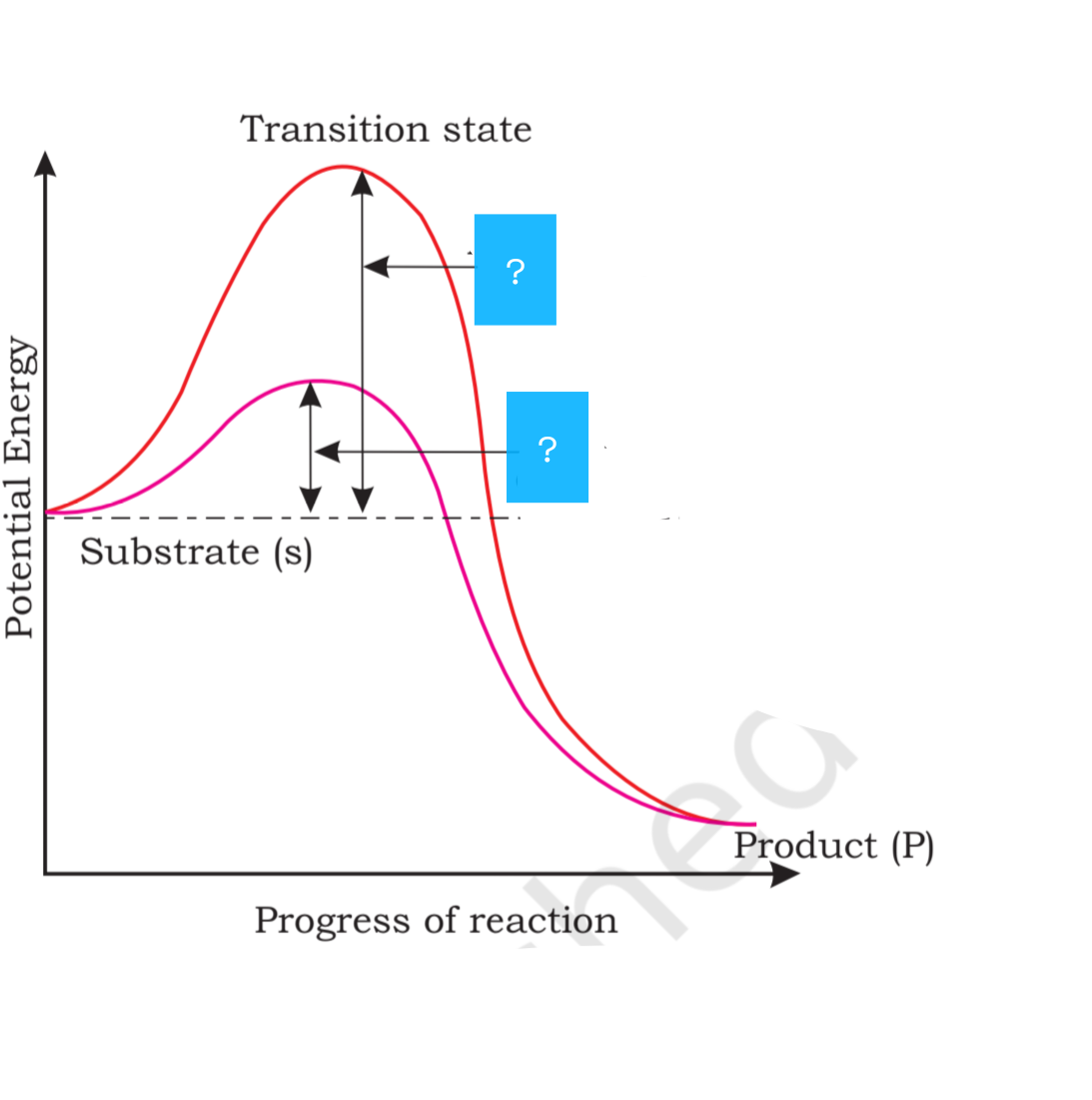
- Q1. In Figure , identify the energy barrier labeled as " ? "
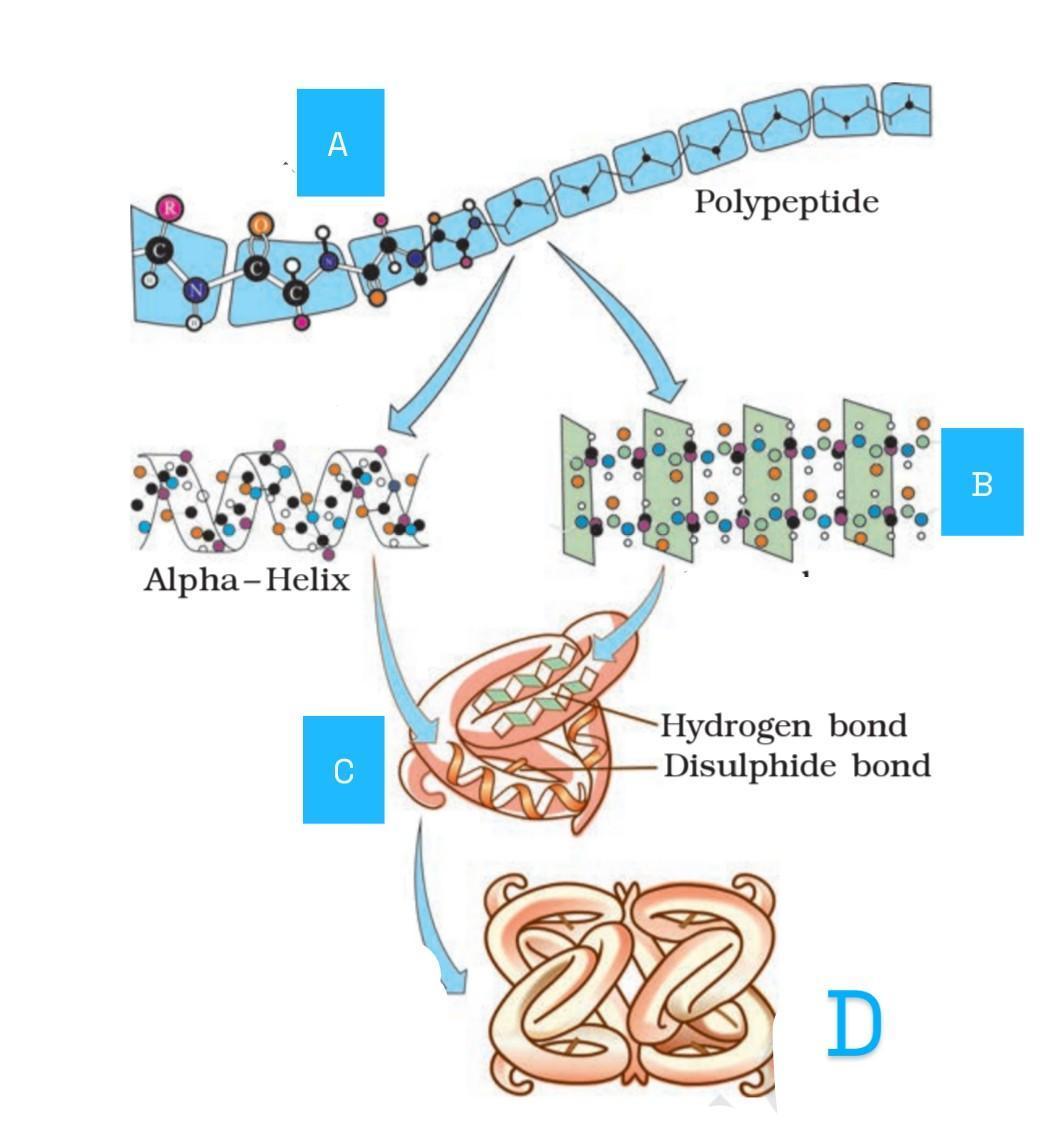
- Q2. Identify the protein assembly in Figure d :-
- Q3. Match the following elemental components with their relative abundance: COLUMN I A. Carbon B. Hydrogen C. Silicon D. Sodium COLUMN II i. Higher in earth’s crust than in human body ii. 18.5% in human body iii. Negligible in human body iV. 0.14% in earth’s crust
- Q4. Match the following components with their correct description: COLUMN I A. Acid-soluble pool B. Acid-insoluble fraction C. Ash D. Biomolecules COLUMN II i. Contains macromolecules like proteins ii. Contains inorganic residues after combustion iii. Small organic molecules from cytoplasm iv. Carbon compounds extracted from living tissue
- Q5. Assertion (A): Elemental composition of living and non-living matter appears similar when analysed qualitatively. Reason (R): Living tissues and non-living matter have completely different types of elements.
- Q6. Assertion (A): Acid-insoluble fraction represents macromolecules. Reason (R): All molecules with molecular weight >1000 Da are acid-insoluble.
- Q7. Which compound is used to grind living tissue to get a slurry?
- Q8. Which compound is NOT present in the acid-soluble pool?
- Q9. Which elements show higher relative abundance in living tissues than in earth's crust?
- Q10. What is the basis of classifying biomolecules from a biological perspective?
You’ve practised 10 of 236 Biomolecules questions in this set.
Practise all 236 + every chapter — free app →Sample NEET PYQs — Biomolecules
Which of the following describes the given graph correctly? (Graph shows reaction-coordinate / potential-energy profile with activation energies labelled 'A' and 'B'.)
- A. Endothermic reaction with energy A in presence of enzyme and B in absence of enzyme
- B. Exothermic reaction with energy A in presence of enzyme and B in absence of enzyme
- C. Endothermic reaction with energy A in absence of enzyme and B in presence of enzyme
- D. Exothermic reaction with energy A in absence of enzyme and B in presence of enzyme
Explanation: Answer: (B) Exothermic reaction with energy A in presence of enzyme and B in absence of enzyme. Solution: In the energy profile the product (P) lies at a lower energy than the substrate (S), so the reaction is exothermic. An enzyme works by bringing down the activation-energy barrier, so the smaller barrier 'A' is the activation energy WITH enzyme and the larger barrier 'B' is WITHOUT enzyme. Hence the curve shows an exothermic reaction with A (enzyme present) lower than B (enzyme absent). NCERT Reference: Ch 9, p.115, line ~24 — "Enzymes eventually bring down this energy barrier making the transition of 'S' to 'P' more easy"
A typical fat molecule is made up of:
- A. Three glycerol molecules and one fatty acid molecule
- B. One glycerol and three fatty acid molecules
- C. One glycerol and one fatty acid molecule
- D. Three glycerol and three fatty acid molecules
Explanation: Answer: (B) One glycerol and three fatty acid molecules. Solution: A typical fat (triglyceride) is formed when three fatty acids are esterified to the three hydroxyl groups of one glycerol molecule. The other options invert or mismatch these ratios; glycerol provides only three –OH sites, so one glycerol binds three fatty acids, not the reverse. NCERT Reference: Ch 9, p.106, line ~22 — "lipids have both glycerol and fatty acids. Here the fatty acids are found esterified with glycerol"
The two polypeptides of human insulin are linked together by:
- A. Hydrogen bonds
- B. Phosphodiester bond
- C. Covalent bond
- D. Disulphide bridges
Explanation: Answer: (D) Disulphide bridges. Solution: Human insulin is made of two polypeptide chains (A and B) that are held together by covalent disulphide (S–S) bridges between cysteine residues, an inter-chain bond of protein structure. Hydrogen bonds (A) only stabilise secondary/tertiary folding weakly, phosphodiester bonds (B) link nucleotides in nucleic acids, and 'covalent bond' (C) is too generic — the specific covalent linkage here is the disulphide bridge. NCERT Reference: Ch 9, p.112, line ~48 — "Disulphide bond"
Which of the following is the least likely to be involved in stabilizing the three-dimensional folding of most proteins?
- A. Hydrogen bonds
- B. Electrostatic interaction
- C. Hydrophobic interaction
- D. Ester bonds
Explanation: Answer: (D) Ester bonds. Solution: The three-dimensional (tertiary) folding of proteins is stabilised by weak interactions among R-groups — hydrogen bonds, electrostatic (ionic) interactions and hydrophobic interactions (plus disulphide bridges). Ester bonds are not a feature of protein folding (they link fatty acids to glycerol in lipids and the sugar-phosphate backbone of nucleic acids), so they are least likely to stabilise protein 3-D structure. NCERT Reference: Ch 9, p.112, line ~42 — "secondary and the tertiary structure. When you look at a tertiary structure"
Frequently Asked Questions — Biomolecules NEET
How many questions from Biomolecules come in NEET every year?+
How many Biomolecules questions does MedicNEET have?+
What is the NEET weightage of Biomolecules?+
Are Biomolecules questions available in Hindi?+
Are Biomolecules questions NCERT-based?+
Is there a timed test for Biomolecules NEET PYQs?+
How do I score full marks in Biomolecules for NEET?+
What are ReNEET 2026-style reasoning Biomolecules questions?+
Are these Biomolecules MCQs free to practise?+
Practise Biomolecules — Free
All 342+ Biomolecules questions · ReNEET 2026 reasoning + every format · Bilingual Hindi & English · NCERT-mapped explanations · No paywall
📲 Download MedicNEET App (Free)