How many questions from Cell Cycle and Cell Division in NEET?
3–5 questions from Cell Cycle and Cell Division appear in NEET every year (12–20 marks, ~4% of NEET Biology). High-yield topics: mitosis stages (prophase, metaphase, anaphase, telophase), meiosis I & II differences, cell cycle phases (G1, S, G2, M), cytokinesis in plants vs animals, and chiasmata/crossing over. Practise all 295 Cell Cycle PYQs free in bilingual Hindi & English in the MedicNEET app.
Year-wise NEET Questions — Cell Cycle and Cell Division
| Year | Questions | Marks |
|---|---|---|
| NEET 2016 | 7 | 28 |
| NEET 2017 | 2 | 8 |
| NEET 2018 | 1 | 4 |
| NEET 2019 | 4 | 16 |
| NEET 2020 | 5 | 20 |
| NEET 2021 | 7 | 28 |
| NEET 2022 | 5 | 20 |
| NEET 2023 | 13 | 52 |
| NEET 2024 | 4 | 16 |
| NEET 2025 | 1 | 4 |
| NEET 2026 | 3 | 12 |
Practise Cell Cycle and Cell Division MCQs — Free
Every Cell Cycle and Cell Division question format NEET uses, starting with the newest ReNEET 2026-style reasoning MCQs. Tap an option for the answer + NCERT explanation.
✨ Cell Cycle and Cell Division — ReNEET 2026-Style Reasoning Questions
The newest, most exam-current format — reasoning-based questions modelled on ReNEET 2026. This is where NEET is heading; practise the pattern before the exam does.
- Q1. Why does cytokinesis differ in plant and animal cells?
- Q2. What would happen if centromeres did not split during anaphase?
- Q3. Why does DNA replication occur before mitosis and not during it?
- Q4. What would be the consequence if spindle fibres failed to attach to kinetochores?
- Q5. Why is mitosis more common in somatic cells than in gametes?
- Q6. Why is diakinesis considered the transition to metaphase I?
- Q7. How does meiosis contribute to genetic variation?
- Q8. Which of the following is true for metaphase II but not metaphase I?
- Q9. Assertion (A): Fertilisation restores the diploid state after meiosis. Reason (R): Gametes formed after meiosis are haploid.
- Q10. Why doesn’t DNA replicate between meiosis I and meiosis II?
You’ve practised 10 of 40 Cell Cycle and Cell Division questions in this set.
Practise all 40 + every chapter — free app →📑 Cell Cycle and Cell Division — NEET 2025 & 2026 Long-Form MCQs
The long, multi-statement questions that dominated NEET 2025 & 2026 — each covers 5-6 concepts at once, so they double as fast full-chapter revision.
- Q1. Which of the following statements about the events occurring during prophase of mitosis is NOT correct?
- Q2. Arrange the following events in the correct sequence as they occur in a typical eukaryotic cell cycle leading to division: A. Synthesis of proteins in preparation for mitosis. B. Duplication of centrioles in the cytoplasm. C. Division of cytoplasm into two daughter cells. D. Chromosomal material condenses and mitotic spindle formation initiates. E. Cell is metabolically active and continuously grows without DNA replication. F. Alignment of chromosomes at the equatorial plate.
- Q3. Match the following stages of Prophase I with their characteristic events: Column I (Stage of Prophase I) A. Leptotene B. Zygotene C. Pachytene D. Diplotene E. Diakinesis Column II (Characteristic Event) 1. Terminalisation of chiasmata 2. Appearance of recombination nodules 3. Dissolution of synaptonemal complex 4. Compaction of chromosomes becomes visible 5. Synapsis of homologous chromosomes
- Q4. Which of the following statements are correct concerning the comparison between mitosis, meiosis I, and meiosis II? S1. Both mitosis and meiosis II are equational divisions, separating sister chromatids and generally maintaining the chromosome number of the parent cell (for that specific division). S2. Meiosis I is unique among these divisions for undergoing synapsis, crossing over, and the separation of homologous chromosomes, leading to reduction in chromosome number. S3. Interkinesis, which precedes Meiosis II, is a brief interphase-like stage where significant cell growth and DNA replication occur to prepare for the second meiotic division. S4. While mitosis can occur in both haploid and diploid cells, meiosis (both I and II) is typically restricted to diploid cells destined to form gametes. S5. The alignment of chromosomes at the equatorial plate in Metaphase I involves bivalent structures, whereas in Metaphase II and mitotic metaphase, individual chromosomes with two chromatids align.
You’ve practised 4 of 37 Cell Cycle and Cell Division questions in this set.
Practise all 37 + every chapter — free app →🧩 Cell Cycle and Cell Division — All-Format Questions — Match, Assertion-Reason, Statement & Image-Based
Every question format NEET uses — match-the-column, assertion-reason, statement-based, and image/diagram questions — not just plain MCQs. Each with an instant NCERT-referenced solution.
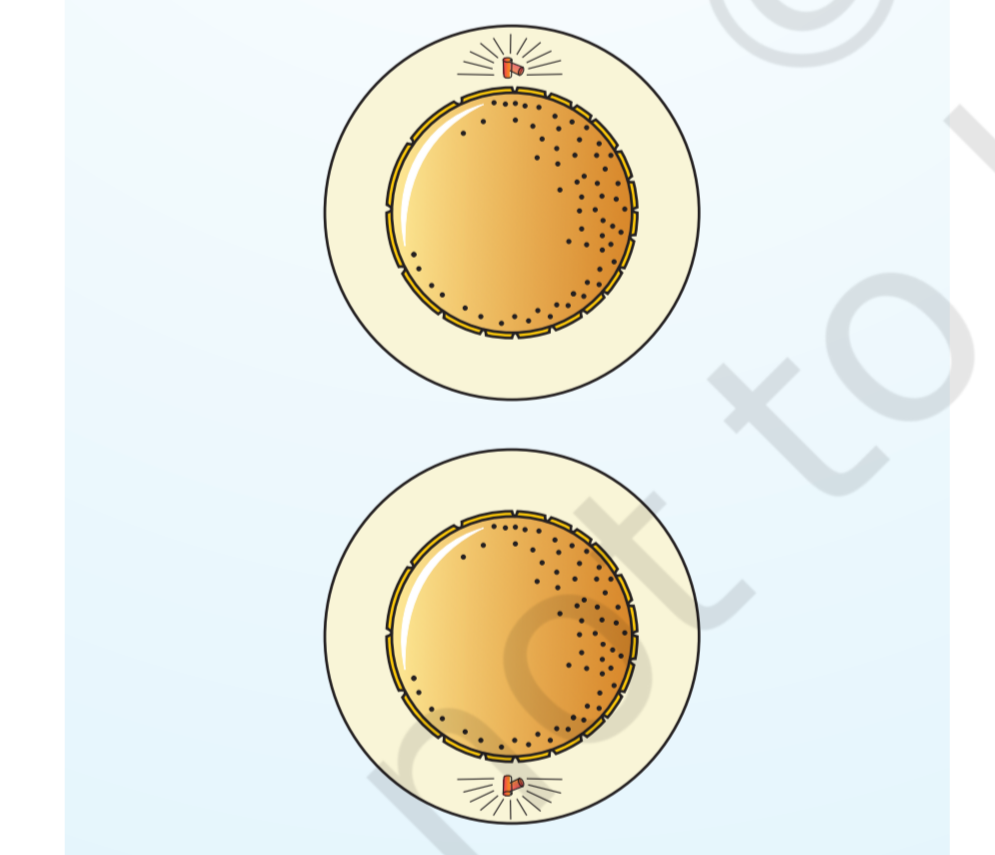
- Q1. Identify the process shown in Figure
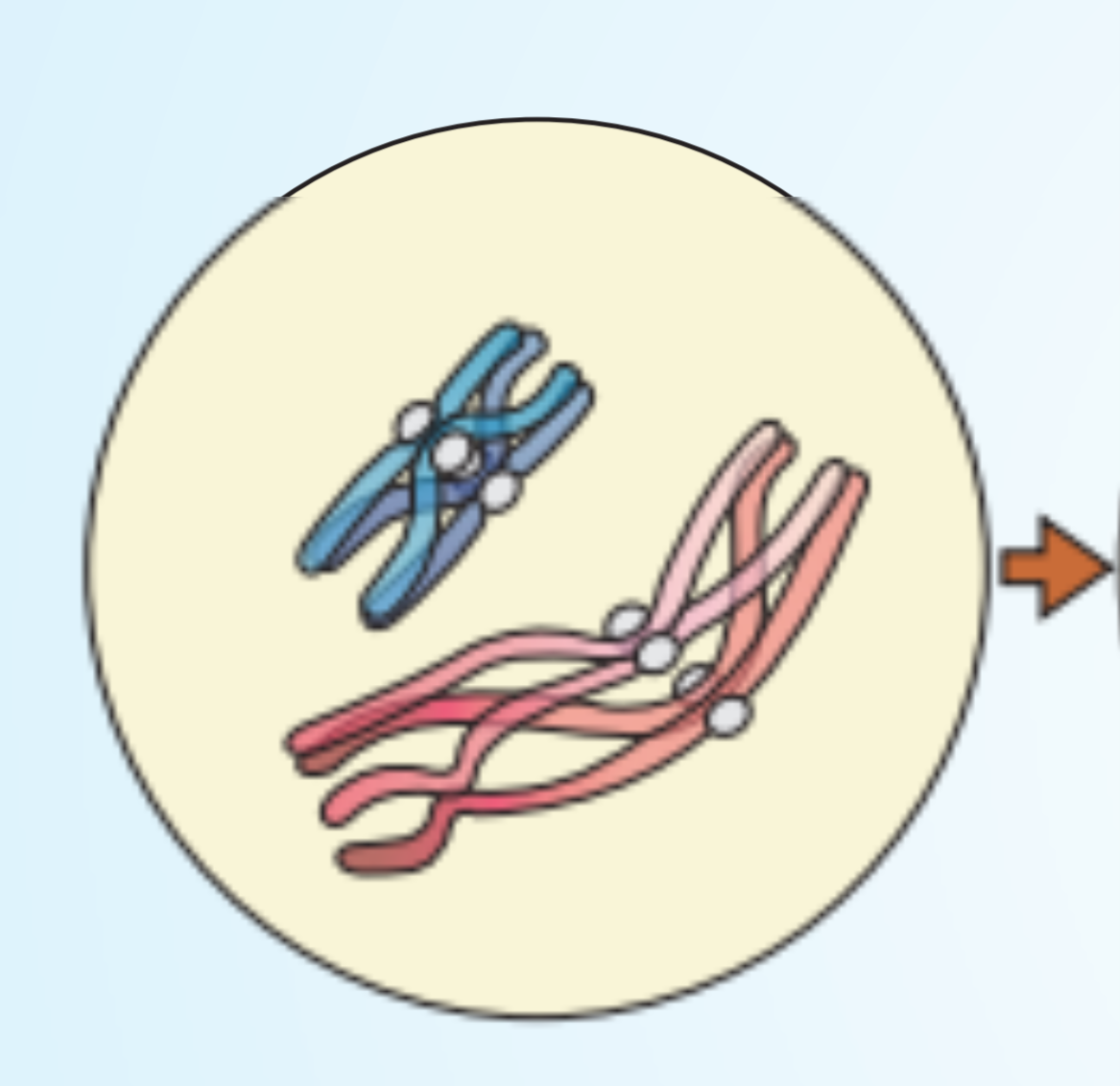
- Q2. Identify the stage shown in Figure
- Q3. Match the following cell cycle phases with their major events: Column I (Phase) A. G₁ phase B. S phase C. G₂ phase D. M phase Column II (Event) I. DNA replication begins II. Histone synthesis III. Preparation for mitosis IV. Karyokinesis and cytokinesis
- Q4. Match the following mitotic stages with events: A. Prophase B. Metaphase C. Anaphase D. Telophase I. Nuclear envelope reforms II. Centromeres split III. Chromosomes aligned at equator IV. Chromosome condensation begins
- Q5. Assertion (A): Centromere splits during anaphase. Reason (R): Each daughter chromatid becomes an independent chromosome.
- Q6. Assertion (A): Metaphase is the best stage to study chromosomes under microscope. Reason (R): During metaphase, chromosomes align at the equator and are maximally condensed.
- Q7. In which phase of interphase does DNA replication occur?
- Q8. What is the function of G0 phase in the cell cycle?
- Q9. What is the full form of MPF involved in mitosis initiation?
- Q10. In which phase of mitosis does the nuclear envelope reappear?
You’ve practised 10 of 165 Cell Cycle and Cell Division questions in this set.
Practise all 165 + every chapter — free app →Sample NEET PYQs — Cell Cycle and Cell Division
Match the stages of meiosis of Column-I to their characteristic features in Column-II and select the correct option using the codes given below: Column-I a. Pachytene b. Metaphase I c. Diakinesis d. Zygotene Column-II (i) Pairing of homologous chromosomes (ii) Terminalization of chiasmata (iii) Crossing-over takes place (iv) Chromosomes align at equatorial plate
- A. a-(iii), b-(iv), c-(ii), d-(i)
- B. a-(i), b-(iv), c-(ii), d-(iii)
- C. a-(ii), b-(iv), c-(iii), d-(i)
- D. a-(iv), b-(iii), c-(ii), d-(i)
Explanation: Answer: a-(iii), b-(iv), c-(ii), d-(i) Solution: Pachytene (a) is the stage where crossing over takes place (iii); Metaphase I (b) is where the bivalent chromosomes align at the equatorial plate (iv); Diakinesis (c) is marked by terminalisation of chiasmata (ii); and Zygotene (d) is when pairing of homologous chromosomes (synapsis) occurs (i). Only option A matches every stage to its correct feature. NCERT Reference: Ch 10, p.126, line 86 — "terminalisation of chiasmata. During this phase the chromosomes are"
Spindle fibres attach on to:
- A. Telomere of the chromosome
- B. Kinetochore of the chromosome
- C. Centromere of the chromosome
- D. Kinetosome of the chromosome
Explanation: Answer: Kinetochore of the chromosome Solution: Spindle fibres attach to the kinetochores, small disc-shaped structures on the surface of the centromere, which serve as the attachment sites that allow chromosomes to be moved to the metaphase plate. The centromere (option C) is the constriction that holds sister chromatids and carries the kinetochore, but the fibres physically dock on the kinetochore itself. The telomere is the chromosome end and the kinetosome is a basal-body structure of cilia/flagella, so both are unrelated to spindle attachment. NCERT Reference: Ch 10, p.123, lines 29-30 — "Spindle fibres attach to kinetochores of"
During cell growth, DNA synthesis takes place in
- A. S phase
- B. G1 phase
- C. G2 phase
- D. M phase
Explanation: Answer: S phase Solution: DNA synthesis (replication) occurs only during the S (synthesis) phase of interphase, when the amount of DNA per cell doubles from 2C to 4C without any change in chromosome number. G1 is the gap before replication when the cell grows but does not replicate DNA, and G2 is the gap after replication when proteins for mitosis are made. M phase is the actual division stage, not DNA synthesis. NCERT Reference: Ch 10, p.121, line 40 — "DNA synthesis or replication takes place"
In meiosis crossing over is initiated at:
- A. Pachytene
- B. Leptotene
- C. Zygotene
- D. Diplotene
Explanation: Answer: Pachytene Solution: Crossing over is initiated during pachytene, the stage marked by the appearance of recombination nodules where exchange of genetic material occurs between non-sister chromatids of homologous chromosomes. Leptotene only shows gradual chromosome compaction and zygotene involves synapsis (pairing), both before any exchange begins. By diplotene crossing over is already complete and the homologues begin to separate, leaving chiasmata, so it is too late for initiation. NCERT Reference: Ch 10, p.126, lines 58-59 — "the sites at which crossing over occurs between non-sister chromatids"
Frequently Asked Questions — Cell Cycle and Cell Division NEET
How many questions from Cell Cycle come in NEET every year?+
How many Cell cycle and cell division questions does MedicNEET have?+
What is the NEET weightage of Cell cycle and cell division?+
Are Cell cycle questions available in Hindi?+
Are Cell cycle and cell division questions NCERT-based?+
Is there a timed test for Cell Cycle and Cell Division NEET PYQs?+
How do I score full marks in Cell Cycle and Cell Division for NEET?+
What are ReNEET 2026-style reasoning Cell Cycle and Cell Division questions?+
Are these Cell Cycle and Cell Division MCQs free to practise?+
Practise Cell Cycle and Cell Division — Free
All 242+ Cell Cycle and Cell Division questions · ReNEET 2026 reasoning + every format · Bilingual Hindi & English · NCERT-mapped explanations · No paywall
📲 Download MedicNEET App (Free)