How many questions from Cell: The Unit of Life in NEET?
3–4 questions from Cell: The Unit of Life appear in NEET every year (12–16 marks, ~4% of NEET Biology). Key topics: cell theory, organelles (ER, Golgi apparatus, mitochondria), prokaryote vs eukaryote differences, nucleus structure, and fluid mosaic model. MedicNEET has 39 NEET PYQs + 340 chapter questions — practice free in timed exam mode in bilingual Hindi & English.
Year-wise NEET Questions — Cell: The Unit of Life
| Year | Questions | Marks |
|---|---|---|
| NEET 2016 | 9 | 36 |
| NEET 2017 | 5 | 20 |
| NEET 2018 | 6 | 24 |
| NEET 2019 | 11 | 44 |
| NEET 2020 | 3 | 12 |
| NEET 2021 | 3 | 12 |
| NEET 2022 | 3 | 12 |
| NEET 2023 | 8 | 32 |
| NEET 2024 | 4 | 16 |
| NEET 2025 | 4 | 16 |
| NEET 2026 | 12 | 48 |
Practise Cell: The Unit of Life MCQs — Free
Every Cell: The Unit of Life question format NEET uses, starting with the newest ReNEET 2026-style reasoning MCQs. Tap an option for the answer + NCERT explanation.
✨ Cell: The Unit of Life — ReNEET 2026-Style Reasoning Questions
The newest, most exam-current format — reasoning-based questions modelled on ReNEET 2026. This is where NEET is heading; practise the pattern before the exam does.
- Q1. Why was the phrase “Omnis cellula-e cellula” important to cell theory?
- Q2. Why are viruses not considered living cells?
- Q3. Why are inclusions in prokaryotes considered reserve materials?
- Q4. Why are prokaryotic cells considered primitive?
- Q5. How does the fluidity of the cell membrane impact its function?
- Q6. Why are plant cell walls made of cellulose, unlike fungal or bacterial cell walls?
- Q7. Why are plastids considered similar to mitochondria?
- Q8. Why do ribosomes in prokaryotes differ from those in eukaryotes?
- Q9. Why is the nuclear membrane said to be selectively permeable?
- Q10. Why do mature mammalian RBCs lack a nucleus?
You’ve practised 10 of 48 Cell: The Unit of Life questions in this set.
Practise all 48 + every chapter — free app →📑 Cell: The Unit of Life — NEET 2025 & 2026 Long-Form MCQs
The long, multi-statement questions that dominated NEET 2025 & 2026 — each covers 5-6 concepts at once, so they double as fast full-chapter revision.
- Q1. Which of the above statements are NOT correct? S1: Mycoplasmas, representing the smallest known cells, are eukaryotic organisms that lack a cell wall. S2: The irregular shape of human White Blood Cells (WBCs) indicates that cellular shape is always independent of the specific function a cell performs. S3: Nerve cells are among the longest cells, and their elongated structure directly aids in the rapid transmission of nerve impulses across long distances. S4: All living organisms are composed of cells, and a semi-fluid matrix, the cytoplasm, is an essential component present in both prokaryotic and eukaryotic cells. S5: Centrosomes, non-membrane bound organelles, are found in animal cells and are primarily involved in the synthesis of lipids and steroidal hormones.
- Q2. Match the following components of a bacterial cell (Column I) with their characteristic or function (Column II): Column I: Component A. Glycocalyx B. Cell wall C. Plasma membrane D. Mesosome E. Plasmid DNA F. 70S Ribosomes Column II: Characteristic/Function i. Acts as the site for protein synthesis ii. Provides strong structural support and prevents bursting iii. Facilitates resistance to antibiotics iv. Involved in DNA replication and respiration v. Selectively permeable and structurally similar to eukaryotes vi. Outermost protective layer, may be slime layer or capsule
- Q3. Match the following cellular components with their associated structure and primary function: Column I (Component/Feature) A. Fluid mosaic model B. Ribosomes C. Mesosome D. Tonoplast E. Pericentriolar materials Column II (Associated Cellular Structure/Location) i. Prokaryotic cell plasma membrane ii. Cytoplasm (free or attached to ER/Mitochondria/Chloroplast) iii. Plasma membrane (eukaryotic) iv. Vacuole v. Centrosome Column III (Primary Function/Role) p. Site of protein synthesis q. Explanation of membrane fluidity and functions like endocytosis r. Facilitates transport of ions against concentration gradient into vacuole s. Involved in cell wall formation, DNA replication, respiration t. Amorphous materials surrounding centrioles
- Q4. Which of the following statements about plastids are NOT correct? S1: Plastids are found in all plant cells and are also a characteristic feature of fungi. S2: Chromoplasts are colourless plastids of varied shapes and sizes that store starch, oils, or proteins. S3: Chloroplasts are typically lens-shaped organelles mainly found in the mesophyll cells of leaves. S4: The stroma lamellae in chloroplasts connect the thylakoids of different grana. S5: The ribosomes present in chloroplasts are smaller (70S) than the cytoplasmic ribosomes (80S).
You’ve practised 4 of 50 Cell: The Unit of Life questions in this set.
Practise all 50 + every chapter — free app →🧩 Cell: The Unit of Life — All-Format Questions — Match, Assertion-Reason, Statement & Image-Based
Every question format NEET uses — match-the-column, assertion-reason, statement-based, and image/diagram questions — not just plain MCQs. Each with an instant NCERT-referenced solution.
- Q1. Which cell type is shown in the diagram?
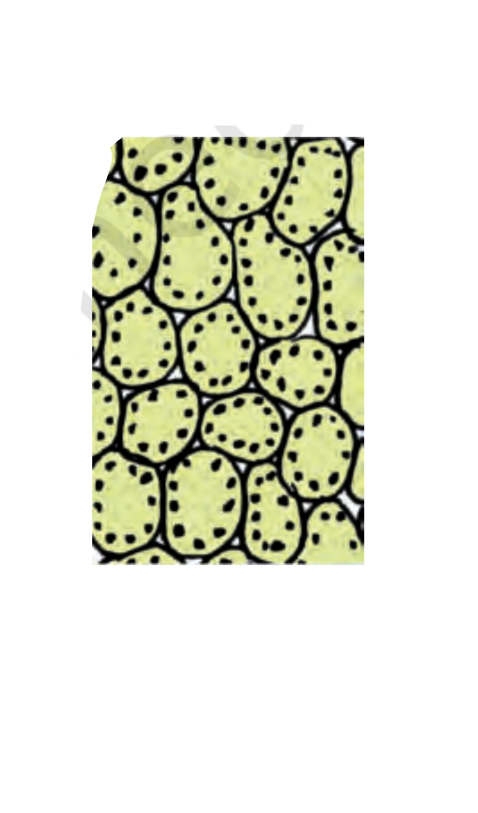
- Q2. Which spherical substructure in the nuclear diagram is the site of rRNA synthesis?
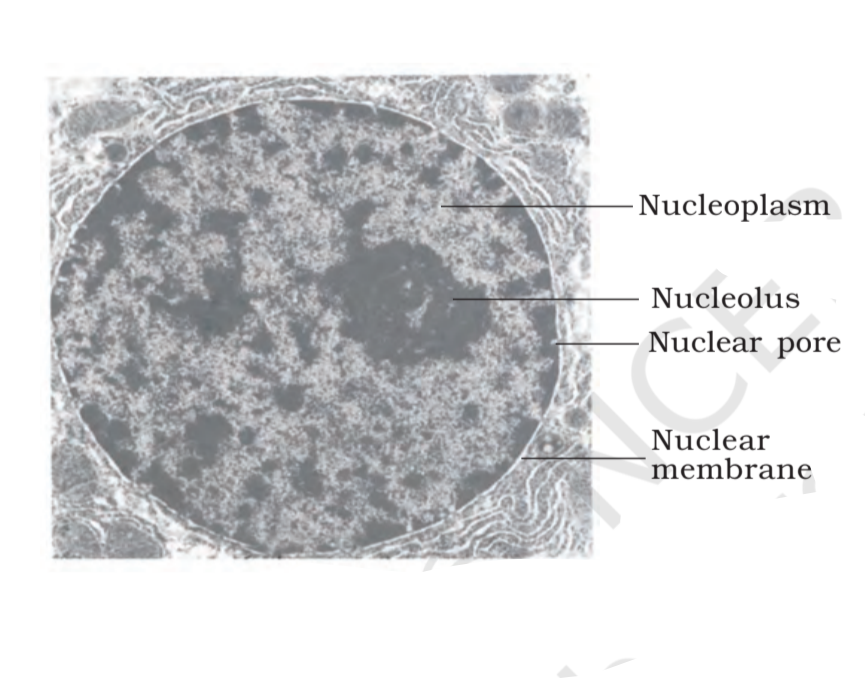
- Q3. Match the scientists with their discoveries: List I: Scientist A. Robert Brown B. Antonie Leeuwenhoek C. Schleiden D. Virchow List II: Discovery i. Live cell ii. Nucleus iii. Plant cell theory iv. Omnis cellula-e cellula
- Q4. Match the following components with their function: List I: Component A. Mesosome B. Ribosomes C. Gas vacuoles D. Inclusion bodies List II: Function i. Buoyancy ii. Protein synthesis iii. Respiration iv. Nutrient storage
- Q5. Assertion (A): All cells arise from pre-existing cells. Reason (R): Living organisms are composed of a single cell.
- Q6. Assertion (A): Centrosome is found in all eukaryotic cells. Reason (R): Centrosomes help in DNA replication.
- Q7. Who discovered the nucleus?
- Q8. What differentiates plant cells from animal cells according to Schwann?
- Q9. Who was the first to observe and describe a live cell?
- Q10. What was the contribution of Rudolf Virchow to cell theory?
You’ve practised 10 of 209 Cell: The Unit of Life questions in this set.
Practise all 209 + every chapter — free app →Sample NEET PYQs — Cell: The Unit of Life
Which of the following is not a feature of the plasmids?
- A. Independent replication
- B. Circular structure
- C. Transferable
- D. Single – stranded
Explanation: Answer: (D) Single – stranded Solution: Plasmids are small circular DNA molecules present outside the genomic DNA in many bacteria; like all DNA they are double-stranded, not single-stranded, so this is not a feature. Plasmids replicate independently, are circular, and can be transferred (used to monitor bacterial transformation with foreign DNA), making options 1, 2 and 3 valid features. Hence the odd one out is "single-stranded." NCERT Reference: Ch 8, p.90, lines 10–16: "many bacteria have small circular DNA outside the genomic DNA. These smaller DNA are called plasmids. The plasmid DNA confers certain unique phenotypic characters to such bacteria."
Select the wrong statement
- A. Bacteria cell wall is made up of peptidoglycan
- B. Pili and fimbriae are mainly involved in motility of bacterial cells
- C. Cyanobacteria lack flagellated cells
- D. Mycoplasma is a wall – less microorganism
Explanation: Answer: (B) Pili and fimbriae are mainly involved in motility of bacterial cells Solution: This is the wrong statement. NCERT explicitly states that besides flagella, pili and fimbriae are surface structures of bacteria but do not play a role in motility; motility is due to flagella. The other statements are correct: bacterial cell wall is peptidoglycan-based, cyanobacteria lack flagellated cells, and Mycoplasma is the wall-less prokaryote. NCERT Reference: Ch 8, p.91, lines 13-14: "Pili and Fimbriae are also surface structures of the bacteria but do not play a role in motility."
A cell organelle containing hydrolytic enzymes is
- A. Lysosome
- B. Microsome
- C. Ribosome
- D. Mesosome
Explanation: Answer: (A) Lysosome Solution: Lysosomes are membrane-bound vesicular structures very rich in almost all types of hydrolytic enzymes (hydrolases) that are optimally active at acidic pH. Microsomes and mesosomes are not defined by hydrolytic enzymes, and ribosomes are the site of protein synthesis. Therefore the organelle containing hydrolytic enzymes is the lysosome. NCERT Reference: Ch 8, p.96, lines 25–29: "These are membrane bound vesicular structures formed by the process of packaging in the golgi apparatus. The isolated lysosomal vesicles have been found to be very rich in almost all types of hydrolytic enzymes (hydrolases – lipases, proteases, carbohydrases) optimally active at the acidic pH."
Mitochondria and chloroplast are: (i) Semi – autonomous organelles (ii) Formed by division of pre – existing organelles and they contain DNA but lack protein synthesizing machinery Which one of the following options is correct?
- A. Both (i) and (ii) are correct
- B. (ii) is true but (i) is false
- C. (i) is true but (ii) is false
- D. Both (i) and (ii) are false
Explanation: Answer: (C) (i) is true but (ii) is false Solution: Mitochondria and chloroplasts are semi-autonomous organelles because both are double-membrane bound, contain their own circular DNA and 70S ribosomes, and divide by fission, so statement (i) is true. Statement (ii) is false: although they do contain DNA, they are NOT lacking protein-synthesising machinery — the mitochondrial matrix (and chloroplast stroma) possess ribosomes and the components required for protein synthesis. Hence only (i) is correct. NCERT Reference: Ch 8, p.97, lines 13–16: "The matrix also possesses single circular DNA molecule, a few RNA molecules, ribosomes (70S) and the components required for the synthesis of proteins. The mitochondria divide by fission."
Frequently Asked Questions — Cell: The Unit of Life NEET
How many questions from Cell: The Unit of Life appear in NEET?+
How many Cell: The Unit of Life questions does MedicNEET have?+
Is there a Hindi and English app for Cell biology NEET practice?+
What is the NEET weightage of Cell: The Unit of Life?+
How to prepare for Cell: The Unit of Life in NEET 2027?+
What are ReNEET 2026-style reasoning Cell: The Unit of Life questions?+
Are these Cell: The Unit of Life MCQs free to practise?+
Practise Cell: The Unit of Life — Free
All 307+ Cell: The Unit of Life questions · ReNEET 2026 reasoning + every format · Bilingual Hindi & English · NCERT-mapped explanations · No paywall
📲 Download MedicNEET App (Free)