How many questions from Microbes in Human Welfare in NEET?
1–2 questions from Microbes in Human Welfare appear in NEET every year (4–8 marks, ~2% of NEET Biology). High-yield: fermentation (lactobacillus, yeast), sewage treatment (BOD), biogas (methanogens), antibiotics (penicillin), biofertilizers (Rhizobium, Azospirillum), biocontrol (Bacillus thuringiensis). Practice all 442 questions free in bilingual Hindi & English in the MedicNEET app.
Year-wise NEET Questions — Microbes in Human Welfare
| Year | Questions | Marks |
|---|---|---|
| NEET 2016 | 6 | 24 |
| NEET 2017 | 2 | 8 |
| NEET 2018 | 1 | 4 |
| NEET 2019 | 6 | 24 |
| NEET 2020 | 2 | 8 |
| NEET 2021 | 1 | 4 |
| NEET 2022 | 1 | 4 |
| NEET 2024 | 1 | 4 |
| NEET 2025 | 3 | 12 |
| NEET 2026 | 5 | 20 |
Practise Microbes in Human Welfare MCQs — Free
Every Microbes in Human Welfare question format NEET uses, starting with the newest ReNEET 2026-style reasoning MCQs. Tap an option for the answer + NCERT explanation.
✨ Microbes in Human Welfare — ReNEET 2026-Style Reasoning Questions
The newest, most exam-current format — reasoning-based questions modelled on ReNEET 2026. This is where NEET is heading; practise the pattern before the exam does.
- Q1. Why is milk partially digested during curdling?
- Q2. Why is 'toddy' considered a microbial product?
- Q3. Why was the discovery of streptokinase significant in medical therapy?
- Q4. How does Lactobacillus contribute to industrial production?
- Q5. What advantage does sedimentation in primary treatment offer?
- Q6. How long has microbial sewage treatment been practiced?
- Q7. Why are methanogenic archaebacteria used in biogas production systems?
- Q8. How does the rumen microbial system benefit rural biogas plants?
- Q9. Why is it important to modify Streptokinase through genetic engineering before use?
- Q10. Why are ladybird beetles considered ideal for biological control?
You’ve practised 10 of 92 Microbes in Human Welfare questions in this set.
Practise all 92 + every chapter — free app →📑 Microbes in Human Welfare — NEET 2025 & 2026 Long-Form MCQs
The long, multi-statement questions that dominated NEET 2025 & 2026 — each covers 5-6 concepts at once, so they double as fast full-chapter revision.
- Q1. Which of the above statements are correct regarding microbial processes in household products? S1: Lactic Acid Bacteria (LAB) enhance the nutritional quality of curd by increasing its Vitamin C content. S2: The puffed-up appearance of idli dough is primarily due to the production of CO2 gas during bacterial fermentation. S3: Toddy, a traditional drink from southern India, is prepared by the fermentation of palm sap, typically involving microbial activity that produces ethanol. S4: The characteristic large holes in Swiss cheese are formed due to methane gas released by Propionibacterium sharmanii. S5: Roquefort cheese acquires its distinct flavour and texture due to specific bacteria growing on its surface. S6: Microbes involved in curd formation produce acids that coagulate and partially digest milk proteins.
- Q2. Which of the following statements regarding microbial products and their applications are correct? S1: *Saccharomyces cerevisiae*, commonly known as brewer's yeast, is utilized for both bread-making and the commercial production of ethanol. S2: The puffed-up appearance of bread dough is primarily due to the production of CO₂ gas from the fermentation of sugars. S3: Wine and beer are typically produced with distillation, whereas whisky, brandy, and rum are produced without distillation of the fermented broth. S4: The characteristic large holes in Swiss cheese are due to the production of a large amount of CO₂ by *Propionibacterium sharmanii*. S5: *Clostridium butylicum* is commercially used for the production of citric acid, while *Aspergillus niger* produces butyric acid. S6: *Acetobacter aceti* is a bacterium involved in the production of acetic acid.
- Q3. Which of the above statements are correct? S1: Secondary treatment primarily involves the physical removal of suspended solids from the primary effluent through sedimentation and filtration. S2: Aeration tanks facilitate the vigorous growth of aerobic microbes, forming flocs, which are aggregations of bacteria and fungal filaments. S3: The Biochemical Oxygen Demand (BOD) of the effluent is significantly reduced during this stage due to the microbial consumption of organic matter. S4: The sediment, termed activated sludge, is completely sent for incineration after serving as an inoculum for primary treatment. S5: Secondary treatment effectively removes pathogenic microbes by anaerobic digestion processes occurring in the aeration tanks.
- Q4. Arrange the following steps in the typical sequence of operation for a domestic biogas plant: (I) Collection of bio-wastes and preparation of dung slurry. (II) Supply of generated biogas for cooking and lighting via an outlet pipe. (III) Microbial activity leading to the production of methane, CO₂, and H₂. (IV) Removal of spent slurry from a separate outlet for use as fertiliser. (V) Feeding the dung slurry into the concrete tank digester. (VI) Accumulation of gas under the floating cover, causing it to rise. (VII) Breakdown of complex cellulosic material by methanogens under anaerobic conditions.
You’ve practised 4 of 69 Microbes in Human Welfare questions in this set.
Practise all 69 + every chapter — free app →🧩 Microbes in Human Welfare — All-Format Questions — Match, Assertion-Reason, Statement & Image-Based
Every question format NEET uses — match-the-column, assertion-reason, statement-based, and image/diagram questions — not just plain MCQs. Each with an instant NCERT-referenced solution.
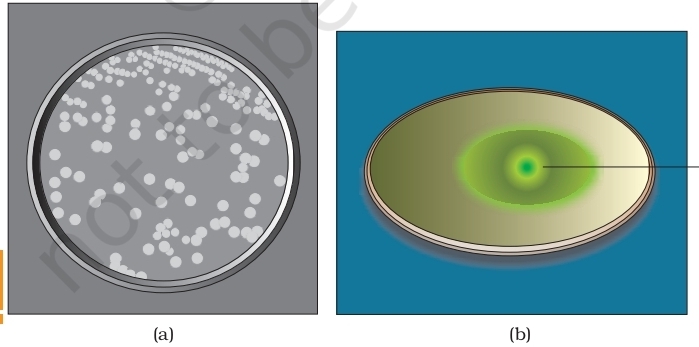
- Q1. Comparing dishes in the given figure, which colony type would likely represent faster growth rate under identical conditions?
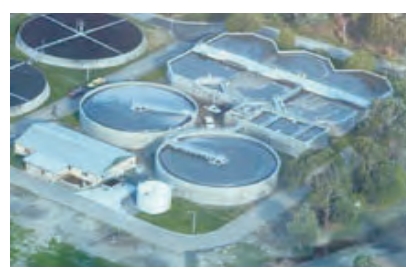
- Q2. What does the given figure represent in the context of microbial processes?
- Q3. Match the columns: Column I A. Lactobacillus B. Penicillium notatum C. Propionibacterium sharmanii D. Clostridium butylicum E. Acetobacter aceti Column II (i) Penicillin production (ii) Holes in Swiss cheese (iii) Acetic acid production (iv) Butyric acid production (v) Lactic acid fermentation
- Q4. Match the columns: Column I A. Dragonfly B. Trichoderma C. Ladybird beetle D. Baculoviruses (Nucleopolyhedrovirus) E. Bacillus thuringiensis Column II (i) Aphid control (ii) Pathogen biocontrol in roots (iii) Caterpillar-specific toxin (iv) Mosquito control (v) Narrow spectrum insecticide
- Q5. Assertion (A): A small amount of curd is added to fresh milk to make more curd. Reason (R): It acts as inoculum containing millions of lactic acid bacteria.
- Q6. Assertion (A): LAB decreases curd's nutritional quality. Reason (R): They synthesize vitamin B₁₂ during milk fermentation.
- Q7. Which statements about biofertilisers are correct? 1. Rhizobium fixes nitrogen in root nodules. 2. Azospirillum and Azotobacter fix nitrogen free-living in soil. 3. Glomus forms mycorrhiza and improves tolerance to salinity. 4. Cyanobacteria like Anabaena enrich paddy fields. 5. Biofertilisers reduce nutrient quality of soil.
- Q8. Which statements about microbial products are correct? 1. Aspergillus niger → citric acid 2. Clostridium butylicum → butyric acid 3. Streptococcus → streptokinase 4. Acetobacter aceti → lactic acid 5. Lipases are detergent additives
- Q9. Which of the following statements about antibiotics is/are correct? 1. Penicillium notatum was the source of Penicillin. 2. Fleming discovered Penicillin but its therapeutic value was realised by Chain and Florey. 3. Antibiotics are microbial products that inhibit or kill microbes. 4. Antibiotics are “anti-life” substances, harmful even to humans. 5. Antibiotics helped control whooping cough and leprosy.
- Q10. Arrange the following events in the correct sequence of biogas production: 1. Methanogens act on cellulosic material in cattle dung slurry 2. Biowaste and dung slurry are fed into a concrete tank 3. Gas accumulates under a floating cover and is supplied through pipes 4. Methane, CO₂ and H₂ are released as end products
You’ve practised 10 of 255 Microbes in Human Welfare questions in this set.
Practise all 255 + every chapter — free app →Sample NEET PYQs — Microbes in Human Welfare
Match Column-I with Column-II and select the correct option using the codes given below: Column-I a. Citric acid b. Cyclosporin A c. Statins d. Butyric acid Column-II (i) Trichoderma (ii) Clostridium (iii) Aspergillus (iv) Monascus Choose the correct option.
- A. a-(iii), b-(i), c-(ii), d-(iv)
- B. a-(iii), b-(i), c-(iv), d-(ii)
- C. a-(i), b-(iv), c-(ii), d-(iii)
- D. a-(iii), b-(iv), c-(i), d-(ii)
Explanation: Answer: (B) a-(iii), b-(i), c-(iv), d-(ii) Solution: Correct pairs are Citric acid–Aspergillus (iii), Cyclosporin A–Trichoderma (i), Statins–Monascus (iv), and Butyric acid–Clostridium (ii). Aspergillus niger produces citric acid and Clostridium butylicum produces butyric acid (both acid producers); cyclosporin A is from Trichoderma polysporum and statins from Monascus purpureus. NCERT Reference: Ch 8, p.153, line 12 — "acid producers are Aspergillus niger (a fungus) of citric acid, Acetobacter"
The primitive prokaryotes responsible for the production of biogas from the dung of ruminant animals, include the:
- A. Halophiles
- B. Thermoacidophiles
- C. Methanogens
- D. Eubacteria
Explanation: Answer: (3) Methanogens Solution: Biogas from cattle dung is produced by methanogens, anaerobic bacteria that grow on cellulosic material and produce methane. They are present in the rumen of cattle, so their dung (gobar) is rich in them. Halophiles and thermoacidophiles are other archaebacteria not involved in biogas; eubacteria is too general and incorrect. NCERT Reference: Ch 8, p.155, line 32 — "methanogens, and one such common bacterium is Methanobacterium."
Biochemical Oxygen Demand (BOD) may not be a good index for pollution for water bodies receiving effluents from
- A. Domestic sewage
- B. Dairy industry
- C. Petroleum industry
- D. Sugar industry
Explanation: Answer: (C) Petroleum industry Solution: BOD measures only the biodegradable (organic) load oxidised by microbes. Petroleum-industry effluent is largely non-biodegradable, so the BOD test underestimates its true pollution and is not a good index for it. Domestic sewage, dairy and sugar industry effluents are rich in biodegradable organic matter, so BOD reflects their pollution well. NCERT Reference: Ch 8, p.154, line 29 — "indirectly, BOD is a measure of the organic matter present"
A river with an inflow of domestic sewage rich in organic waste may result in:
- A. Drying of the river very soon due to algal bloom.
- B. Increased population of aquatic food web organisms.
- C. An increased production of fish due to biodegradable nutrients.
- D. Death of fish due to lack of oxygen.
Explanation: Answer: (4) Death of fish due to lack of oxygen. Solution: Domestic sewage rich in organic waste raises the BOD; aerobic microbes consume the organic matter and deplete dissolved oxygen in the water. With oxygen exhausted, fish and other aquatic organisms die. The greater the BOD of the waste water, the more its polluting potential, so options suggesting increased fish or food-web growth are wrong. NCERT Reference: Ch 8, p.154, line 30 — "The greater the BOD of waste water, more is its polluting"
Frequently Asked Questions — Microbes in Human Welfare NEET
How many questions from Microbes in Human Welfare come in NEET?+
How many Microbes in Human Welfare questions does MedicNEET have?+
What is the NEET weightage of Microbes in Human Welfare?+
Are Microbes in Human Welfare questions available in Hindi?+
Are Microbes in Human Welfare questions NCERT-based?+
What are ReNEET 2026-style reasoning Microbes in Human Welfare questions?+
Are these Microbes in Human Welfare MCQs free to practise?+
Practise Microbes in Human Welfare — Free
All 416+ Microbes in Human Welfare questions · ReNEET 2026 reasoning + every format · Bilingual Hindi & English · NCERT-mapped explanations · No paywall
📲 Download MedicNEET App (Free)