How many questions from Plant Kingdom in NEET?
3–4 questions from Plant Kingdom appear in NEET every year (12–16 marks, ~3% of NEET Biology). High-yield topics: algae classification (Chlorophyceae, Phaeophyceae, Rhodophyceae), bryophyta (Marchantia, Funaria), pteridophytes (Selaginella, Equisetum), and gymnosperm life cycles. Practice all 331 Plant Kingdom questions free in bilingual Hindi & English in the MedicNEET app.
Year-wise NEET Questions — Plant Kingdom
| Year | Questions | Marks |
|---|---|---|
| NEET 2016 | 6 | 24 |
| NEET 2017 | 6 | 24 |
| NEET 2018 | 4 | 16 |
| NEET 2019 | 4 | 16 |
| NEET 2020 | 5 | 20 |
| NEET 2021 | 7 | 28 |
| NEET 2022 | 2 | 8 |
| NEET 2023 | 8 | 32 |
| NEET 2024 | 1 | 4 |
| NEET 2025 | 5 | 20 |
| NEET 2026 | 3 | 12 |
Practise Plant Kingdom MCQs — Free
Every Plant Kingdom question format NEET uses, starting with the newest ReNEET 2026-style reasoning MCQs. Tap an option for the answer + NCERT explanation.
✨ Plant Kingdom — ReNEET 2026-Style Reasoning Questions
The newest, most exam-current format — reasoning-based questions modelled on ReNEET 2026. This is where NEET is heading; practise the pattern before the exam does.
- Q1. Why were fungi excluded from the plant kingdom in newer classification systems?
- Q2. Why is cytotaxonomy useful in resolving classification issues?
- Q3. Why are Chlorella and Spirulina considered potential food sources?
- Q4. Why do red algae appear red in deep water environments?
- Q5. Why do mosses play a role in ecological succession?
- Q6. Why is the gametophyte the most visible and persistent stage in bryophytes?
- Q7. How do heterosporous pteridophytes show an evolutionary trend towards seed habit?
- Q8. Why is double fertilisation unique to angiosperms?
- Q9. Why are endosperm and embryo products of double fertilisation?
- Q10. Why are angiosperms called 'flowering plants'?
You’ve practised 10 of 56 Plant Kingdom questions in this set.
Practise all 56 + every chapter — free app →📑 Plant Kingdom — NEET 2025 & 2026 Long-Form MCQs
The long, multi-statement questions that dominated NEET 2025 & 2026 — each covers 5-6 concepts at once, so they double as fast full-chapter revision.
- Q1. Which of the following statements about Natural Classification Systems, such as that proposed by Bentham and Hooker, are NOT correct? S1. They are primarily based on a few superficial morphological characters, similar to artificial systems. S2. These systems incorporate internal features like ultrastructure, anatomy, embryology, and phytochemistry. S3. They ignore the natural affinities among organisms, focusing solely on observable external traits. S4. Such systems avoid giving equal weightage to vegetative and sexual characters, acknowledging environmental influences on vegetative traits. S5. The classification by George Bentham and Joseph Dalton Hooker for flowering plants is an example of this system.
- Q2. Match the following algal classes with their major pigments and cell wall composition: Column I (Algal Class) A. Chlorophyceae B. Phaeophyceae C. Rhodophyceae Column II (Major Pigments) (i) Chlorophyll a, d, phycoerythrin (ii) Chlorophyll a, b (iii) Chlorophyll a, c, fucoxanthin Column III (Cell Wall Composition) (X) Cellulose, pectin and polysulphate esters (Y) Cellulose and algin (Z) Cellulose and pectose Which of the following represents the correct combination of Algal Class, Major Pigments, and Cell Wall Composition?
- Q3. Arrange the following events of sexual reproduction in bryophytes in the correct sequential order, starting from the establishment of the gametophyte: (i) Formation of haploid gametophyte from germinating spores. (ii) Production of multicellular antheridia and archegonia on the gametophyte. (iii) Release of biflagellate antherozoids and a single egg. (iv) Fusion of antherozoid and egg in water, leading to zygote formation. (v) Development of a multicellular sporophyte from the zygote, attached to the gametophyte. (vi) Meiosis in sporophyte cells to produce haploid spores.
- Q4. Match the following columns correctly regarding examples and characteristics of Pteridophytes. Column I (Pteridophyte) A. Lycopodium B. Selaginella C. Equisetum D. Dryopteris Column II (Class) i. Psilopsida ii. Lycopsida iii. Sphenopsida iv. Pteropsida Column III (Key Characteristic) p. Precursor to seed habit q. Dominant sporophyte with true roots, stem, and leaves r. Sporophylls form compact strobili s. Homosporous in nature
You’ve practised 4 of 44 Plant Kingdom questions in this set.
Practise all 44 + every chapter — free app →🧩 Plant Kingdom — All-Format Questions — Match, Assertion-Reason, Statement & Image-Based
Every question format NEET uses — match-the-column, assertion-reason, statement-based, and image/diagram questions — not just plain MCQs. Each with an instant NCERT-referenced solution.
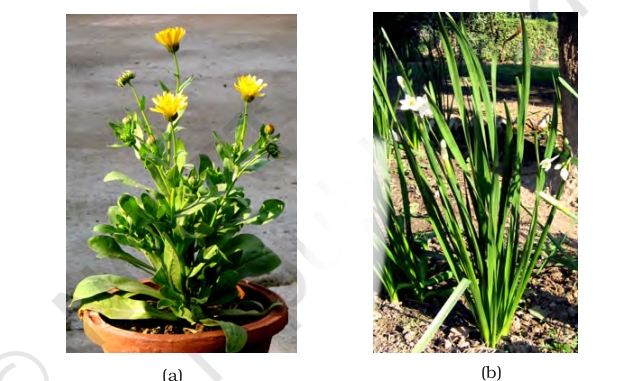
- Q1. Observe the two plant images (A and B) shown below: Column II – Plant Group 1. Dicotyledon 2. Monocotyledon 3. Gymnosperm 4. Pteridophyte
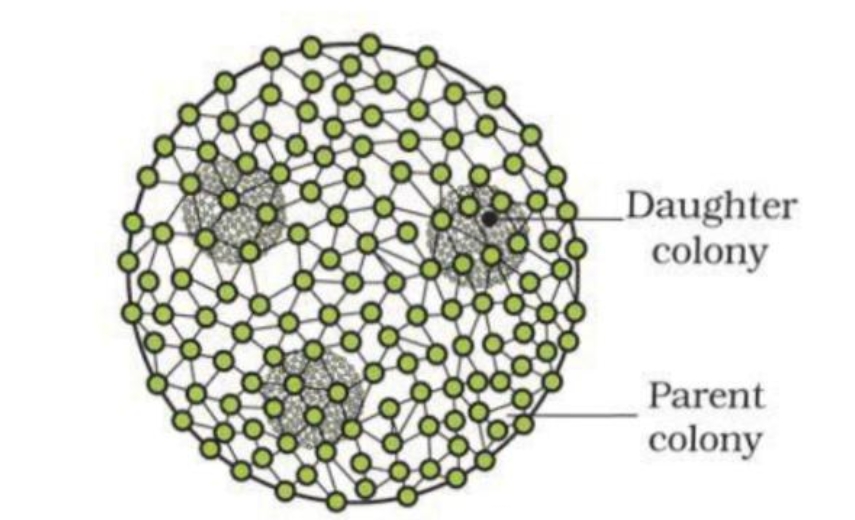
- Q2. Identify the organism shown in the diagram below:
- Q3. Match the classification types with their key feature: Column I: A. Artificial system B. Natural system C. Phylogenetic system D. Chemotaxonomy Column II: i. Uses evolutionary relationships ii. Uses chemical constituents iii. Based on morphological traits iv. Based on natural affinities
- Q4. Match the algal group with their respective storage food material: Column I: A. Chlorophyceae B. Phaeophyceae C. Rhodophyceae Column II: (i) Floridean starch (ii) Starch (iii) Laminarin and mannitol
- Q5. Assertion (A): Fungi are no longer classified under plant kingdom. Reason (R): Fungi have cell walls made of cellulose and are photosynthetic.
- Q6. Assertion (A): Numerical taxonomy gives equal importance to all observable characteristics. Reason (R): Numerical taxonomy is performed manually using dichotomous keys.
- Q7. Chemotaxonomy uses which of the following to classify plants?
- Q8. Natural system of classification is based upon:
- Q9. Who gave a natural classification system for flowering plants?
- Q10. Phylogenetic classification systems are based on:
You’ve practised 10 of 213 Plant Kingdom questions in this set.
Practise all 213 + every chapter — free app →Sample NEET PYQs — Plant Kingdom
Which one of the following statements is wrong?
- A. Algae increase the level of dissolved oxygen in the immediate environment
- B. Algin is obtained from red algae, and carrageenan from brown algae
- C. Agar - agar is obtained from Gelidium and Gracilaria
- D. Laminaria and Sargassum are used as food
Explanation: Answer: (B) Algin is obtained from red algae, and carrageenan from brown algae. Solution: This is the WRONG statement, hence the correct choice. NCERT clearly states the opposite: algin is obtained from BROWN algae and carrageen (carrageenan) from RED algae. The other statements are all true — algae are photosynthetic and raise dissolved oxygen, agar is obtained from Gelidium and Gracilaria, and Laminaria and Sargassum are used as food. NCERT Reference: Class XI Biology, Plant Kingdom, p.26, lines 10-13 — "produce large amounts of hydrocolloids (water holding substances), e.g., algin (brown algae) and carrageen (red algae) which are used commercially. Agar, one of the commercial products obtained from Gelidium and Gracilaria".
Which of the following is incorrectly matched?
- A. Ectocarpus - Fucoxanthin
- B. Ulothrix - Mannitol
- C. Porphyra - Floridian Starch
- D. Volvox - Starch
Explanation: Answer: (B) Ulothrix - Mannitol. Solution: Ulothrix is a green alga (Chlorophyceae) and its stored food is starch, not mannitol; mannitol is the reserve carbohydrate of brown algae (Phaeophyceae), so the Ulothrix–Mannitol pairing is incorrect. The other pairs are correct: Ectocarpus (Phaeophyceae) bears the pigment fucoxanthin, Porphyra (Rhodophyceae) stores floridean starch, and Volvox (Chlorophyceae) stores starch. NCERT Reference: Class XI Biology, Plant Kingdom, p.27, lines 3-4 — "Food is stored as complex carbohydrates, which may be in the form of laminarin or mannitol".
Which of the following statements is true?
- A. Most algal genera are diplontic
- B. Most bryophytes do not have haplo-diplontic life cycle
- C. All pteridophytes exhibit haplo-diplontic pattern
- D. Seed bearing plants follow haplontic pattern
Explanation: Answer: (C) All pteridophytes exhibit haplo-diplontic pattern. Solution: In pteridophytes both the multicellular diploid sporophyte and the multicellular haploid gametophyte (prothallus) are independent and free-living, which defines the haplo-diplontic life cycle; hence option C is true. Most algal genera are haplontic (not diplontic), bryophytes are haplo-diplontic (so the statement that they do not have it is false), and seed-bearing plants follow the diplontic (not haplontic) pattern. NCERT Reference: Class XI Biology, Plant Kingdom (Plant Life Cycles & Alternation of Generations — content rationalised from current reprint, grounded in pre-2023 NCERT text). The current reprint retains the supporting facts that pteridophytes have an independent free-living sporophyte and a free-living prothallus gametophyte at p.32, lines 12-13 ("Zygote thereafter produces a multicellular well-differentiated sporophyte which is the dominant phase of the pteridophytes") and p.31-32 ("free-living, mostly photosynthetic thalloid gametophytes called prothallus").
Conifers are adapted to tolerate extreme environmental conditions because of
- A. Broad hardy leaves
- B. Superficial stomata
- C. Thick cuticle
- D. Presence of vessels
Explanation: Answer: (C) Thick cuticle. Solution: Conifers face extremes of temperature, humidity and wind, and survive by minimising water loss. Their needle-like leaves reduce surface area while a thick cuticle and sunken (not superficial) stomata cut transpiration; hence the adaptive feature is the thick cuticle. Broad hardy leaves and superficial stomata are wrong as conifers have needle-like leaves and sunken stomata, and gymnosperms (the conifer group) lack vessels in their xylem (vessels are a typical angiosperm feature). NCERT Reference: Class XI Biology, Plant Kingdom, p.32, lines 40-42 — "In conifers, the needle-like leaves reduce the surface area. Their thick cuticle and sunken stomata also help to reduce water loss."
Frequently Asked Questions — Plant Kingdom NEET
How many questions from Plant Kingdom come in NEET?+
How many Plant Kingdom questions does MedicNEET have?+
What is the NEET weightage of Plant Kingdom?+
Are Plant Kingdom questions available in Hindi?+
Are Plant Kingdom questions NCERT-based?+
Can I take a timed test for Plant Kingdom NEET PYQs online?+
How to score full marks in Plant Kingdom for NEET?+
What is the best way to revise Plant Kingdom for NEET?+
What are ReNEET 2026-style reasoning Plant Kingdom questions?+
Are these Plant Kingdom MCQs free to practise?+
Practise Plant Kingdom — Free
All 313+ Plant Kingdom questions · ReNEET 2026 reasoning + every format · Bilingual Hindi & English · NCERT-mapped explanations · No paywall
📲 Download MedicNEET App (Free)