Wheatstone Bridge Questions for NEET 2027All 31 problems — MCQs, numericals & ReNEET 2026-style reasoning, with worked solutions
Every Wheatstone Bridge question NEET has asked and the newest exam-style ones — free, no login. Tap an option for an instant worked solution.
✨ Practise all 31 Wheatstone Bridge Questions
Wheatstone Bridge is a high-yield part of Current Electricity. This is the complete set — real NEET PYQs plus ReNEET 2026-style reasoning, each with an instant worked solution.
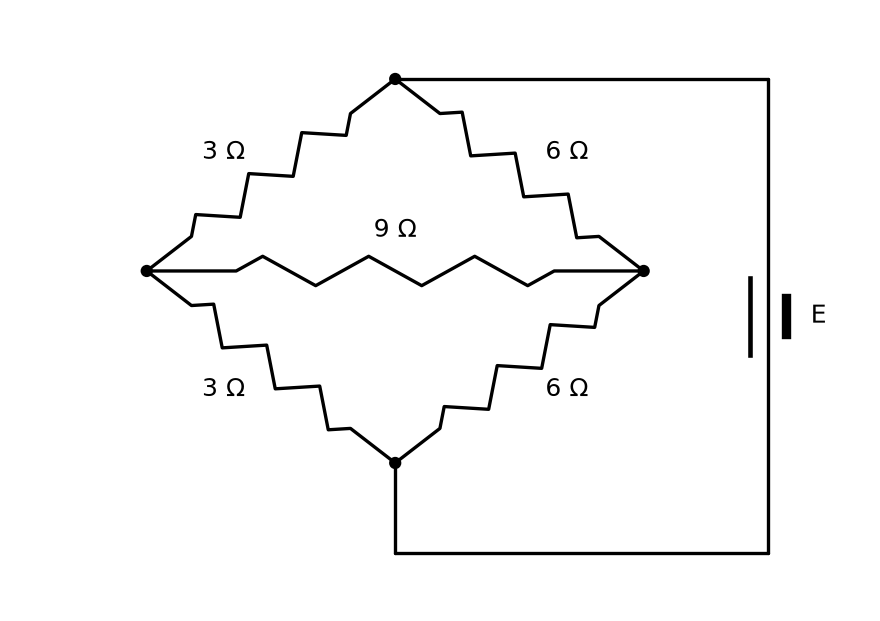
- Q1. In the network shown the four arms are P = 3 , Q = 6 , R = 3 , S = 6 with a 9 bridge arm, fed by a 9 V battery across A–B. The current from the battery is:
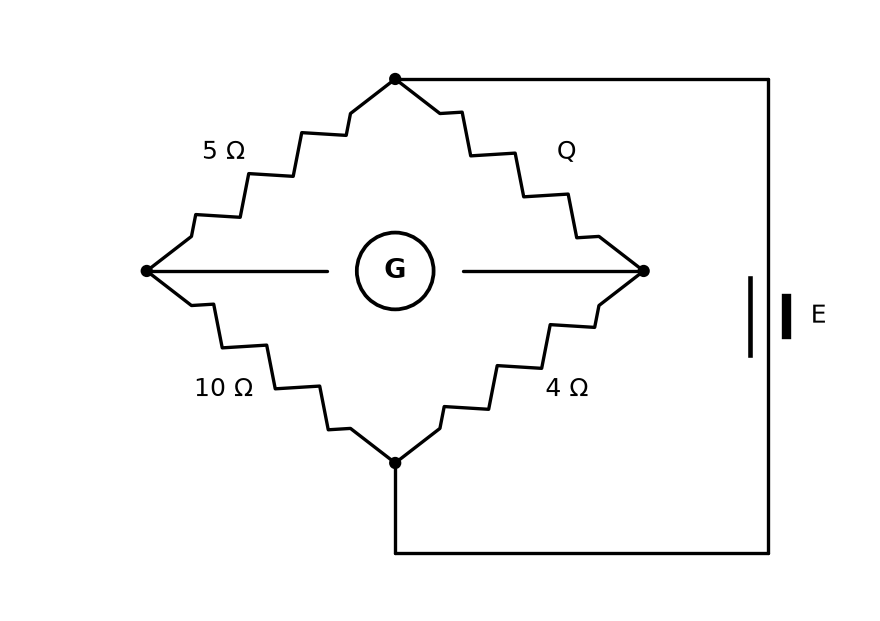
- Q2. The bridge is balanced with arms P = 5 , R = 10 (lower-left) and S = 4 (lower-right). The upper-right arm Q is:
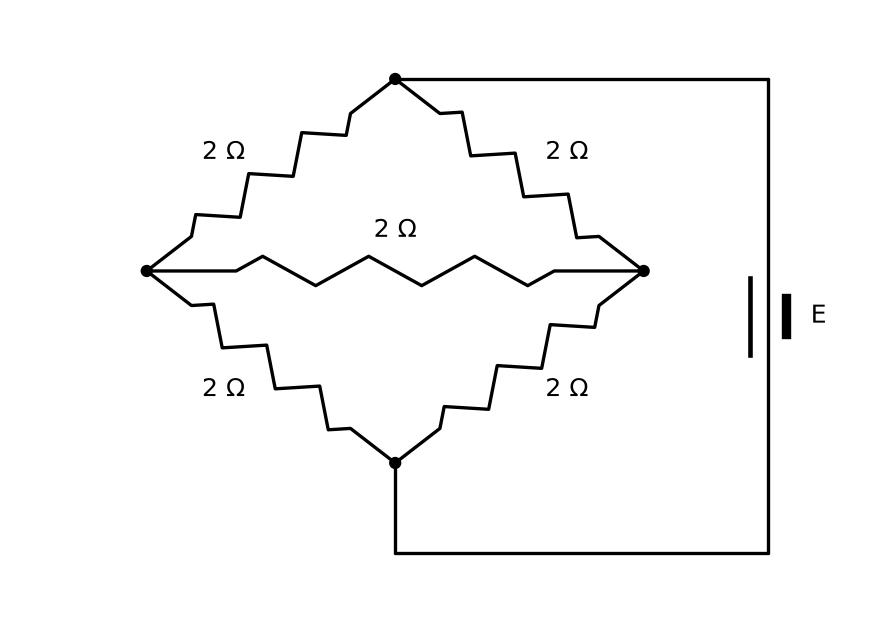
- Q3. In the symmetric bridge network shown all five resistors are 2 . The equivalent resistance between A and B is:
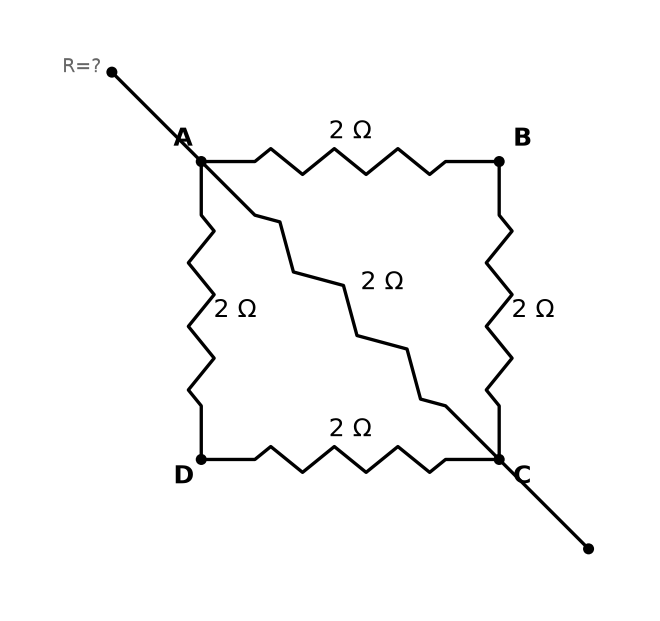
- Q4. A square ABCD has each side 2 and one diagonal AC of 2 . The equivalent resistance between A and C is:
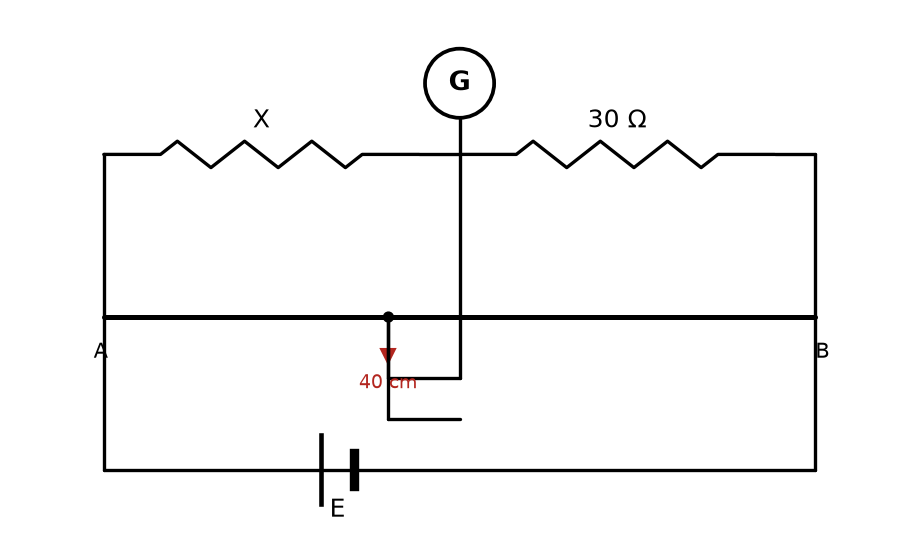
- Q5. In a metre-bridge, an unknown resistance X (left gap) is balanced against R = 30 (right gap); the balance point is at 40 cm from A. The value of X is:
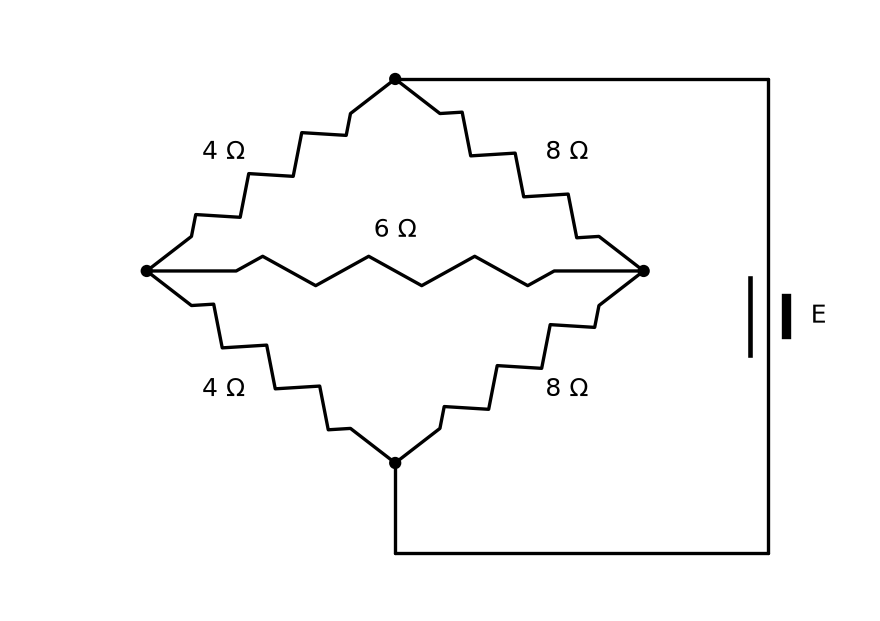
- Q6. A 6 bridge network has arms 4 , 8 , 4 , 8 (balanced) across a 12 V source A–B. The current drawn is:
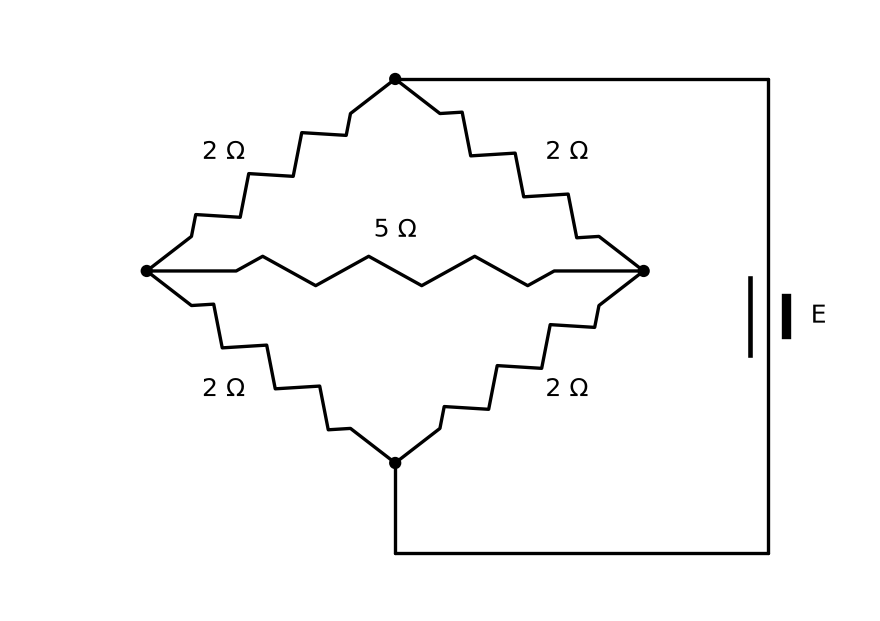
- Q7. Each arm of the bridge shown is 2 and the bridge (galvanometer) arm is 5 . A 4 V battery is connected across A and B. The current drawn from the battery is:
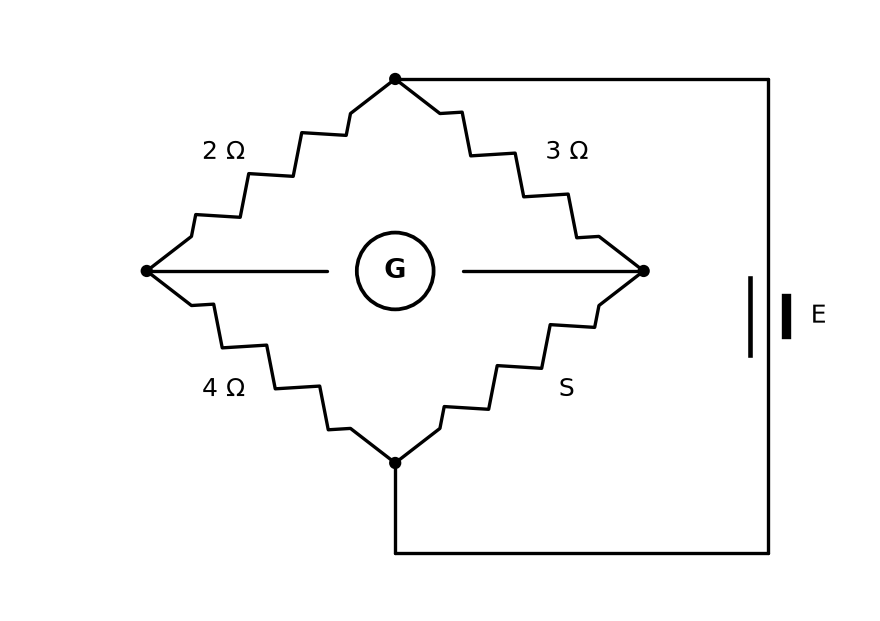
- Q8. For the bridge shown to be balanced, the arms P = 2 , Q = 3 and R = 4 . The fourth arm S must be:
- Q9. In a metre-bridge, R = 10 is in the left gap and an unknown S in the right gap; the null point is at 25 cm from A. The value of S is:
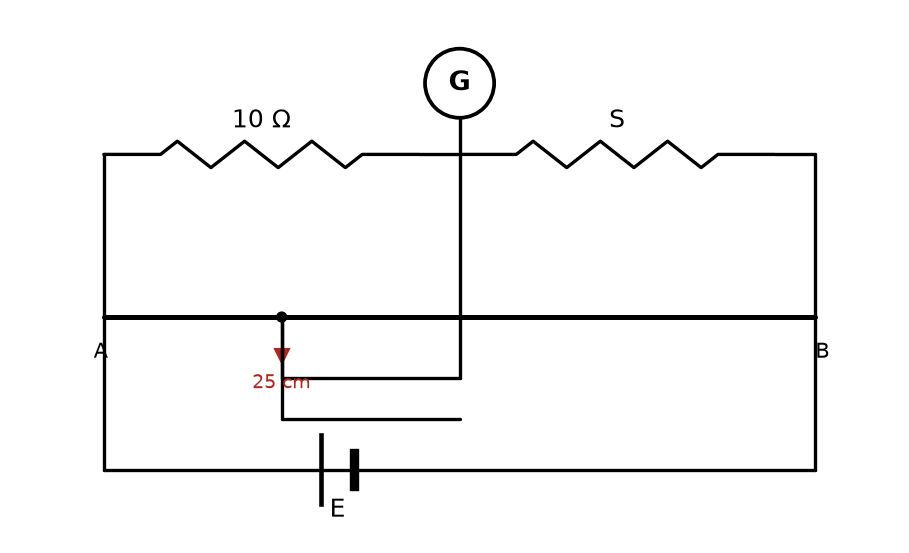
- Q10. A Wheatstone bridge is balanced (no galvanometer deflection) with arms P = 4 , Q = 6 , the lower-right arm S = 9 . The lower-left unknown arm X is:
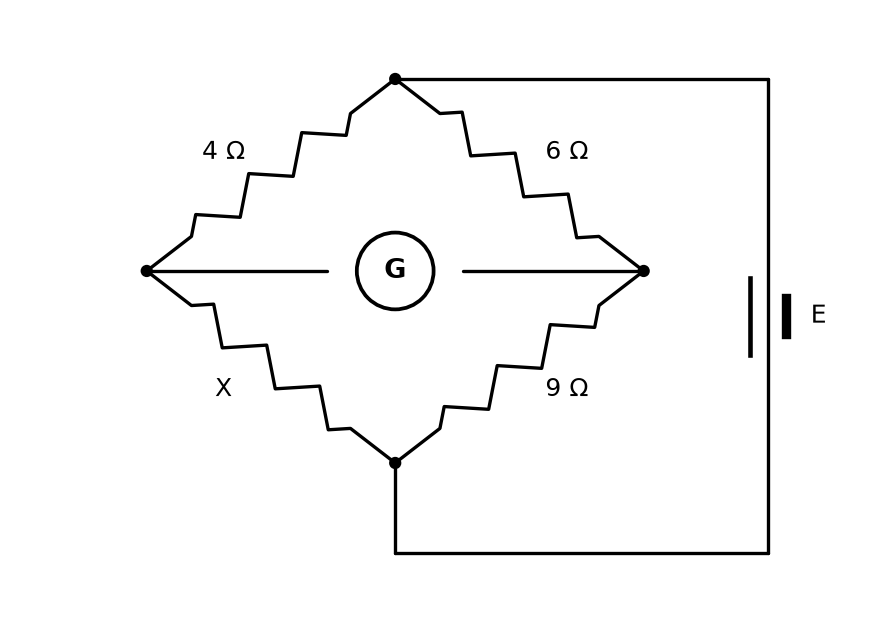
- Q11. In the balanced Wheatstone bridge shown the galvanometer shows no deflection. The arms are P = 10 , Q = 20 and R = 15 . The value of the unknown resistance S is:
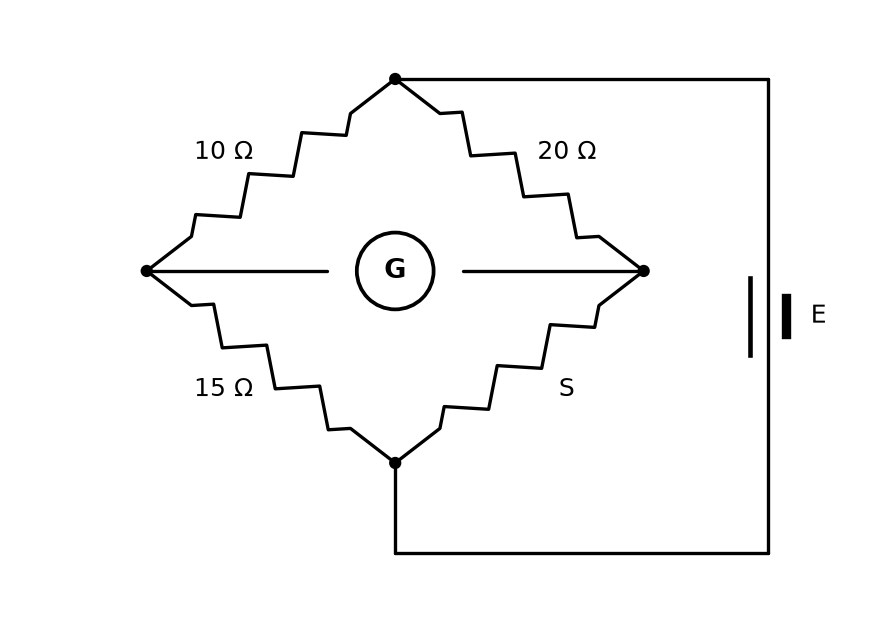
- Q12. A meter bridge is balanced when the null point is at 40 cm from the left end. If a resistance of 15 Ω is connected in the left gap, what is the unknown resistance in the right gap?
- Q13. A meter bridge wire of total length 100 cm has a resistance of 9 Ω. An unknown resistance X is connected in the left gap and a standard resistance of 6 Ω is connected in the right gap. The balance point is obtained at 40 cm from the left end. What is the value of the unknown resistance X?
- Q14. A meter bridge is balanced with a resistance of 15 Ω in the left gap and an unknown resistance X in the right gap. The jockey makes contact at 60 cm from the left end of the meter bridge wire. What is the value of the unknown resistance X?
- Q15. In a Wheatstone bridge circuit, four resistors are connected: R₁ = 5 Ω, R₂ = 10 Ω, R₃ = 15 Ω, and R₄ is unknown. When the galvanometer shows zero deflection (balanced condition), what is the value of R₄?
- Q16. In a Wheatstone bridge circuit, four resistances are arranged as follows: P = 5 Ω, Q = 10 Ω, R = 8 Ω, and S is unknown. The bridge is balanced (galvanometer shows zero deflection). If the positions of the battery and galvanometer are now interchanged, will the bridge remain balanced? If yes, what is the value of S?
- Q17. In a meter bridge experiment, a resistance R is connected in the left gap and a resistance of 15 Ω is connected in the right gap. The null point is obtained at 60 cm from the left end. What is the value of the unknown resistance R?
- Q18. A meter bridge is balanced when the jockey is at 40 cm from the left end. If a resistance of 6 Ω is in the left gap, what is the unknown resistance in the right gap?
- Q19. In a meter bridge experiment, an unknown resistance X is placed in the left gap and a resistance of 6 Ω is placed in the right gap. The null point is obtained at 40 cm from the left end. What is the value of the unknown resistance X?
- Q20. In a balanced Wheatstone bridge the galvanometer (middle arm) carries no current. If this galvanometer is now removed from the circuit, the current drawn from the battery:
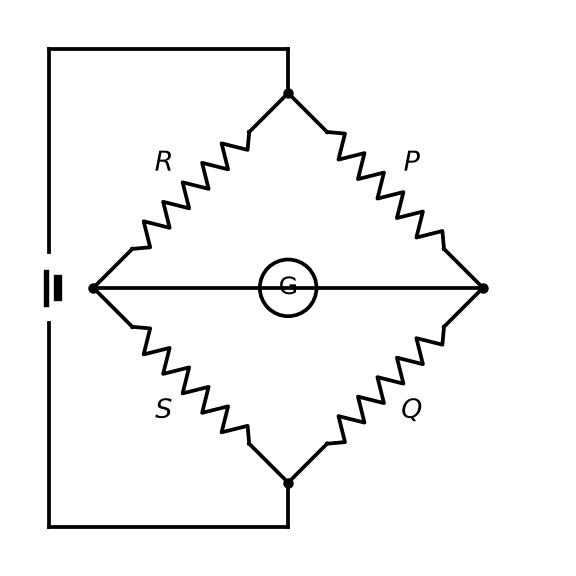
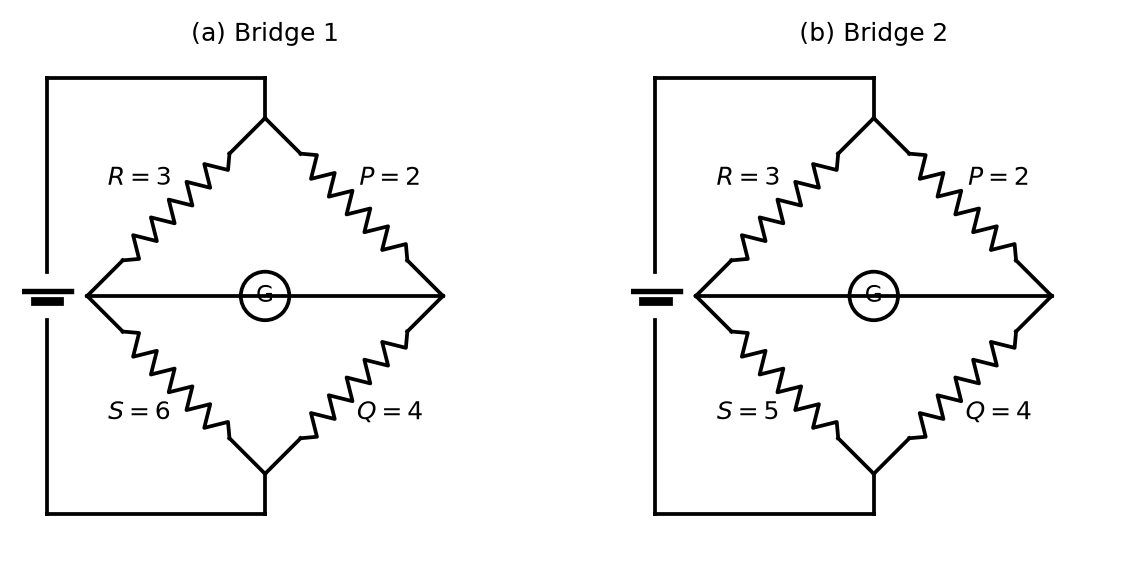
- Q21. The figure shows two Wheatstone bridges with their arm values marked. Which bridge is balanced (no galvanometer current)?
- Q22. A Wheatstone bridge is balanced. If the cell (battery) and the galvanometer are now interchanged with each other, the bridge will:
- Q23. A Wheatstone bridge (arms ) is balanced when:
- Q24. A Wheatstone bridge with arms , , and (the galvanometer joins the – junction to the – junction) is initially balanced. The following changes are made one at a time: (i) the battery emf is doubled; (ii) the cell and the galvanometer are interchanged; (iii) the galvanometer is replaced by one of larger resistance; (iv) only the resistances in arms and are interchanged with each other. How many of these changes leave the bridge still balanced?
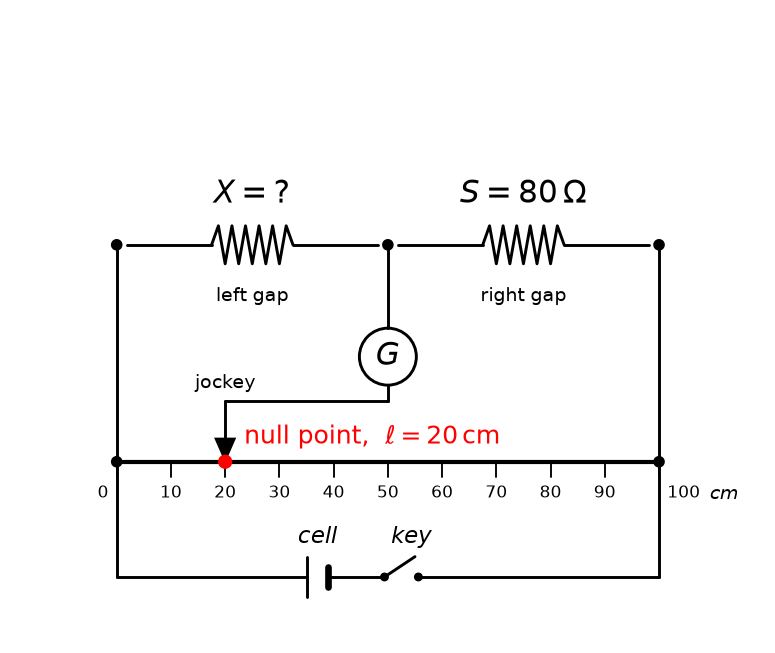
- Q25. The metre-bridge shown is used to measure the unknown resistance (in the left gap) against the known resistance (in the right gap), and the null point occurs at the position marked on the wire. Because a balance point so close to one end gives a large percentage error, the experiment is to be repeated with a different known resistance so that the null falls near the middle of the wire. The known resistance that should now be used is:
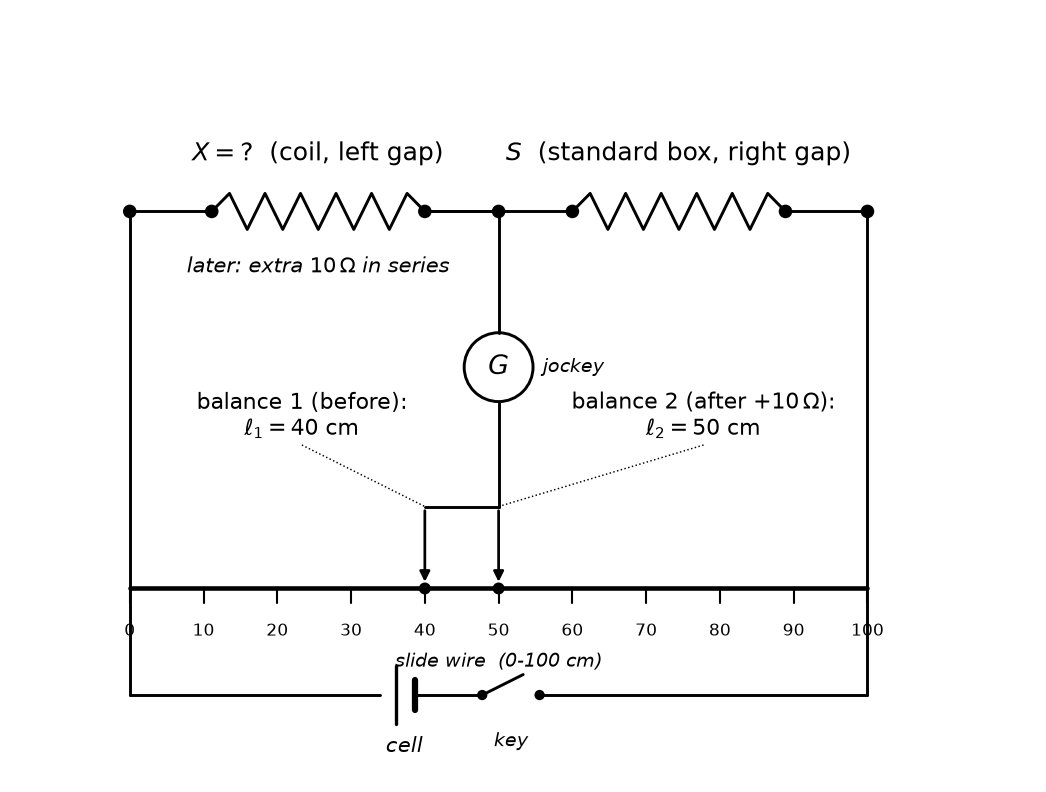
- Q26. In the metre (slide-wire) bridge shown, an unknown coil sits in the left gap and a standard box in the right gap; the jockey first gives a null at the balance length marked. An extra spool is then joined in series with the left-gap coil (nothing else is touched), and the jockey now finds silence at the balance length marked. Using the balance lengths shown on the figure, the original value of the coil is:
- Q27. A potentiometer wire is long and a steady potential difference of is maintained across its full length. The potential gradient along the wire is:
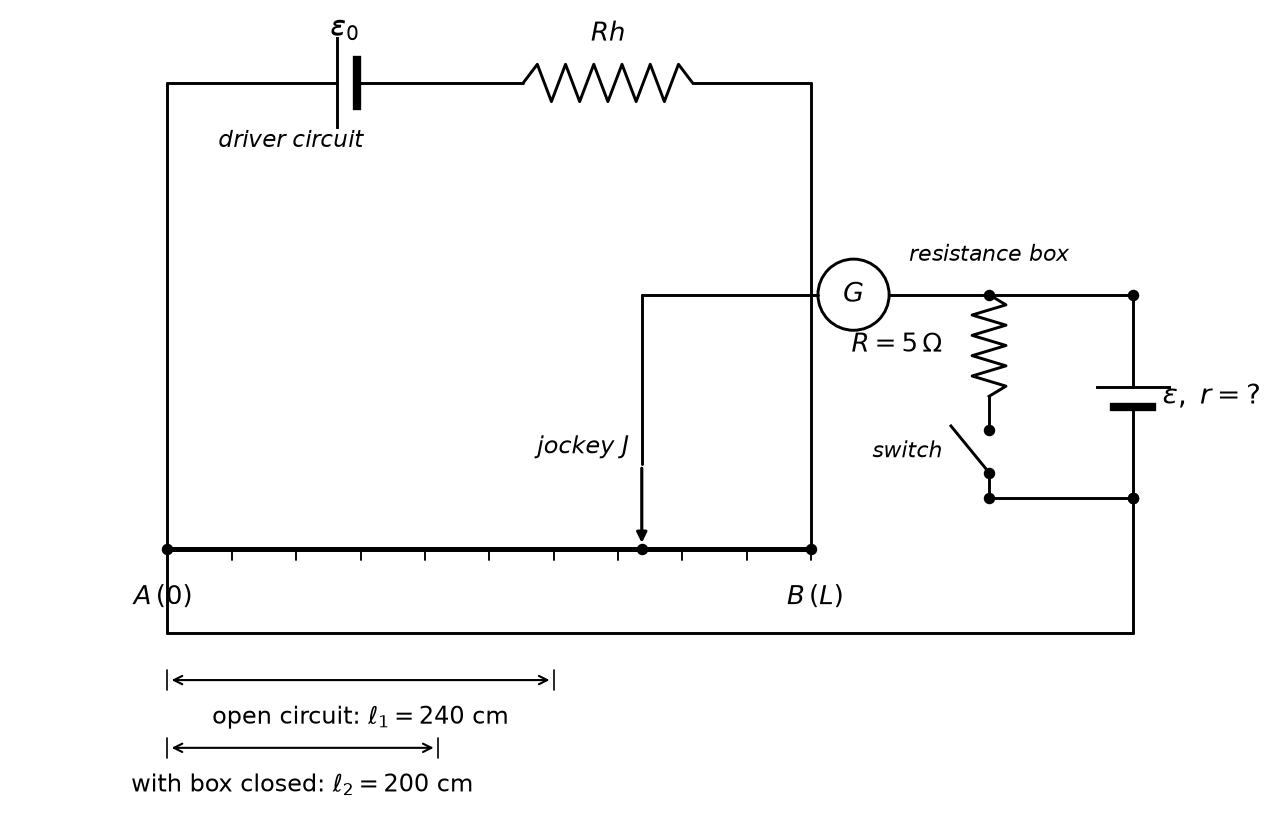
- Q28. In the potentiometer circuit shown, a driver cell (with rheostat Rh) is connected across the uniform wire –, and the test cell is connected through a galvanometer to the jockey . On open circuit the test cell balances at the length marked in the figure. When the resistance box is switched in (connected across the cell's terminals), the balance length falls to . Using the values shown, the internal resistance of the cell is:
- Q29. Given below are two statements. Statement I: A potentiometer measures the emf of a cell more accurately than a voltmeter does. Statement II: At the balance point the potentiometer draws no current from the cell, so there is no potential drop across the cell's internal resistance. In the light of the above statements, choose the correct answer:
- Q30. Which of the following statements is CORRECT regarding a Wheatstone bridge?
- Q31. In a Wheatstone bridge circuit, the galvanometer shows null deflection. What does this observation directly imply about the galvanometer arm?
Struggling with the tough-level Wheatstone Bridge questions? The ReNEET 2026 question paper changed — it’s harder than ever. Download the free MedicNEET app to climb from the easiest level to the toughest in Wheatstone Bridge and every concept.
Download the app — climb every level →Wheatstone Bridge — FAQs
How many Wheatstone Bridge questions are on this page?
All 31 — this is a complete Wheatstone Bridge question set for NEET 2027, covering MCQs, numericals and problems drawn from real previous-year questions and ReNEET 2026-style reasoning. Every question shows a worked solution the moment you answer.
Are these Wheatstone Bridge questions free?
Yes — practise all 31 here free, no login. Wheatstone Bridge is part of the Current Electricity chapter; the free MedicNEET app then lets you practise it the way it actually raises your score — adaptively.
What is the best way to master Wheatstone Bridge for NEET?
Practising every Wheatstone Bridge problem once (as you can here) fixes the patterns; retaining them till the exam needs spaced repetition. The MedicNEET app's Predicted Batch schedules Wheatstone Bridge and every other topic one step ahead of where you are, so you revise exactly when you're about to forget — that's what converts practice into marks.