Year-wise Weightage (2016–2026)

YearQuestions AskedMarks
2026520
2025312
2024416
2023936
2022416
Show earlier years (2016–2021)
2021520
2020520
2019520
2018312
201728
2016416
Q1
NEET 2016 Phase 1Kirchhoff laws

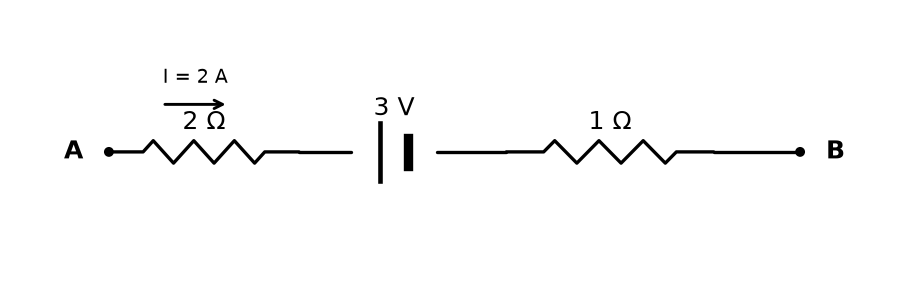
The potential difference (V_A - V_B) between points A and B in the figure (current 2 A from A to B through 2 $\Omega$, a 3 V cell, then 1 $\Omega$) is:
Current Electricity NEET PYQ diagram
Q2
NEET 2016 Phase 1Joule heating

The charge through a resistance R varies with time as Q = at - bt$^{2}$ (a, b positive constants). The total heat produced in R is:

Q3
NEET 2016 Phase 1Electric power

A filament bulb (500 W, 100 V) is to be used in a 230 V supply. A resistance R is connected in series so it works perfectly at 500 W. The value of R is:

Q4
NEET 2016 Phase 1Potentiometer

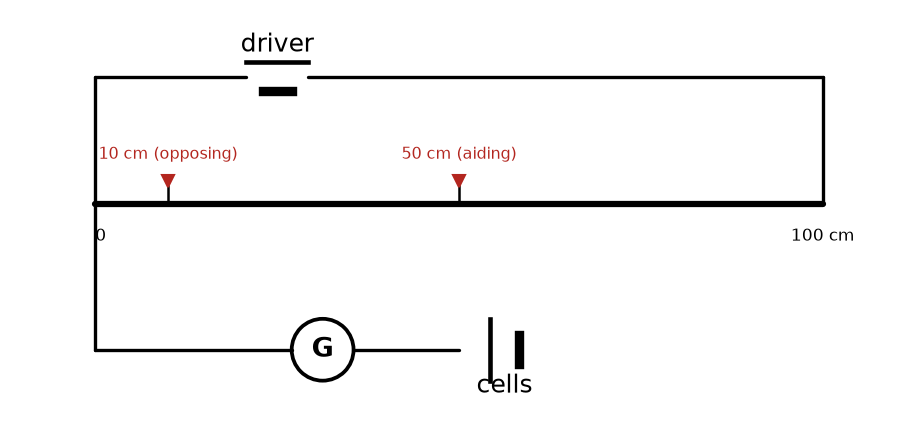
A potentiometer wire is 100 cm long with a constant PD across it. Two cells in series give balance at 50 cm (aiding) and 10 cm (opposing). The ratio of emfs is:
Current Electricity NEET PYQ diagram
Q5
NEET 2017Wire resistance

The resistance of a wire is R. If it is melted and stretched to n times its original length, its new resistance is:

Q6
NEET 2017Potentiometer

A potentiometer is an accurate and versatile device to measure emf because the method involves:

Q7
NEET 2018Resistivity

A carbon resistor of (47 ± 4.7) k$\Omega$ is to be marked with rings of different colours for its identification. The colour code sequence will be:

Q8
NEET 2018Cells combined

A set of 'n' equal resistors (R each) in series with a battery (emf E, internal resistance R) draws current I. In parallel they draw 10I. The value of n is:

Q9
NEET 2018Short circuit

A battery of n identical cells (each internal resistance r) in series is short-circuited and the current I measured. Which graph shows I vs n?
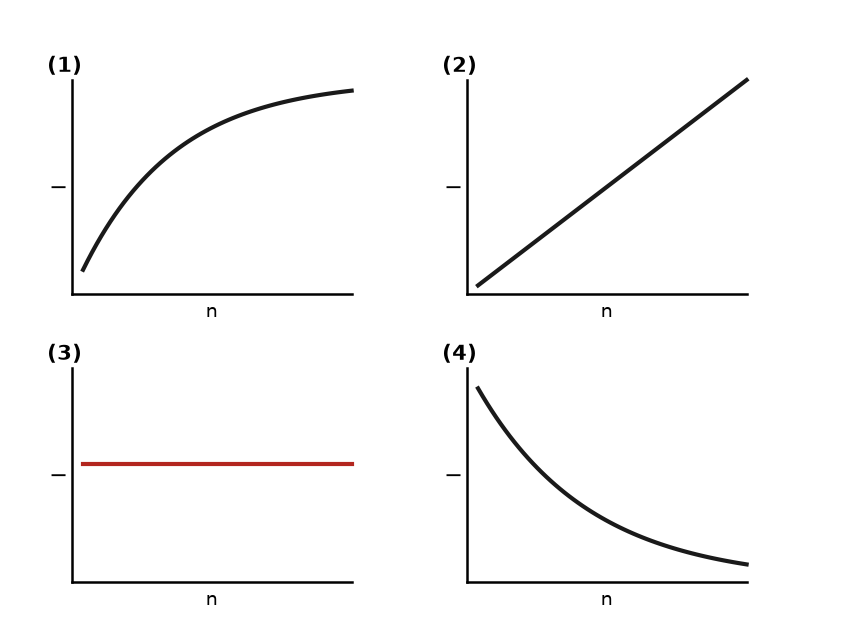
Current Electricity NEET PYQ diagram
Q10
NEET 2019Power split

Six similar bulbs are connected as shown with a DC source of emf E and zero internal resistance. The ratio of power consumed when (i) all glow to (ii) when two of section A and one of section B glow, is:
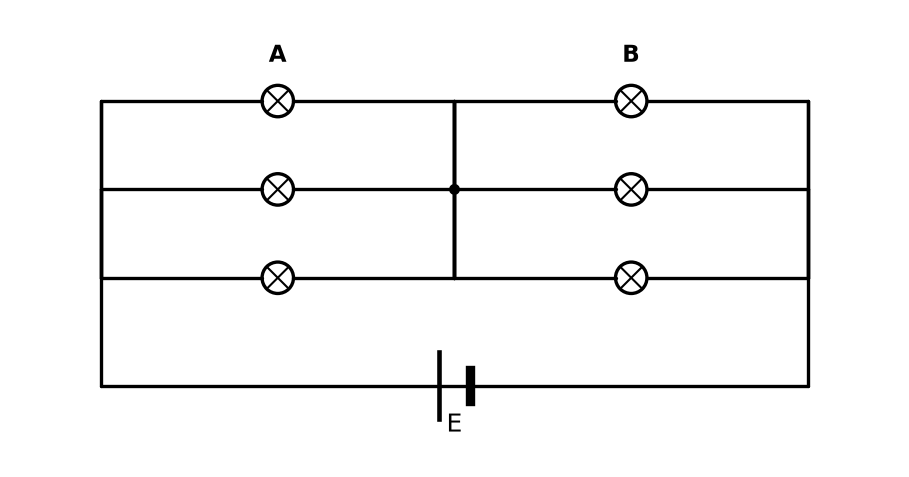
Current Electricity NEET PYQ diagram
Q11
NEET 2019 OdishaTerminal voltage

The reading of an ideal voltmeter in the circuit shown is:
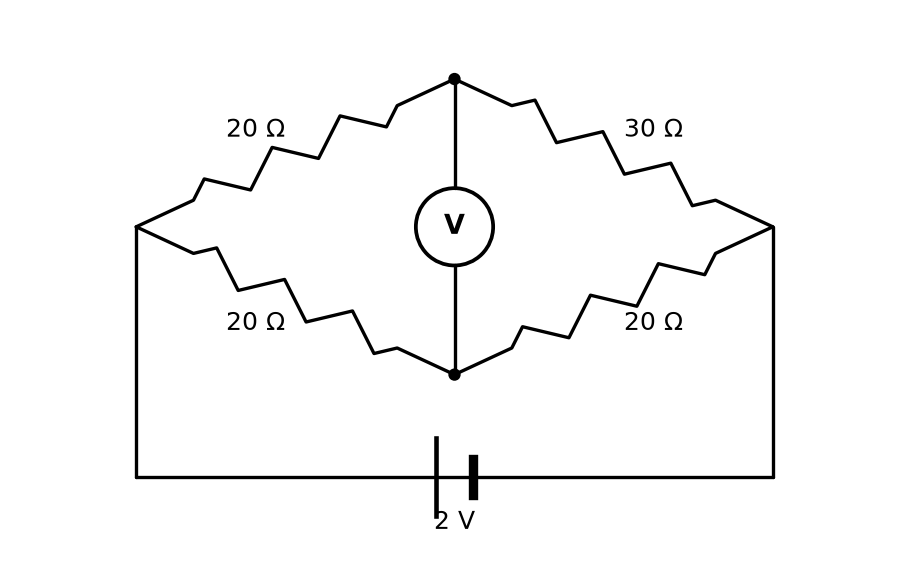
Current Electricity NEET PYQ diagram
Q12
NEET 2019Kirchhoff laws

In the two circuits shown (same 10 V cell, same 10 $\Omega$ resistor; ideal meters, only the order of V and A swapped), the readings of the voltmeters and ammeters will be:
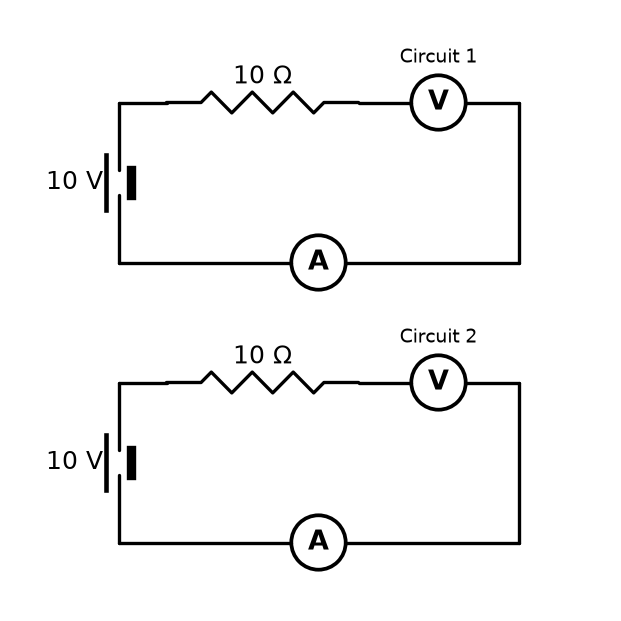
Current Electricity NEET PYQ diagram
Q13
NEET 2019Joule heating

Which of the following acts as a circuit protecting device?

Q14
NEET 2019 OdishaMeter bridge

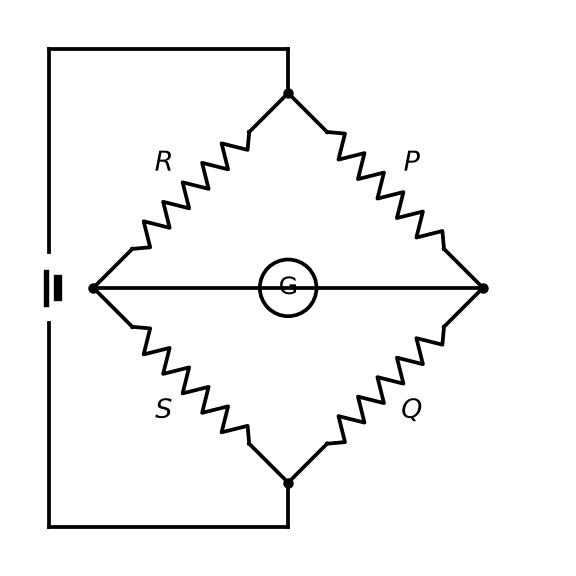
A metre bridge is balanced with P/Q = l$_{1}$/l$_{2}$. If the positions of galvanometer and cell are interchanged, will it balance, and what is the condition?
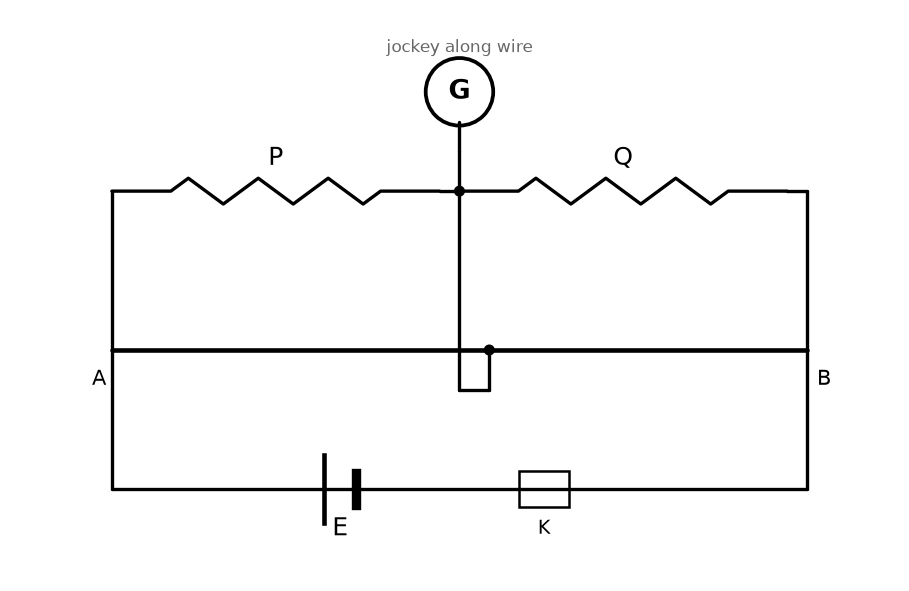
Current Electricity NEET PYQ diagram
Q15
NEET 2020Mobility

A charged particle having drift velocity 7.5$\times$10$^{-4}$ m s$^{-1}$ in an electric field of 3$\times$10$^{-10}$ V m$^{-1}$ has a mobility (in m$^{2}$ V$^{-1}$ s$^{-1}$) of:

Q16
NEET 2020Meter bridge

A resistance wire in the left gap of a metre bridge balances a 10 $\Omega$ resistance in the right gap at a point dividing the wire 3:2. If the wire length is 1.5 m, the length corresponding to 1 $\Omega$ is:

Q17
NEET 2020R vs temp

The colour code of a resistance is given (Yellow, Violet, Brown, Gold). The values of resistance and tolerance, respectively, are:
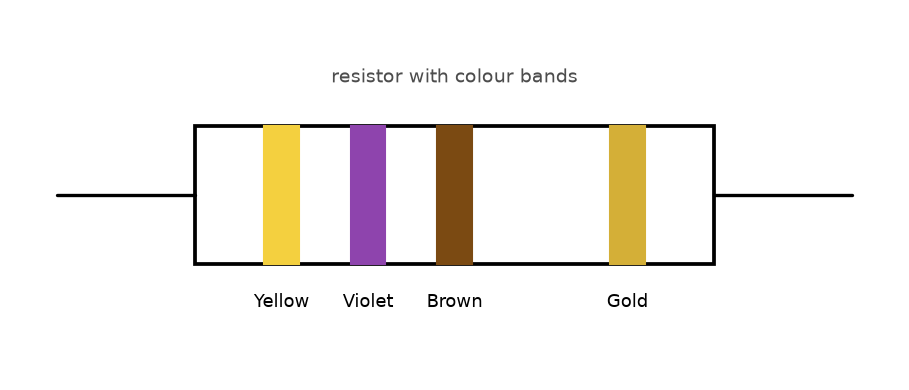
Current Electricity NEET PYQ diagram
Q18
NEET 2020Sign of alpha

The solids which have the negative temperature coefficient of resistance are:

Q19
NEET 2020R vs temp

Which of the following graphs represents the variation of resistivity ($\rho$) with temperature (T) for copper?
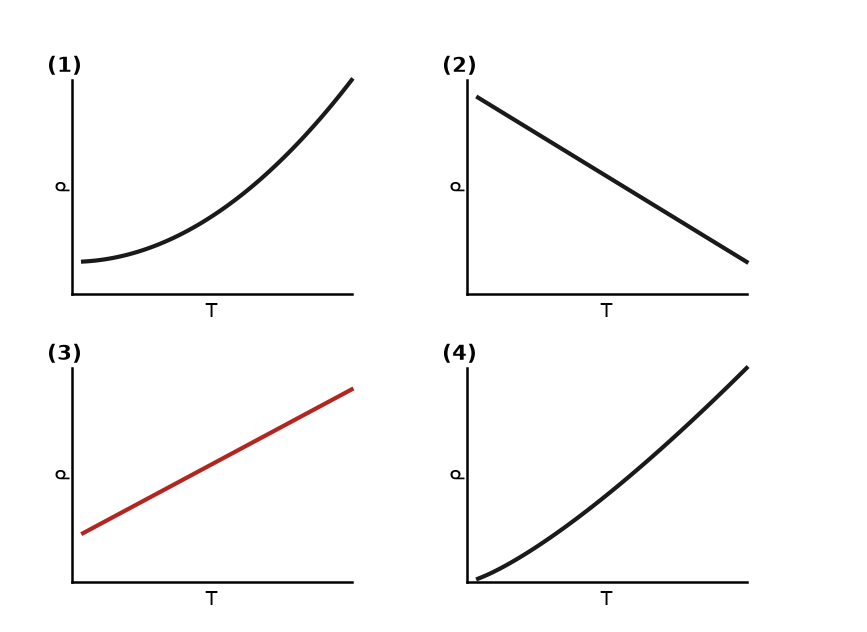
Current Electricity NEET PYQ diagram
Q20
NEET 2021Combining R

The effective resistance of four identical wires in parallel is 0.25 $\Omega$. Their effective resistance in series is:

Q21
NEET 2021Potentiometer

In a potentiometer, a cell of emf 1.5 V balances at 36 cm. If a 2.5 V cell replaces it, the balance length is:

Q22
NEET 2021Power split

Three resistors r$_{1}$, r$_{2}$, r$_{3}$ are connected as shown. The ratio i$_{3}$/i$_{1}$ of currents in terms of the resistances is:
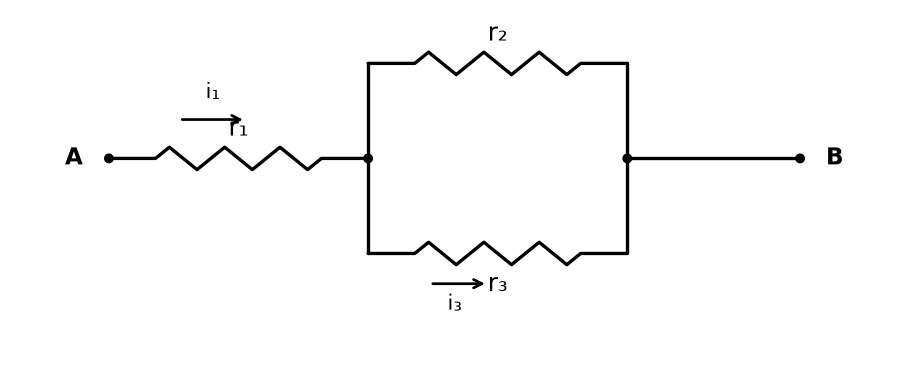
Current Electricity NEET PYQ diagram
Q23
NEET 2021Mobility

The electron concentration in an n-type semiconductor equals the hole concentration in a p-type. An electric field is applied across each. Compare the currents:

Q24
NEET 2021Drift velocity

Match Column-I with Column-II: Column-I (A) Drift velocity (B) Electrical resistivity (C) Relaxation period (D) Current density Column-II (P) $m/(ne^{2}\rho)$ (Q) $ne\cdot v_d$ (R) $(eE/m)\tau$ (S) $E/J$ Choose the correct match:

Q25
NEET 2022Current density

A copper wire of length 10 m and radius (10$^{-2}$/$\surd\pi$) m has resistance 10 $\Omega$. The current density for an electric field strength of 10 V/m is:

Q26
NEET 2022Power split

Two resistors 100 $\Omega$ and 200 $\Omega$ are connected in parallel. The ratio of thermal energy developed in 100 $\Omega$ to that in 200 $\Omega$ in a given time is:

Q27
NEET 2022Sign of alpha

As the temperature increases, the electrical resistance:

Q28
NEET 2022Wheatstone bridge

A Wheatstone bridge is used to determine an unknown resistance X by adjusting the variable resistance Y. For the most precise measurement of X, the resistances P and Q:
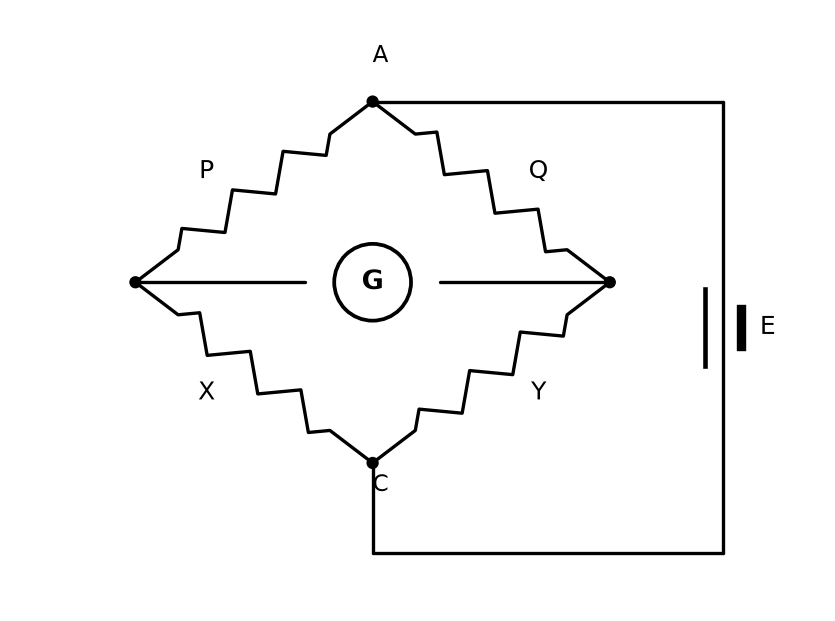
Current Electricity NEET PYQ diagram
Q29
NEET 2023 Phase 1Combining R

10 resistors (R each) in series with a battery (emf E, negligible internal resistance); then connected in parallel — the current increases n times. The value of n is:

Q30
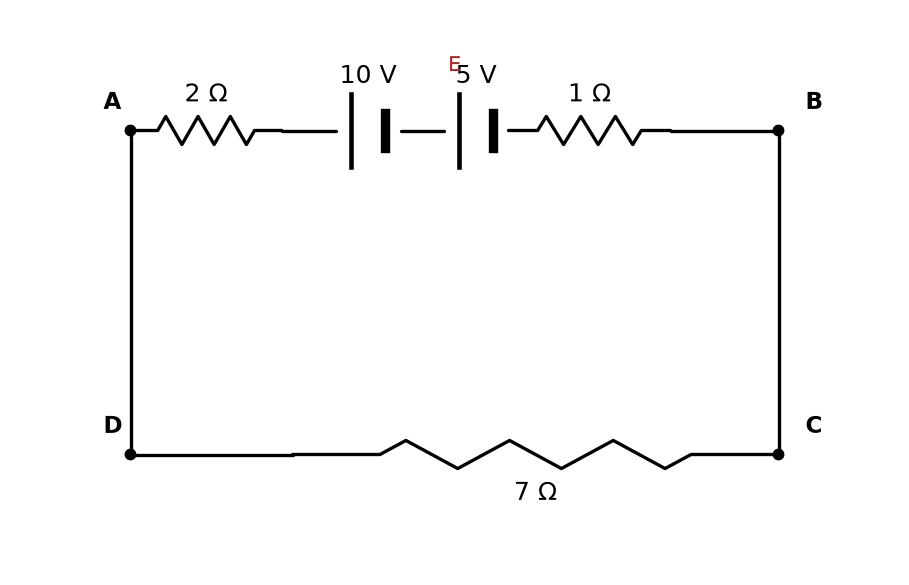
NEET 2023 Phase 1Kirchhoff laws

The magnitude and direction of the current in the following circuit is:
Current Electricity NEET PYQ diagram
Q31
NEET 2023 Phase 1Drift velocity

A copper wire of radius 1 mm contains 10$^{22}$ free electrons per m$^{3}$. The drift velocity for a 10 A current is (e = 1.6$\times$10$^{-19}$ C):

Q32
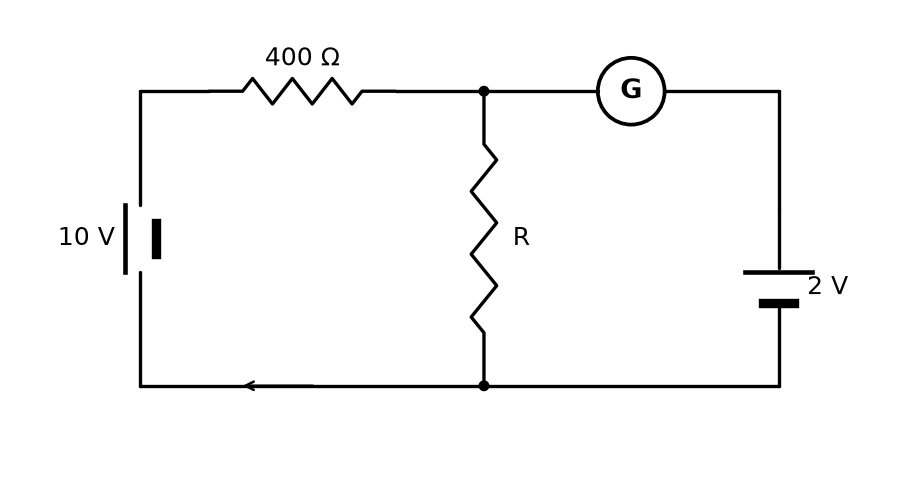
NEET 2023 Phase 1Wheatstone bridge

If the galvanometer G does not show any deflection in the circuit shown, the value of R is given by:
Current Electricity NEET PYQ diagram
Q33
NEET 2023 Phase 1Wire resistance

Wire A has resistance 81 $\Omega$. Wire B (same material, equal length, diameter three times that of A) has resistance:

Q34
NEET 2023 Phase 2Resistivity

On the basis of electrical conductivity, which one of the following materials has the smallest resistivity?

Q35
NEET 2023 Phase 1Potentiometer

The emf of a cell (internal resistance 1 $\Omega$) balances at 330 cm on a potentiometer. With a 2 $\Omega$ external resistance across the cell, the balance length is:

Q36
NEET 2023 Phase 1Resistivity

Resistance of a carbon resistor from colour codes is (22000 ± 5%) $\Omega$. The colour of the third band must be:

Q37
NEET 2023 Phase 1R vs temp

The resistance of a platinum wire is 2 $\Omega$ at 0$^\circ$C and 6.8 $\Omega$ at 80$^\circ$C. The temperature coefficient of resistance is:

Q38
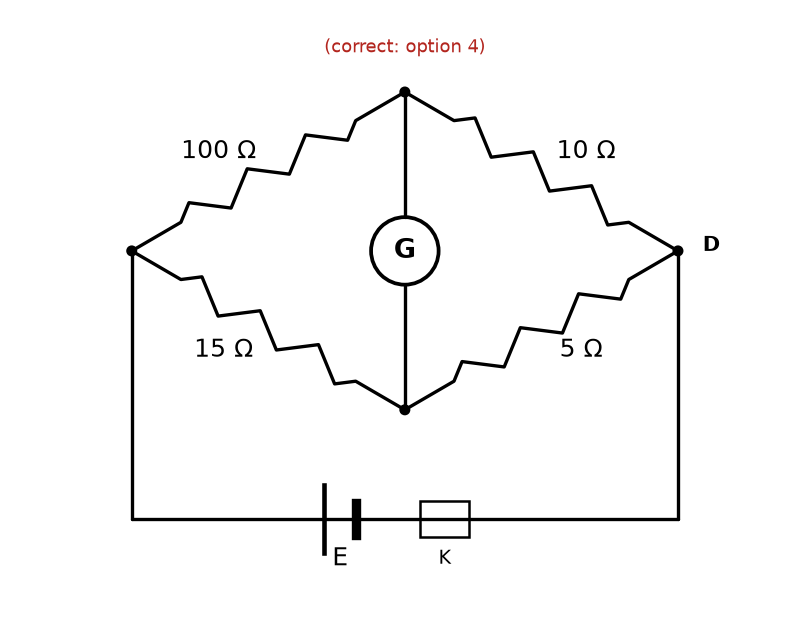
NEET 2024Wheatstone bridge

Choose the correct circuit which can achieve the bridge balance. (Arms 100 $\Omega$, 10 $\Omega$, 15 $\Omega$, 5 $\Omega$ with galvanometer G and cell E + key K.)
Current Electricity NEET PYQ diagram
Q39
NEET 2024Combining R

A wire of resistance 100 $\Omega$ is divided into 10 equal parts. The first 5 are connected in series, the next 5 in parallel; the two combinations are then in series. The resistance of the final combination is:
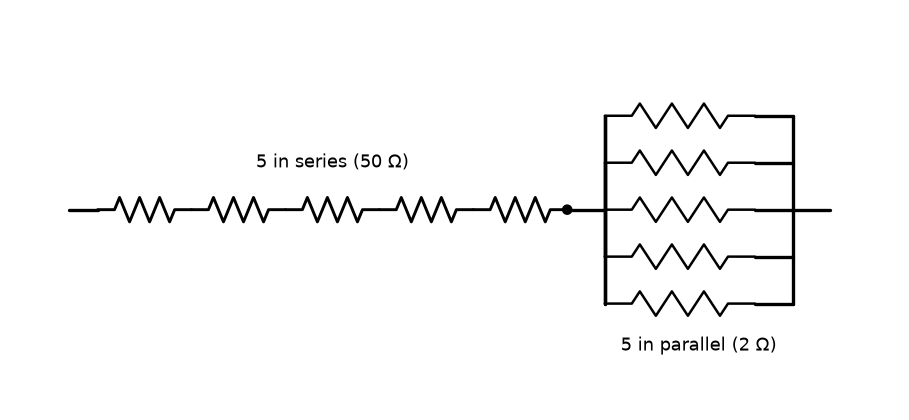
Current Electricity NEET PYQ diagram
Q40
NEET 2024Terminal voltage

The terminal voltage of a battery of emf 10 V and internal resistance 1 $\Omega$, connected to an external resistance of 4 $\Omega$, is:
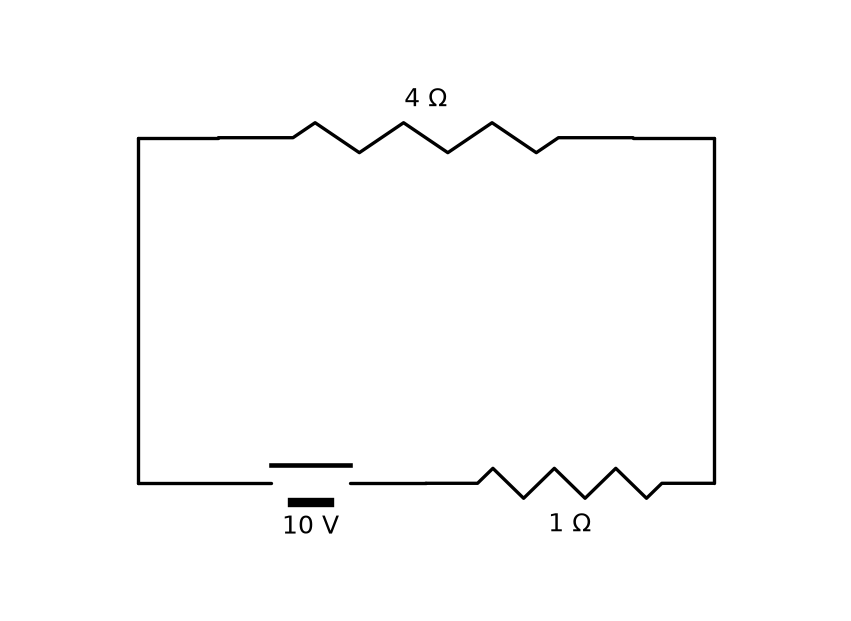
Current Electricity NEET PYQ diagram
Q41
NEET 2024Power split

Two heaters A and B rated 1 kW and 2 kW are connected first in series and then in parallel to a fixed source. The ratio of power outputs (series : parallel) is:

Q42
NEET 2025Combining R

A wire of resistance R is cut into 8 equal pieces. Two sets are made by joining four pieces in parallel each; the two sets are then in series. The net resistance is:

Q43
NEET 2025Kirchhoff laws

A constant voltage of 50 V is maintained between points A and B of the circuit shown. The current through the branch CD of the circuit is:
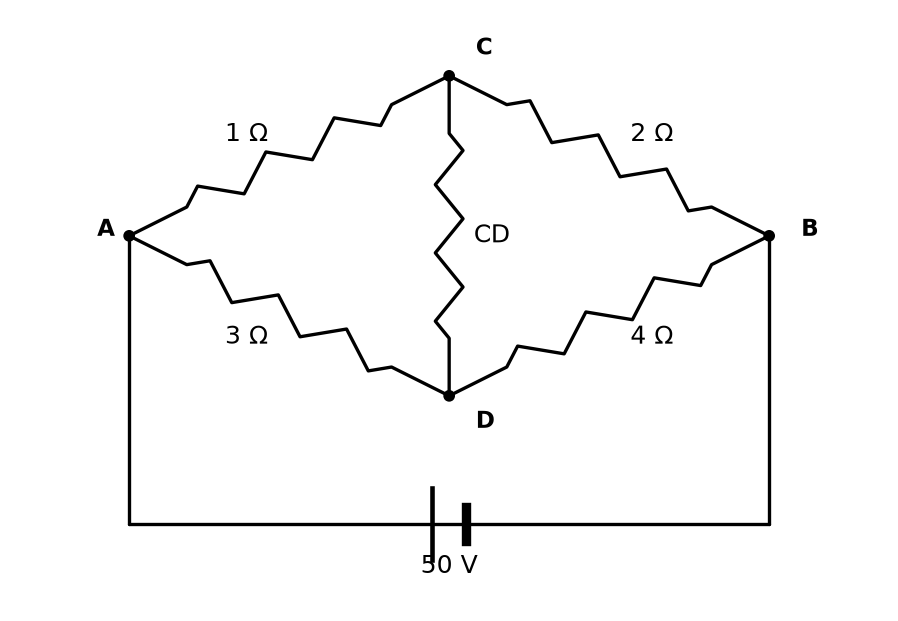
Current Electricity NEET PYQ diagram
Q44
NEET 2025Kirchhoff laws

The current passing through the battery in the given circuit is:
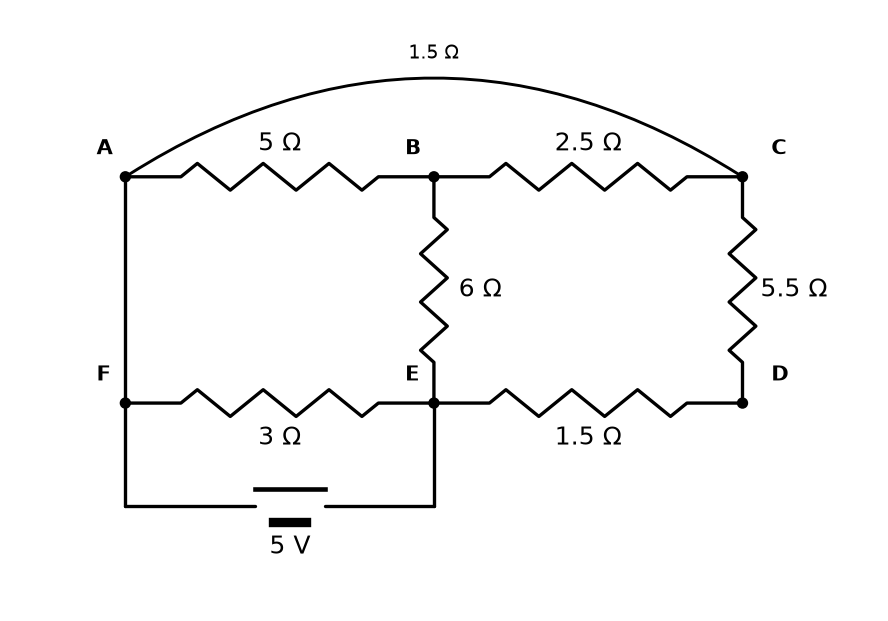
Current Electricity NEET PYQ diagram
Q45
NEET 2026 (1)Terminal voltage

A resistor is connected to a battery of emf 12 V and internal resistance 2 $\Omega$. If the current is 0.6 A, the terminal voltage of the battery is:
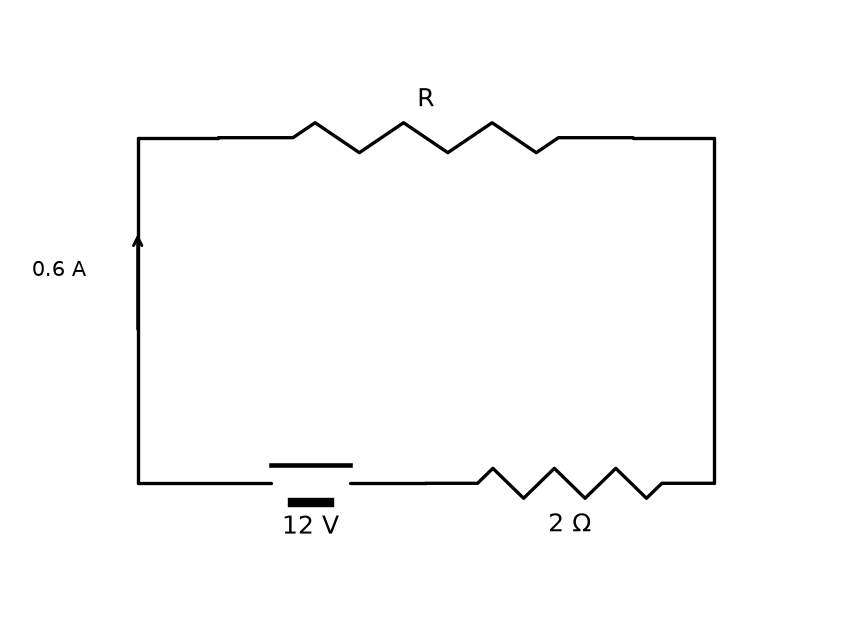
Current Electricity NEET PYQ diagram
Q46
ReNEET 2026Sign of alpha

Consider two circuits A and B, each with two resistors. One resistor has a positive temperature coefficient $+\alpha$ and the other $-\alpha$. In circuit A the two are in series; in circuit B they are in parallel, across the same battery. At the initial temperature each resistance is $R_0$. As temperature increases, the correct statement about the currents $I_A$ and $I_B$ is:
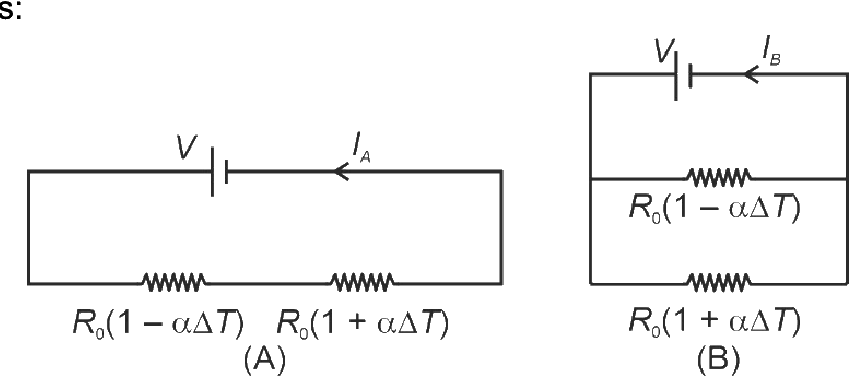
Current Electricity NEET PYQ diagram
Q47
NEET 2026 (1)Meter bridge

In a metre bridge experiment, the positions of the cell E and galvanometer G are interchanged. In the galvanometer we shall observe:
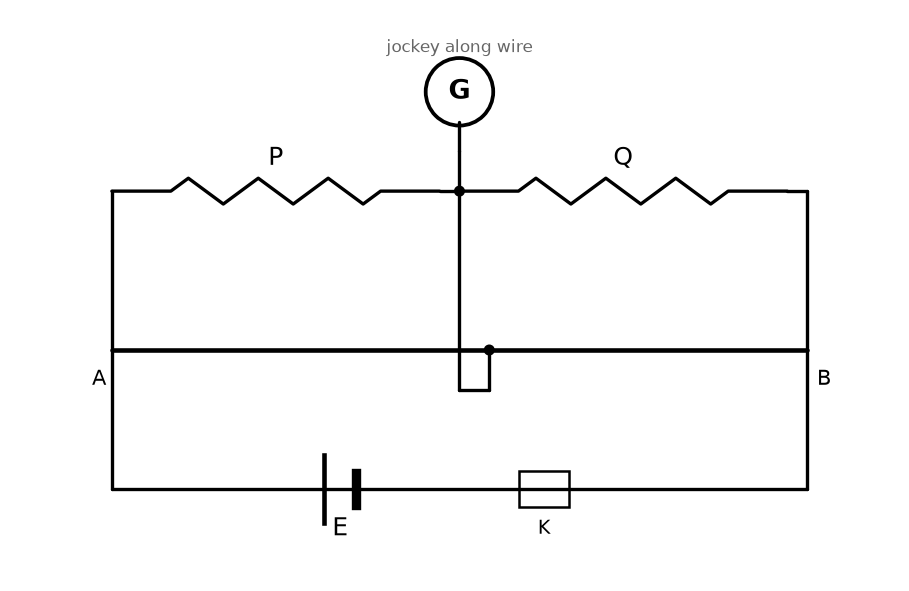
Current Electricity NEET PYQ diagram
Q48
NEET 2026 (1)Electric power

A room heater is rated 400 W, 220 V. If the supply voltage drops to 200 V, the power consumed (approximately) is:

Q49
NEET 2026 (1)Bridge symmetry

A uniform metallic wire of resistance 4 $\Omega$ is bent to form a square loop ABCD. A resistance of 2 $\Omega$ is connected between B and D, and a battery of 2 V across A and C. The value of current i is:
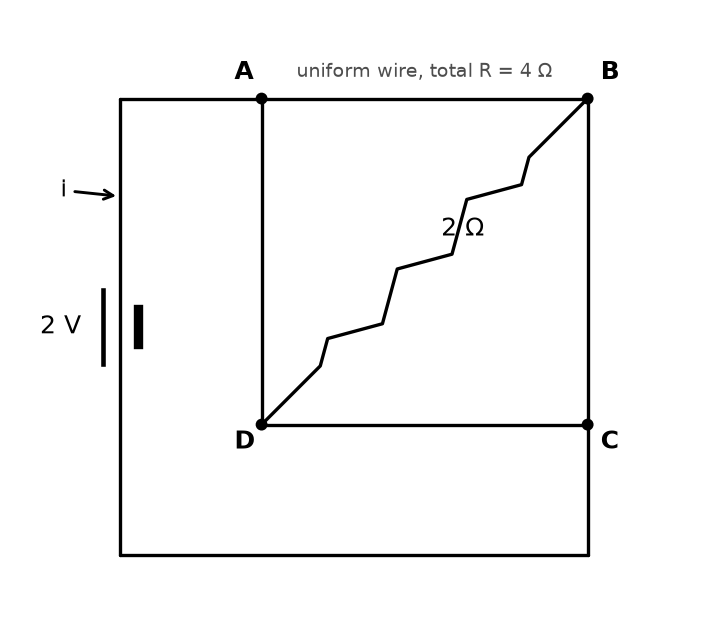
Current Electricity NEET PYQ diagram

Want more Current Electricity questions?

MedicNEET has 14,000+ NEET-style Biology questions with detailed NCERT-based explanations — including long, tricky questions that actually come in the exam.

Download MedicNEET App — Free
Practise Current Electricity MCQs — Free

Beyond the PYQs above — every Physics question format NEET now uses, starting with the newest ReNEET 2026-style reasoning MCQs. Tap an option for the answer and a worked solution. Free, no login.

🔢 Current ElectricityNumericals — PYQ-Based

Exam-style numericals seeded from real NEET previous-year questions, kept inside the NEET syllabus boundary. Each with a worked solution.

  1. Q1. Three identical bulbs, each rated 60 W, 120 V, are arranged with two in parallel and that combination in series with the third, across a 120 V supply. The total power consumed is:
  2. Q2. Two resistors 6 and 12 can give a maximum and minimum equivalent resistance of:
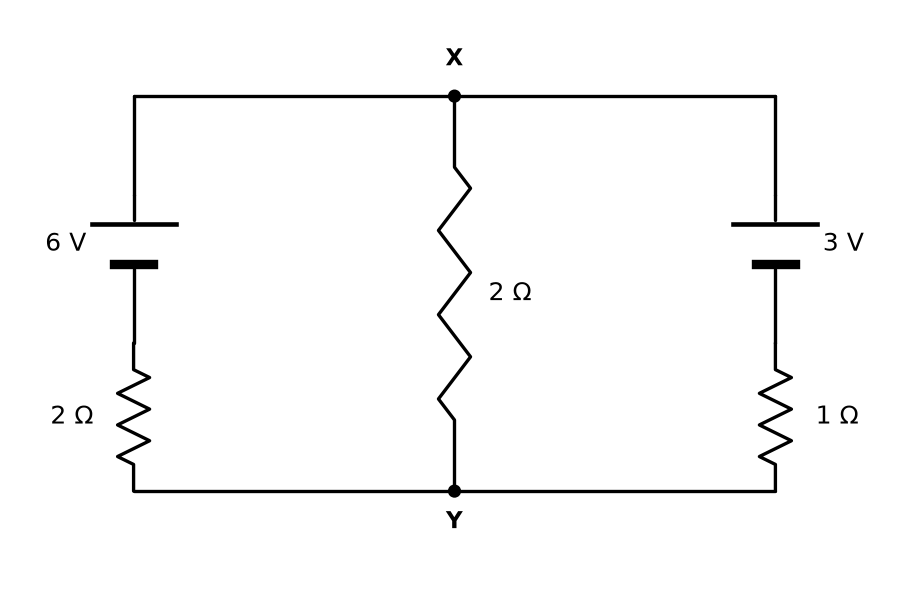
  3. Q3. Three branches connect points X and Y: branch 1 is a 6 V cell with 2 , branch 2 is a 3 V cell with 1 , branch 3 is a 2 resistor. The current through the 2 resistor (branch 3) is:
    NEET question diagram
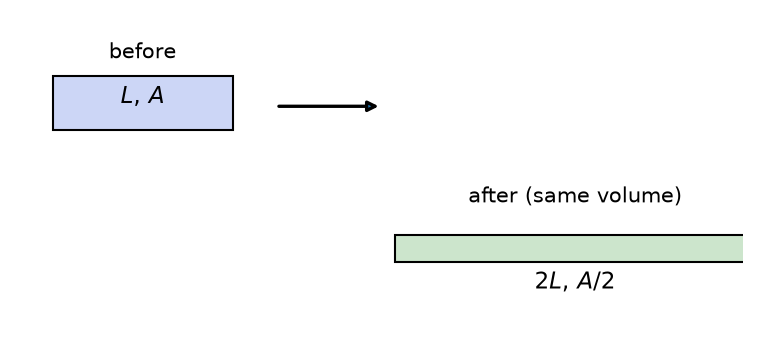
  4. Q4. A wire carrying a steady current is stretched (at constant volume) to twice its original length. For the SAME current, the drift velocity of the electrons becomes:
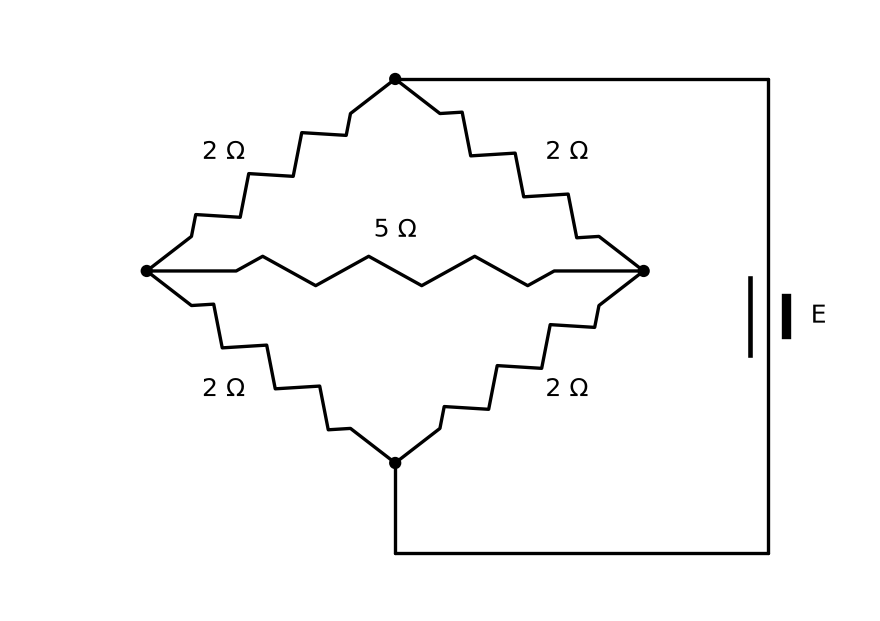
  5. Q5. Each arm of the bridge shown is 2 and the bridge (galvanometer) arm is 5 . A 4 V battery is connected across A and B. The current drawn from the battery is:
    NEET question diagram
  6. Q6. Manganin and constantan are used for making standard resistances because they have:
  7. Q7. A cylindrical wire of length 2 m and cross-sectional area 2 × 10⁻⁶ m² has a resistance of 4 Ω. If the wire is stretched uniformly to double its length while keeping its volume constant, what will be the new resistance?
  8. Q8. A battery of EMF 12 V and internal resistance 2 Ω is connected to a resistor R. When R = 4 Ω, what is the terminal voltage of the battery?
  9. Q9. A nichrome heating element has a resistance of 50 Ω at 20°C. When it is connected to a power supply, its temperature rises to 420°C and the resistance becomes 53.4 Ω. The temperature coefficient of resistivity of nichrome is:
  10. Q10. A uniform wire of total length 24 cm and resistance 48 Ω is bent into a square ABCD with each side 6 cm. The resistance is measured between different pairs of vertices: (i) R_AB between adjacent vertices A and B via the direct side AB, (ii) R_AC between opposite vertices A and C via one semicircular path (either ABC or ADC), and (iii) R_AD between adjacent vertices A and D via the direct side AD. The ratio R_AB : R_AC : R_AD is:

You’ve practised 10 of 145 Current Electricity questions in this set.

Practise all 145 + every chapter — free app →

📘 Current ElectricityConceptual Theory MCQs

Theory MCQs — assertion-reason, statement and standard — for the part of the physics paper that isn't numericals.

  1. Q1. In a metallic conductor, in the absence of an applied electric field, what is the average velocity of the free electrons over a large collection of electrons?
  2. Q2. Kirchhoff’s junction rule, which states that the sum of currents entering a junction equals the sum of currents leaving it, is a direct consequence of which fundamental principle?
  3. Q3. Which of the following statements is CORRECT?
  4. Q4. Regarding a simple electrolytic cell with emf ε and internal resistance r, which of the following statements is incorrect?
  5. Q5. Two identical cells, each of emf , are connected in series. The negative terminal of the first cell is connected to the positive terminal of the second cell. What is the equivalent electromotive force (emf) of this combination?
  6. Q6. Given below are two statements: Statement I: The study of electrostatics deals with charges in motion, whereas the study of current electricity deals with charges at rest. Statement II: The scope of the chapter on Current Electricity covers both steady currents and transient (time-varying) currents in detailed mathematical treatment. In the light of the above statements, choose the correct answer from the options given below.
  7. Q7. Materials are classified as conductors, semiconductors, and insulators based on their resistivity. How does the resistivity of a typical insulator (like ceramic or rubber) compare to that of a typical metal?
  8. Q8. Which of the following statements is CORRECT regarding the combination of cells?
  9. Q9. Regarding the motion of electrons in a solid conductor in the absence of an electric field, which of the following statements is CORRECT?
  10. Q10. Which of the following statements regarding a cell's electromotive force (emf) and terminal potential difference is CORRECT?

You’ve practised 10 of 47 Current Electricity questions in this set.

Practise all 47 + every chapter — free app →

Current Electricity — NEET PYQ Analysis

Current Electricity is a Class 12 NEET Physics chapter consistently tested from 2016 to ReNEET 2026. This page has all 49 authentic previous year questions from real NEET papers — with answers and detailed solutions, not model questions.

For full chapter-wise practice in timed test mode, download the MedicNEET app — 22,000+ questions across the full NEET syllabus. Back to the NEET Physics PYQ index.