
Lipids — Fatty Acids, Glycerides, Phospholipids: Carbon Counts and Lecithin
✅ Asked in NEET 2024Lecithin, a small molecular weight organic compound found in living tissues, is an example of:
Lecithin, a small molecular weight organic compound found in living tissues, is an example of:
Following are the statements with reference to 'lipids': (NEET 2021) a) Lipids having only single bonds are called unsaturated fatty acids. b) Lecithin is a phospholipid. c) Trihydroxy propane is glycerol. d) Palmitic acid has 20 carbon atoms including carboxyl carbon. e) Arachidonic acid has 16 carbon atoms. Choose the correct answer:
A typical fat molecule is made up of (NEET 2016 Phase 1)
Which of the following are not fatty acids? A. Glutamic acid B. Arachidonic acid C. Palmitic acid D. Lecithin E. Aspartic acid Choose the correct answer from the options given below:
Answer & NCERT explanation
Correct answer: B — Phospholipids
Lecithin is a phospholipid, a major component of cell membranes. It contains glycerol, two fatty acids, a phosphate group, and choline. Phospholipids are amphipathic molecules with hydrophilic head (phosphate group) and hydrophobic tails (fatty acid chains). They form bilayers in cell membranes.
Read more NCERT concept on the PYQ
Lipids are generally water insoluble. They could be simple fatty acids. A fatty acid has a carboxyl group attached to an R group. The R group could be a methyl (–CH₃), or ethyl (–C₂H₅) or higher number of –CH₂ groups (1 carbon to 19 carbons). For example, palmitic acid has 16 carbons including carboxyl carbon. Arachidonic acid has 20 carbon atoms including the carboxyl carbon. Fatty acids could be saturated (without double bond) or unsaturated (with one or more C=C double bonds). Another simple lipid is glycerol which is trihydroxy propane. Many lipids have both glycerol and fatty acids. Here the fatty acids are found esterified with glycerol. They can be then monoglycerides, diglycerides and triglycerides. These are also called fats and oils based on melting point. Oils have lower melting point (e.g., gingelly oil) and hence remain as oil in winters. Can you identify a fat from the market? Some lipids have phosphorous and a phosphorylated organic compound in them. These are phospholipids. They are found in cell membrane. Lecithin is one example. Some tissues especially the neural tissues have lipids with more complex structures.
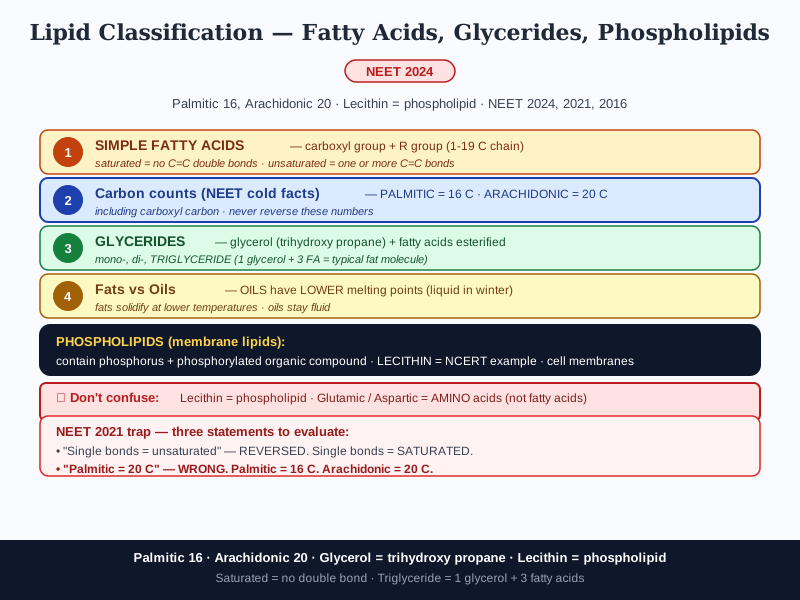
LIPIDS are generally WATER INSOLUBLE. They include simple FATTY ACIDS (carboxyl group + R group, with 1-19 carbons in the chain). PALMITIC ACID has 16 CARBONS (including the carboxyl carbon); ARACHIDONIC ACID has 20 CARBONS. Fatty acids are SATURATED (no double bonds) or UNSATURATED (one or more C=C double bonds). GLYCEROL is trihydroxy propane. When fatty acids ESTERIFY with glycerol, the products are MONO-, DI- or TRIGLYCERIDES (fats and oils). OILS have LOWER MELTING POINTS than fats and remain liquid in winter. PHOSPHOLIPIDS contain phosphorus + phosphorylated organic compound (e.g., LECITHIN — found in CELL MEMBRANES). A typical FAT MOLECULE (triglyceride) = ONE GLYCEROL + THREE FATTY ACIDS linked by ester bonds.
NEET tested lipids 4+ times (2024, 2021, 2016, NEET-undated). Memory cards: PALMITIC = 16 C; ARACHIDONIC = 20 C; LECITHIN = phospholipid (cell membranes); GLYCEROL = trihydroxy propane; saturated = no double bond, unsaturated = with double bond. A typical fat = 1 glycerol + 3 fatty acids (triglyceride). Glutamic acid and aspartic acid are AMINO ACIDS (not fatty acids). Lecithin is a PHOSPHOLIPID (not a fatty acid). Don't reverse palmitic (16) and arachidonic (20).
Palmitic acid has 20 carbon atoms and arachidonic acid has 16 carbons; lipids with single bonds are unsaturated fatty acids.
PALMITIC = 16 carbons. ARACHIDONIC = 20 carbons. Single bonds = SATURATED. Double bonds = UNSATURATED. Lecithin = phospholipid.
Palmitic 16, Arachidonic 20. Saturated = single bonds. Glycerol = trihydroxy propane. Lecithin = phospholipid in cell membrane.
- Palmitic acid = 16 carbons; Arachidonic acid = 20 carbons (including carboxyl carbon).
- Saturated fatty acids = no C=C double bonds; Unsaturated = one or more C=C double bonds.
- Glycerol = trihydroxy propane; Lecithin = phospholipid (cell membrane component).
- Typical fat (triglyceride) = 1 glycerol + 3 fatty acids esterified together. Oils have lower melting points than fats.
Following are statements with reference to 'lipids': (a) Lipids having only single bonds are called unsaturated fatty acids. (b) Lecithin is a phospholipid. (c) Trihydroxy propane is glycerol. (d) Palmitic acid has 20 carbon atoms including carboxyl carbon. (e) Arachidonic acid has 16 carbon atoms.
View bonus solution & explanation
Correct answer: A — (b) and (c) only
(a) WRONG: Single bonds = SATURATED fatty acids (not unsaturated). (b) CORRECT: Lecithin is a phospholipid found in cell membranes (NEET 2024 confirmed). (c) CORRECT: Glycerol is trihydroxy propane (3-carbon backbone of fats). (d) WRONG: Palmitic acid has 16 carbons (not 20). (e) WRONG: Arachidonic acid has 20 carbons (not 16). Only (b) and (c) are correct → option A. NEET 2021 answer. Memory: don't swap palmitic (16) with arachidonic (20).
What is Lipids?
What did NEET 2024 ask on Lipids?
What is the most common NEET trap on Lipids?
How do you remember Lipids for NEET?
What are the key components of Lipids?
Through deep analysis of NEET and NTA, 176 of the 180 ReNEET 2026 (June 21) questions were already in the MedicNEET question bank before the exam.
176/180MedicNEET's Biology question bank is built from the same NCERT lines NTA picks repeatedly. Not random MCQs — questions crafted exactly like NTA crafts them.
You just learned this concept. The free app turns it into a daily goal built from your weak topics and brings it back just before you forget it — using active recall and spaced repetition — so it stays till exam day.