
Prophase I Substages — Leptotene to Diakinesis with Key Events
✅ Asked in NEET 2024Match List I with List II: List-I: A. Diakinesis B. Pachytene C. Zygotene D. Leptotene List-II: i. Synaptonemal complex formation ii. Terminalisation of chiasmata iii. Chromosomes appear as thin threads iv. Appearance of recombination nodules
Match List I with List II: List-I: A. Diakinesis B. Pachytene C. Zygotene D. Leptotene List-II: i. Synaptonemal complex formation ii. Terminalisation of chiasmata iii. Chromosomes appear as thin threads iv. Appearance of recombination nodules
Recombination between homologous chromosomes is completed by the end of: [NEET 2024 ]
The process of appearance of recombination nodules occurs at which substage of Prophase I in meiosis?
Identify the correct sequence of events during Prophase I of meiosis: I. Synapsis of homologous chromosomes II. Chromosomes become gradually visible under microscope III. Crossing over between non-sister chromatids of homologous chromosomes IV. Terminalisation of chiasmata V. Dissolution of synaptonemal complex [NEET -2022]
Which one of the following never occurs during mitotic cell division?
The appearance of recombination nodules on homologous chromosomes during meiosis characterizes:
Bivalent or tetrad formation is a characteristic feature observed during: [NEET -2022]
Match the following with respect to meiosis: (A) Zygotene — (i) Terminalization (B) Pachytene — (ii) Chiasmata (C) Diplotene — (iii) Crossing over (D) Diakinesis — (iv) Synapsis
Crossing over takes place between which chromatids and in which stage of the cell cycle?
Which of the following is not a characteristic feature during mitosis in somatic cells? (NEET I 2016)
Match the stages of meiosis in Column I to their characteristic features in Column II: Column I A. Pachytene B. Metaphase I C. Diakinesis D. Zygotene Column II (i) Pairing of homologous chromosomes (ii) Terminalisation of chiasmata (iii) Crossing-over takes place (iv) Chromosomes align at equatorial plate
Answer & NCERT explanation
Correct answer: C — A-II, B-IV, C-I, D-III
Correct matching: Diakinesis-Terminalisation of chiasmata, Pachytene-Appearance of recombination nodules, Zygotene-Synaptonemal complex formation, Leptotene-Chromosomes appear as thin threads. During diakinesis, chiasmata move towards chromosome ends (terminalization). Pachytene is when crossing over occurs with recombination nodules visible. Zygotene involves homolog pairing with synaptonemal complex formation. Leptotene is the first stage where chromosomes become visible as thin threads after chromatin condensation begins.
Read more NCERT concept on the PYQ
Prophase I: Prophase of the first meiotic division is typically longer and more complex when compared to prophase of mitosis. It has been further subdivided into the following five phases based on chromosomal behaviour, i.e., Leptotene, Zygotene, Pachytene, Diplotene and Diakinesis. During leptotene stage the chromosomes become gradually visible under the light microscope. The compaction of chromosomes continues throughout leptotene. This is followed by the second stage of prophase I called zygotene. During this stage, chromosomes start pairing together and this process of association is called synapsis. Such paired chromosomes are called homologous chromosomes. Electron micrographs of this stage, indicate that chromosome synapsis is accompanied by the formation of complex structure called synaptonemal complex. The complex formed by a pair of synapsed homologous chromosomes is called a bivalent or a tetrad. However, these are more clearly visible at the next stage. The first two stages of prophase I are relatively short-lived compared to the next stage that is pachytene. During this stage, the four chromatids of each bivalent chromosome are clearly visible as a tetrad. This stage is characterised by the appearance of recombination nodules, the sites at which crossing over occurs between non-sister chromatids of the homologous chromosomes. Crossing over is the exchange of genetic material between two homologous chromosomes. Crossing over is also an enzyme-mediated process and the enzyme involved is called recombinase. Crossing over leads to recombination of genetic material and formation of recombinant DNA. Recombination between homologous chromosomes is completed by the end of pachytene (crossing over between sister chromatids of homologous chromosomes linked at the sites of crossing over.
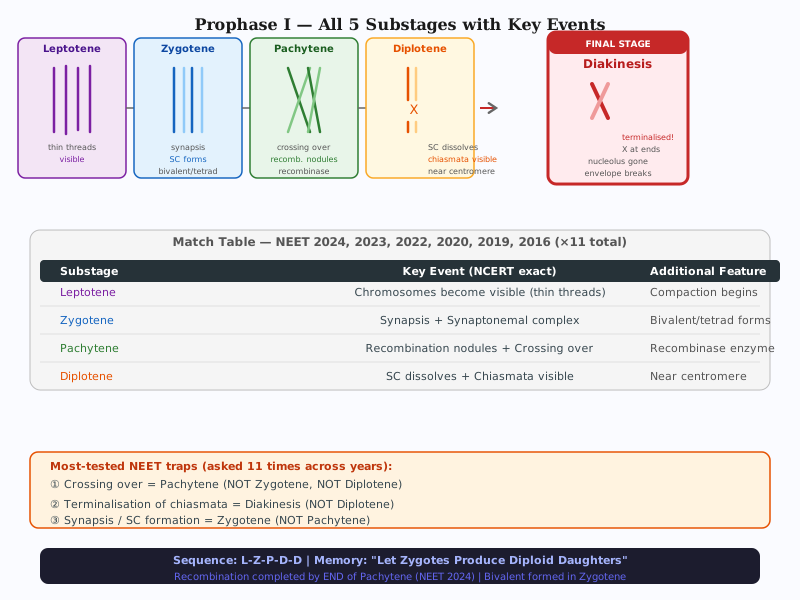
Prophase I of meiosis is the longest and most complex phase, subdivided into five stages. Leptotene: chromosomes first become visible as thin threads, compaction begins. Zygotene: homologous chromosomes pair (synapsis) and form the synaptonemal complex (SC); paired homologs are called bivalents or tetrads. Pachytene: the longest substage — recombination nodules appear, crossing over occurs between non-sister chromatids of homologous chromosomes via recombinase enzyme; recombination is completed by the end of pachytene. Diplotene: SC dissolves, chiasmata become visible near centromeres. Diakinesis: chiasmata terminalise (move to chromosome ends), chromosomes reach maximum condensation, nucleolus disappears, nuclear envelope breaks down — Metaphase I begins.
This page has been asked 11 times in NEET (2016-2024) — the single most repeatedly tested concept in the cell cycle chapter. NTA tests three specific distinctions relentlessly: (1) Crossing over occurs at PACHYTENE — not zygotene, not diplotene. (2) Terminalisation of chiasmata occurs at DIAKINESIS — not diplotene. (3) Synaptonemal complex FORMS at Zygotene and DISSOLVES at Diplotene. Bivalent formation also occurs at Zygotene when the SC is assembled. Recombination is COMPLETED by end of pachytene.
Terminalisation of chiasmata occurs during Diplotene, and crossing over occurs during Zygotene.
Terminalisation = Diakinesis. Crossing over = Pachytene. Chiasmata become VISIBLE at Diplotene but TERMINALISE at Diakinesis.
L-Z-P-D-D = Let Zygotes Produce Diploid Daughters. Cross at Pachytene, Terminalise at Diakinesis.
- Recombination between homologous chromosomes is COMPLETED by the end of PACHYTENE (NEET 2024 exact question).
- Bivalent = synapsed homologous chromosome pair; Tetrad = the four chromatids of the bivalent (same structure, different terminology).
- Recombinase enzyme catalyses crossing over in Pachytene — recombination nodules are the physical sites.
- Synapsis occurs in Zygotene NEVER in Mitosis — pairing of homologous chromosomes never occurs in mitosis (NEET 2022).
What is Prophase I Substages?
What did NEET 2024 ask on Prophase I Substages?
What is the most common NEET trap on Prophase I Substages?
How do you remember Prophase I Substages for NEET?
What are the key components of Prophase I Substages?
Through deep analysis of NEET and NTA, 176 of the 180 ReNEET 2026 (June 21) questions were already in the MedicNEET question bank before the exam.
176/180MedicNEET's Biology question bank is built from the same NCERT lines NTA picks repeatedly. Not random MCQs — questions crafted exactly like NTA crafts them.
You just learned this concept. The free app turns it into a daily goal built from your weak topics and brings it back just before you forget it — using active recall and spaced repetition — so it stays till exam day.