
Diplotene — Synaptonemal Complex Dissolves, Chiasmata X-Shaped Crossover Sites
✅ Asked in NEET 2024Given below are two statements: Statement I: Chromosomes become gradually visible under light microscope during leptotene stage. Statement II: The beginning of diplotene stage is recognized by dissolution of synaptonemal complex.[Neet 2024] Choose the correct answer from the options given below:
Given below are two statements: Statement I: Chromosomes become gradually visible under light microscope during leptotene stage. Statement II: The beginning of diplotene stage is recognized by dissolution of synaptonemal complex.[Neet 2024] Choose the correct answer from the options given below:
The dissolution of synaptonemal complex occurs during:
Which stage of meiosis can last for months or years in the oocytes of some vertebrates?
The stage during which separation of the paired homologous chromosomes begins is:
Dissolution of the synaptonemal complex occurs during:
Answer & NCERT explanation
Correct answer: A — Both Statement I and Statement II are true
Both statements are correct. Statement I: During leptotene, chromosomes condense and become visible under light microscope as thin threads. Statement II: Diplotene stage begins when synaptonemal complex starts dissolving, allowing homologous chromosomes to separate while maintaining chiasmata connections. Both are fundamental features described in NCERT meiosis chapter.
Read more NCERT concept on the PYQ
The beginning of diplotene is recognised by the dissolution of the synaptonemal complex and the tendency of the recombined homologous chromosomes of the bivalents to separate from each other except at the sites of crossovers. These X-shaped structures, are called chiasmata. In oocytes of some vertebrates, diplotene can last for months or years.
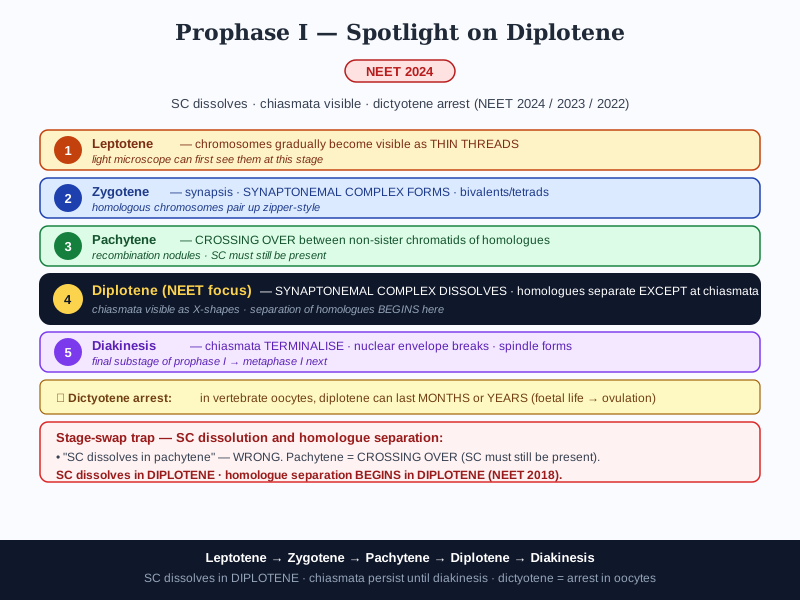
DIPLOTENE is the FOURTH stage of PROPHASE I of meiosis. The BEGINNING of DIPLOTENE is recognised by the DISSOLUTION of the SYNAPTONEMAL COMPLEX — the protein scaffold that held homologous chromosomes paired during pachytene. With the complex gone, the RECOMBINED HOMOLOGOUS chromosomes of the bivalents TEND TO SEPARATE — EXCEPT at the SITES OF CROSSOVERS, where they remain connected. These persistent X-SHAPED structures are called CHIASMATA. In OOCYTES of some VERTEBRATES (including humans), diplotene can LAST FOR MONTHS OR YEARS — the DICTYOTENE state. Order of prophase I: Leptotene → Zygotene → Pachytene → Diplotene → Diakinesis.
Diplotene tested 5 times in NEET (2024, 2023, 2022, 2018, undated). Lock these: SYNAPTONEMAL COMPLEX dissolves in DIPLOTENE (NOT pachytene, NOT zygotene). SEPARATION OF HOMOLOGUES BEGINS in DIPLOTENE — they remain connected only at chiasmata (NEET 2018). DIPLOTENE can last MONTHS OR YEARS in vertebrate oocytes (NEET 2022). NEET 2024 dual: Statement I (chromosomes visible at LEPTOTENE) TRUE; Statement II (synaptonemal complex dissolves in diplotene) TRUE → option A. Don't confuse pachytene (crossing over happens) with diplotene (synaptonemal complex dissolves).
Dissolution of the synaptonemal complex occurs during pachytene, when crossing over takes place between homologues.
Synaptonemal complex DISSOLVES in DIPLOTENE (the next stage after pachytene). Crossing over happens in pachytene; the dissolution that follows in diplotene allows separation except at chiasmata.
Order: Leptotene → Zygotene → Pachytene → Diplotene → Diakinesis. Synaptonemal complex DISSOLVES in DIPLOTENE. Chiasmata = X-shaped crossover sites.
- Diplotene begins with DISSOLUTION of the SYNAPTONEMAL COMPLEX (NEET 2023, 2018, undated).
- Homologous chromosomes start to SEPARATE in diplotene, except at sites of crossovers (CHIASMATA).
- In vertebrate oocytes, diplotene can last for MONTHS OR YEARS (dictyotene arrest) — NEET 2022.
- Prophase I order: Leptotene → Zygotene → Pachytene → Diplotene → Diakinesis. Chromosomes first become visible in LEPTOTENE.
What is Diplotene?
What did NEET 2024 ask on Diplotene?
What is the most common NEET trap on Diplotene?
How do you remember Diplotene for NEET?
What are the key components of Diplotene?
Through deep analysis of NEET and NTA, 176 of the 180 ReNEET 2026 (June 21) questions were already in the MedicNEET question bank before the exam.
176/180MedicNEET's Biology question bank is built from the same NCERT lines NTA picks repeatedly. Not random MCQs — questions crafted exactly like NTA crafts them.
You just learned this concept. The free app turns it into a daily goal built from your weak topics and brings it back just before you forget it — using active recall and spaced repetition — so it stays till exam day.