
Diakinesis — Terminalisation of Chiasmata in Prophase I
✅ Asked in NEET 2021Which stage of meiotic prophase shows terminalisation of chiasmata as its distinctive feature?
Which stage of meiotic prophase shows terminalisation of chiasmata as its distinctive feature?
Answer & NCERT explanation
Correct answer: C — Diakinesis
Terminalisation of chiasmata is the distinctive feature of diakinesis stage. During this final stage of prophase I, chiasmata move toward the chromosome ends (terminalization) before complete separation of homologous chromosomes. This process prepares chromosomes for metaphase I alignment. Other stages have different characteristic features like pairing or crossing over.
Read more NCERT concept on the PYQ
The final stage of meiotic prophase I is diakinesis. This is marked by terminalisation of chiasmata. During this phase the chromosomes are fully condensed and the meiotic spindle is assembled to prepare the homologous chromosomes for separation. By the end of diakinesis, the nucleolus disappears and the nuclear envelope also breaks down. Diakinesis represents transition to metaphase I.
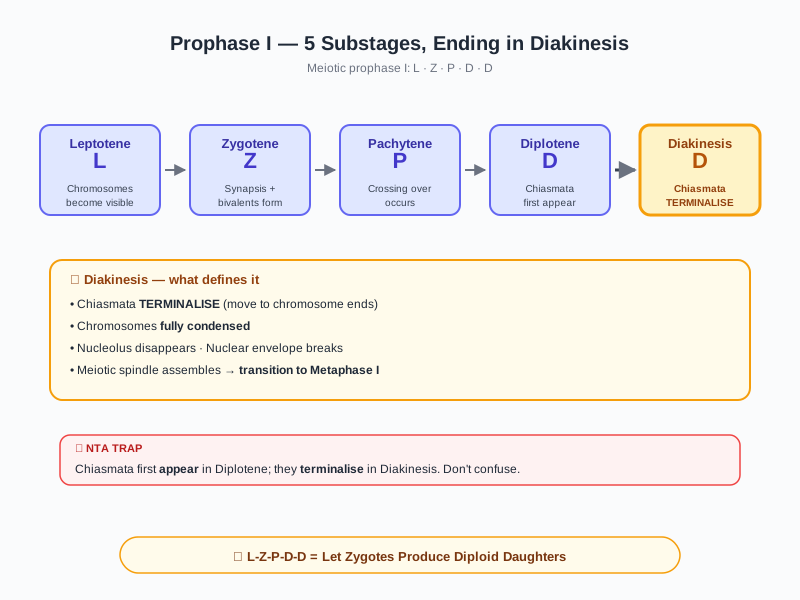
Meiotic prophase I is uniquely long and complex, divided into five substages: Leptotene, Zygotene, Pachytene, Diplotene, and Diakinesis. In Diakinesis (the final substage), the chiasmata — which formed during Pachytene crossing over and became visible in Diplotene — now move to the very ends of the chromosomes. This movement is called terminalisation of chiasmata. By the end of Diakinesis, four major events have occurred: chromosomes reach maximum condensation, the meiotic spindle is fully assembled, the nucleolus disappears, and the nuclear envelope breaks down. These events prepare the homologous chromosomes for their first separation in Metaphase I.
NCERT describes each substage briefly. Deeper distinction: In DIPLOTENE, chiasmata are first visible as the synaptonemal complex dissolves — but they are still near the centromere. In DIAKINESIS, these chiasmata SLIDE toward the chromosome ends (terminalise). This is why Diakinesis is called the transition stage — it bridges Prophase I to Metaphase I. The nucleolus disappears because rRNA genes (located in NOR — nucleolus organiser region) become too condensed for transcription. The nuclear envelope breakdown is mediated by MPF (Maturation Promoting Factor = CDK1 + Cyclin B).
Diakinesis is when chiasmata first appear
Chiasmata first appear in Diplotene. In Diakinesis they TERMINALISE (move to ends).
L-Z-P-D-D = Let Zygotes Produce Diploid Daughters
What is Diakinesis?
Has Diakinesis been asked in NEET?
What is the most common NEET trap on Diakinesis?
How do you remember Diakinesis for NEET?
Through deep analysis of NEET and NTA, 176 of the 180 ReNEET 2026 (June 21) questions were already in the MedicNEET question bank before the exam.
176/180MedicNEET's Biology question bank is built from the same NCERT lines NTA picks repeatedly. Not random MCQs — questions crafted exactly like NTA crafts them.
You just learned this concept. The free app turns it into a daily goal built from your weak topics and brings it back just before you forget it — using active recall and spaced repetition — so it stays till exam day.