
Chloroplast Structure — Grana, Thylakoids, Stroma and 70S Ribosomes
✅ Asked in NEET 2026Non-membrane bound cell organelles found in both prokaryotic and eukaryotic cells are
Non-membrane bound cell organelles found in both prokaryotic and eukaryotic cells are
Answer & NCERT explanation
Correct answer: A — Ribosomes
Ribosomes are non-membrane-bound and present in both prokaryotes (70S) and eukaryotes (80S in cytoplasm, 70S in mitochondria/chloroplasts).
Read more NCERT concept on the PYQ
Majority of the chloroplasts of the green plants are found in the mesophyll cells of the leaves. These are lens-shaped, oval, spherical, discoid or even ribbon-like organelles having variable length (5-10μm) and width (2-4μm). Their number varies from 1 per cell of the Chlamydomonas, a green alga to 20-40 per cell in the mesophyll. Like mitochondria, the chloroplasts are also double membrane bound. Of the two, the inner chloroplast membrane is relatively less permeable. The space limited by the inner membrane of the chloroplast is called the stroma. A number of organised flattened membranous sacs called the thylakoids, are present in the stroma. Thylakoids are arranged in stacks like the piles of coins called grana (singular: granum) or the intergranal thylakoids. In addition, there are flat membranous tubules called the stroma lamellae connecting the thylakoids of the different grana. The membrane of the thylakoids enclose a space called a lumen. The stroma of the chloroplast contains enzymes required for the synthesis of carbohydrates and proteins. It also contains small, double-stranded circular DNA molecules and ribosomes. Chlorophyll pigments are present in the thylakoids. The ribosomes of the chloroplasts are smaller (70S) than the cytoplasmic ribosomes (80S).
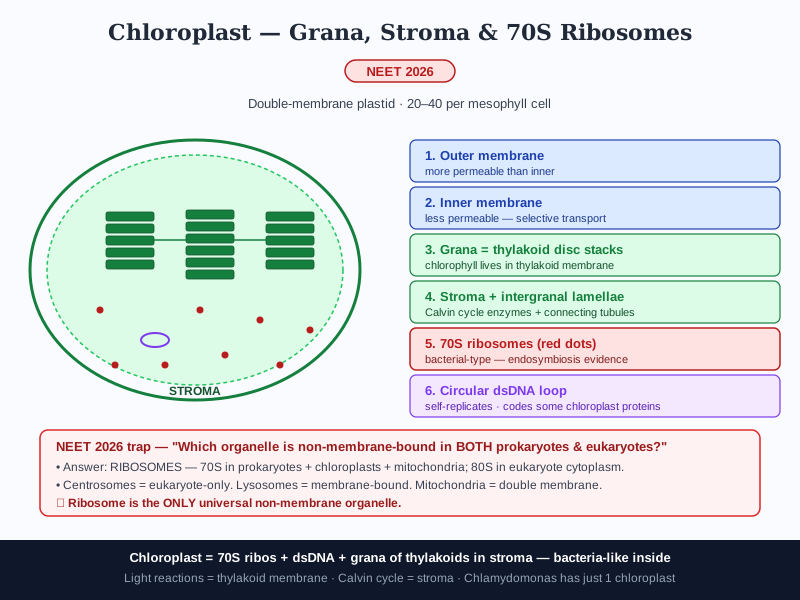
Chloroplasts, found mostly in mesophyll cells (20-40 per cell), are double membrane-bound organelles. The inner membrane is less permeable than the outer. The inner space is called the stroma, which contains enzymes for carbohydrate and protein synthesis, small circular double-stranded DNA, and 70S ribosomes. Flattened membranous sacs called thylakoids are arranged in the stroma in stacks called grana (singular: granum). Stroma lamellae are flat membranous tubules connecting thylakoids of different grana. Chlorophyll pigments are located in the thylakoid membranes. NEET 2026 asked which non-membrane-bound organelle is in both prokaryotes and eukaryotes — ribosomes.
The ribosome question is the specific NEET 2026 query from this paragraph. Ribosomes are non-membrane-bound and present in ALL cells — prokaryotes (70S) and eukaryotes (80S cytoplasmic; 70S in chloroplasts and mitochondria). Lysosomes = membrane-bound, eukaryotes only. Centrosomes = non-membrane-bound but eukaryotes only (mostly). Mitochondria = double membrane-bound, eukaryotes only. Only ribosomes are universally present and non-membrane-bound in both prokaryotes and eukaryotes.
Centrosomes are non-membrane-bound organelles found in both prokaryotes and eukaryotes.
RIBOSOMES are the only non-membrane-bound organelle found in BOTH prokaryotes and eukaryotes. Centrosomes are found mainly in animal cells (eukaryotes).
Ribosomes = universal. 70S in prokaryotes + chloroplasts + mitochondria. 80S in cytoplasm of eukaryotes.
- Mesophyll cells: 20-40 chloroplasts per cell | Chlamydomonas (alga): 1 chloroplast per cell.
- Chloroplast ribosomes = 70S (like bacteria) — evidence for endosymbiotic origin.
- Stroma lamellae: connect thylakoids of different grana — intergranal thylakoids.
- Thylakoid lumen = space enclosed by thylakoid membrane; chlorophyll in thylakoid membrane, Calvin cycle in stroma.
Which of the following statements about chloroplast structure are CORRECT? S1: The inner chloroplast membrane is relatively less permeable than the outer membrane. S2: The space enclosed by the inner membrane is called the stroma and contains enzymes for carbohydrate synthesis. S3: Chlorophyll pigments are present in the stroma of the chloroplast. S4: Chloroplast ribosomes are 70S — smaller than cytoplasmic ribosomes (80S). S5: Stroma lamellae are flat tubes connecting thylakoids of different grana.
View bonus solution & explanation
Correct answer: A — S1, S2, S4 and S5
S1 CORRECT: Inner chloroplast membrane is less permeable — NCERT exact statement. S2 CORRECT: Stroma = inner space containing enzymes for carbohydrate and protein synthesis, DNA, and ribosomes. S3 WRONG: Chlorophyll is in the THYLAKOID membranes, not the stroma. S4 CORRECT: Chloroplast ribosomes = 70S; cytoplasmic = 80S (NEET 2026 related). S5 CORRECT: Stroma lamellae connect thylakoids of different grana — NCERT exact.
What is Chloroplast Structure?
What did NEET 2026 ask on Chloroplast Structure?
What is the most common NEET trap on Chloroplast Structure?
How do you remember Chloroplast Structure for NEET?
What are the key components of Chloroplast Structure?
Through deep analysis of NEET and NTA, 176 of the 180 ReNEET 2026 (June 21) questions were already in the MedicNEET question bank before the exam.
176/180MedicNEET's Biology question bank is built from the same NCERT lines NTA picks repeatedly. Not random MCQs — questions crafted exactly like NTA crafts them.
You just learned this concept. The free app turns it into a daily goal built from your weak topics and brings it back just before you forget it — using active recall and spaced repetition — so it stays till exam day.