
Chromatin and Cellular Structures — F1, Histones, Axoneme, Cisternae
✅ Asked in NEET 2020Match List I with List II: List I A. F1 particles B. Histones C. Axoneme D. Cisternae List II I. Chromosomes II. Cilia III. Golgi apparatus IV. Mitochondria NEET 2020
Match List I with List II: List I A. F1 particles B. Histones C. Axoneme D. Cisternae List II I. Chromosomes II. Cilia III. Golgi apparatus IV. Mitochondria NEET 2020
Answer & NCERT explanation
Correct answer: B — A–IV, B–I, C–II, D–III
F1 particles are present in mitochondria as part of ATP synthase complex. Histones are proteins associated with chromosomes for DNA packaging. Axoneme is the structural framework of cilia and flagella with 9+2 microtubule arrangement. Cisternae are flattened membrane sacs found in Golgi apparatus and ER. This gives A-IV, B-I, C-II, D-III.
Read more NCERT concept on the PYQ
You may recall that the interphase nucleus has a loose and indistinct network of nucleoprotein fibres called chromatin. But during different stages of cell division, cells show structured chromosomes in place of the nucleus. Chromatin contains DNA and some basic proteins called histones, some non-histone proteins and also RNA. A single human cell has approximately two metre long thread of DNA distributed among its forty six (twenty three pairs) chromosomes. You will study the details of DNA packaging in the form of a chromosome in class XII.
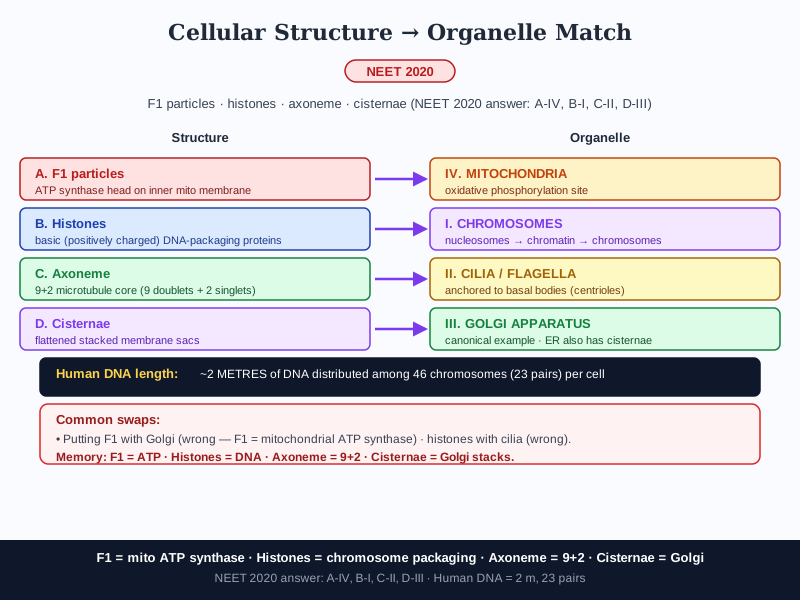
The INTERPHASE nucleus has a LOOSE and INDISTINCT network of nucleoprotein fibres called CHROMATIN. During cell division, cells show STRUCTURED CHROMOSOMES in place of the diffuse nucleus. Chromatin CONTAINS DNA + BASIC PROTEINS called HISTONES + some non-histone proteins + RNA. A single human cell has approximately TWO METRES of DNA distributed among its FORTY-SIX (23 PAIRS) chromosomes. Key cellular structures to match with their organelles: F1 PARTICLES = MITOCHONDRIA (part of ATP synthase on inner membrane). HISTONES = CHROMOSOMES (DNA packaging proteins). AXONEME = CILIA/FLAGELLA (9+2 microtubule core). CISTERNAE = GOLGI APPARATUS (flattened membrane sacs).
NEET 2020 matched four structures: F1 particles → MITOCHONDRIA (ATP synthase); Histones → CHROMOSOMES (DNA packaging); Axoneme → CILIA (9+2 core); Cisternae → GOLGI APPARATUS (stacked discs). Correct match: A-IV, B-I, C-II, D-III → option B. The 2 m DNA / 23 pair / 46 chromosomes figure is high-yield NEET trivia for the human genome. Histones are BASIC proteins (positively charged) that interact with negatively charged DNA backbone. Chromatin in interphase = LOOSE network; chromosomes in division = STRUCTURED units.
F1 particles are found in cilia and histones are part of the cisternae of Golgi apparatus.
F1 PARTICLES = MITOCHONDRIA (ATP synthase). HISTONES = CHROMOSOMES (DNA packaging). AXONEME = CILIA. CISTERNAE = GOLGI APPARATUS.
F1 = mito ATP synthase. Histones = chromosomes (basic proteins). Axoneme = cilia/flagella. Cisternae = Golgi sacs.
- Interphase nucleus = chromatin (loose, indistinct nucleoprotein fibre network).
- Chromatin contains: DNA + HISTONES (basic proteins) + non-histone proteins + RNA.
- Human cell: ~2 metres of DNA in 46 chromosomes (23 pairs) — NCERT exact.
- Match-set: F1 particles → mitochondria; Histones → chromosomes; Axoneme → cilia; Cisternae → Golgi.
What is Chromatin and Cellular Structures?
What did NEET 2020 ask on Chromatin and Cellular Structures?
What is the most common NEET trap on Chromatin and Cellular Structures?
How do you remember Chromatin and Cellular Structures for NEET?
What are the key components of Chromatin and Cellular Structures?
Through deep analysis of NEET and NTA, 176 of the 180 ReNEET 2026 (June 21) questions were already in the MedicNEET question bank before the exam.
176/180MedicNEET's Biology question bank is built from the same NCERT lines NTA picks repeatedly. Not random MCQs — questions crafted exactly like NTA crafts them.
You just learned this concept. The free app turns it into a daily goal built from your weak topics and brings it back just before you forget it — using active recall and spaced repetition — so it stays till exam day.