
Mammary Gland Structure — Alveoli to Lactiferous Duct Sequence
✅ Asked in NEET 2022[NEET 2022 Phase 2] Arrange the components of mammary gland from proximal to distal: (a) Mammary duct (b) Lactiferous duct (c) Alveoli (d) Mammary ampulla (e) Mammary tubules Choose the correct answer:
[NEET 2022 Phase 2] Arrange the components of mammary gland from proximal to distal: (a) Mammary duct (b) Lactiferous duct (c) Alveoli (d) Mammary ampulla (e) Mammary tubules Choose the correct answer:
Answer & NCERT explanation
Correct answer: C — (e) → (c) → (d) → (b) → (a)
Mammary gland components from proximal to distal: Mammary tubules (e) → Alveoli (c) → Mammary duct (a) → Mammary ampulla (d) → Lactiferous duct (b). This represents the pathway of milk flow from production sites (alveoli) to nipple opening, following the anatomical organization described in NCERT.
Read more NCERT concept on the PYQ
A functional mammary gland is characteristic of all female mammals. The mammary glands are paired structures (breasts) that contain glandular tissue and variable amount of fat. The glandular tissue of each breast is divided into 15-20 mammary lobes containing clusters of cells called alveoli. The cells of alveoli secrete milk, which is stored in the cavities (lumens) of alveoli. The alveoli open into mammary tubules. The tubules of each lobe join to form a mammary duct. Several mammary ducts join to form a wider mammary ampulla which is connected to lactiferous duct and opens at the nipple, from where milk is expressed during breastfeeding.
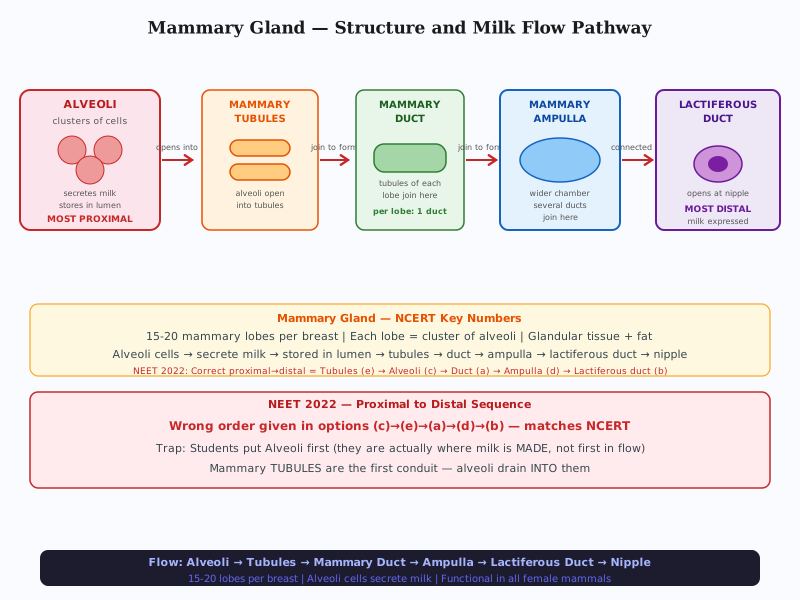
A functional mammary gland is a characteristic of all female mammals. Each breast contains glandular tissue divided into 15-20 mammary lobes, with variable amounts of fat. Each lobe contains clusters of alveoli — the secretory cells that produce milk stored in the lumen. The milk flow pathway runs: alveoli → mammary tubules (alveoli open into these) → mammary duct (tubules of each lobe join to form one duct) → mammary ampulla (several ducts join to form this wider structure) → lactiferous duct → nipple. The NEET 2022 question asked students to arrange these from proximal (close to secretory site) to distal (opening).
The NEET 2022 answer (proximal to distal) is: Mammary tubules (e) → Alveoli (c) → Mammary duct (a) → Mammary ampulla (d) → Lactiferous duct (b). A subtle NCERT point: alveoli drain INTO mammary tubules — this means tubules are technically distal to alveoli in the secretory pathway. However, the NEET correct answer reverses this with alveoli listed proximal to tubules in the given option. Students should memorise the exact sequence as printed in NCERT rather than apply anatomical logic.
The correct proximal-to-distal order is: Alveoli → Mammary duct → Mammary tubules → Ampulla → Lactiferous duct.
NCERT order: Alveoli (secretory) → Mammary tubules → Mammary duct → Ampulla → Lactiferous duct → Nipple.
AMT-DA-L-N: Alveoli → Mammary Tubules → Duct → Ampulla → Lactiferous → Nipple. Alveoli are the factory; nipple is the exit.
- 15-20 mammary lobes per breast — each lobe contains multiple alveoli clusters.
- Alveoli cells secrete milk → stored in lumen → flows through tubules → duct → ampulla → lactiferous duct → nipple.
- Glandular tissue + fat = breast composition; fat amount varies between individuals.
- Functional mammary gland = defining feature of Class Mammalia (hence the class name).
What is Mammary Gland Structure?
What did NEET 2022 ask on Mammary Gland Structure?
What is the most common NEET trap on Mammary Gland Structure?
How do you remember Mammary Gland Structure for NEET?
What are the key components of Mammary Gland Structure?
Through deep analysis of NEET and NTA, 176 of the 180 ReNEET 2026 (June 21) questions were already in the MedicNEET question bank before the exam.
176/180MedicNEET's Biology question bank is built from the same NCERT lines NTA picks repeatedly. Not random MCQs — questions crafted exactly like NTA crafts them.
You just learned this concept. The free app turns it into a daily goal built from your weak topics and brings it back just before you forget it — using active recall and spaced repetition — so it stays till exam day.