
Spermatogenesis — Divisions from Spermatogonium to Spermatozoa
✅ Asked in NEET 2026About spermatogenesis: A. Spermatogonia always undergo meiotic division. B. Primary spermatocytes divide mitotically. C. Secondary spermatocytes form haploid spermatids via meiosis II. D. Spermatids form spermatozoa by mitosis. E. Spermatids transform into spermatozoa by spermiogenesis.
About spermatogenesis: A. Spermatogonia always undergo meiotic division. B. Primary spermatocytes divide mitotically. C. Secondary spermatocytes form haploid spermatids via meiosis II. D. Spermatids form spermatozoa by mitosis. E. Spermatids transform into spermatozoa by spermiogenesis.
[NEET 2022 Phase 2] How many secondary spermatocytes are required to form 400 million spermatozoa?
Answer & NCERT explanation
Correct answer: B — C and E only
Spermatogonia divide by mitosis (A wrong); primary spermatocytes undergo meiosis I (B wrong); spermatids transform into spermatozoa by spermiogenesis, not mitosis (D wrong). C and E are correct.
Read more NCERT concept on the PYQ
The primary sex organs – the testis in the males and the ovaries in the females – produce gametes, i.e, sperms and ovum, respectively, by the process called gametogenesis. In testis, the immature male germ cells (spermatogonia) produce sperms by spermatogenesis that begins at puberty. The spermatogonia (sing. spermatogonium) present on the inside wall of seminiferous tubules multiply by mitotic division and increase in numbers. Each spermatogonium is diploid and contains 46 chromosomes. Some of the spermatogonia called primary spermatocytes periodically undergo meiosis. A primary spermatocyte completes the first meiotic division (reduction division) leading to formation of two equal, haploid cells called secondary spermatocytes, which have only 23 chromosomes each. The secondary spermatocytes undergo the second meiotic division to produce four equal, haploid spermatids. What would be the number of chromosome in the spermatids? The spermatids are transformed into spermatozoa (sperms) by the process called spermiogenesis. After spermiogenesis, sperm heads become embedded in the Sertoli cells, and are finally released from the seminiferous tubules by the process called spermiation.
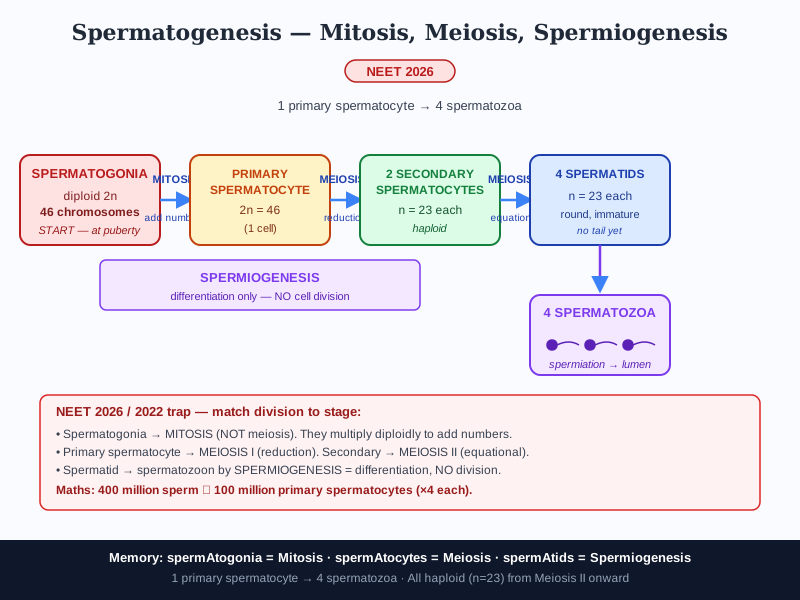
Spermatogenesis begins at puberty in the seminiferous tubules. Spermatogonia (diploid, 46 chromosomes) multiply by mitotic division. Some become primary spermatocytes (2n) which undergo Meiosis I to produce two equal haploid secondary spermatocytes (23 chromosomes each). Secondary spermatocytes undergo Meiosis II to produce four equal haploid spermatids. Spermatids are transformed into spermatozoa by spermiogenesis — a process of differentiation, not division. Finally, spermiation releases sperms from Sertoli cells into the seminiferous tubule lumen. Sertoli cells nourish developing spermatids throughout.
NEET 2026 and 2022 both tested precise knowledge of which cells undergo which division. The key traps: Spermatogonia divide by MITOSIS (not meiosis) to increase numbers. Primary spermatocytes undergo MEIOSIS I. Spermatids → spermatozoa by SPERMIOGENESIS (not mitosis). The calculation: 1 primary spermatocyte → 4 spermatozoa. Therefore: 400 million spermatozoa require 100 million primary spermatocytes, but only 200 million secondary spermatocytes (since 1 primary → 2 secondary → 4 spermatozoa).
Spermatogonia undergo meiotic division to produce spermatozoa, and spermatids form spermatozoa by mitosis.
Spermatogonia divide by MITOSIS. Primary spermatocytes undergo MEIOSIS I. Spermatids → spermatozoa by SPERMIOGENESIS (differentiation, not division).
SpermAtogonia = Mitosis (A for Add numbers). SpermAtocytes = Meiosis (cut in half). SpermAtids = Spermiogenesis (transform, no division).
- Spermatogonia: mitotic divisions to increase numbers — diploid (2n, 46 chromosomes).
- Primary spermatocyte → 2 secondary spermatocytes: Meiosis I (reduction division).
- Secondary spermatocyte → 2 spermatids each: Meiosis II; 4 spermatids total from 1 primary spermatocyte.
- Spermiation: release of sperms from Sertoli cells into seminiferous tubule lumen (after spermiogenesis).
Regarding spermatogenesis, which of the following combinations of statements are CORRECT? S1: Spermatogonia always undergo meiotic divisions to increase in number. S2: Primary spermatocytes complete the first meiotic division to form two equal haploid secondary spermatocytes. S3: Secondary spermatocytes undergo the second meiotic division to produce four equal haploid spermatids. S4: Spermatids are transformed into spermatozoa by a process called spermiogenesis. S5: To produce 400 million spermatozoa, 200 million secondary spermatocytes are required.
View bonus solution & explanation
Correct answer: B — S2, S4 and S5
S1 WRONG: Spermatogonia divide by MITOSIS (not meiosis) — this is the NEET 2026 trap. S2 CORRECT: Primary spermatocytes → Meiosis I → 2 secondary spermatocytes (haploid, 23 chr). S3 CORRECT: Secondary spermatocytes → Meiosis II → 4 spermatids total. S4 CORRECT: Spermiogenesis = transformation of spermatids into spermatozoa (differentiation, not division). S5 CORRECT: 1 secondary spermatocyte → 2 spermatozoa; 400M ÷ 2 = 200 million secondary spermatocytes (NEET 2022).
What is Spermatogenesis?
What did NEET 2026 ask on Spermatogenesis?
What is the most common NEET trap on Spermatogenesis?
How do you remember Spermatogenesis for NEET?
What are the key components of Spermatogenesis?
Through deep analysis of NEET and NTA, 176 of the 180 ReNEET 2026 (June 21) questions were already in the MedicNEET question bank before the exam.
176/180MedicNEET's Biology question bank is built from the same NCERT lines NTA picks repeatedly. Not random MCQs — questions crafted exactly like NTA crafts them.
You just learned this concept. The free app turns it into a daily goal built from your weak topics and brings it back just before you forget it — using active recall and spaced repetition — so it stays till exam day.