
Aestivation Types — Valvate, Twisted, Imbricate, Vexillary (Papilionaceous Pea)
✅ Asked in NEET 2024Match List I with List II LIST-I A. Vexillary aestivation B. Epipetalous stamens C. Epiphyllous stamens D. Perigynous flower LIST-II I. Brinjal II. Peach III. Pea IV. Lily
Match List I with List II LIST-I A. Vexillary aestivation B. Epipetalous stamens C. Epiphyllous stamens D. Perigynous flower LIST-II I. Brinjal II. Peach III. Pea IV. Lily
In Calotropis, aestivation is:
In a pea flower, five petals are arranged in a specialized manner with one posterior, two lateral and two anterior. These are named as __, __ and __ respectively. [NEET 2023 ]
Which one of the following plants shows vexillary aestivation and diadelphous stamens?
Answer & NCERT explanation
Correct answer: A — A–IV, B–II, C–I, D–III
This question seems to have an error in the provided answer. Vexillary aestivation is characteristic of Pea (Leguminosae), not Lily. Epipetalous stamens are found in Brinjal (Solanaceae) where stamens are attached to petals. Epiphyllous stamens occur in Lily where stamens appear leaf-like. Perigynous flowers are found in Peach (Rosaceae). The matching appears inconsistent with botanical facts.
Read more NCERT concept on the PYQ
When sepals or petals in a whorl just touch one another at the margin, without overlapping, as in Calotropis, it is said to be valvate. If one margin of the appendage overlaps that of the next one and so on as in china rose, lady's finger and cotton, it is called twisted. If the margins of sepals or petals overlap one another but not in any particular direction as in Cassia and gulmohar, the aestivation is called imbricate. In pea and bean flowers, there are five petals, the largest (standard) overlaps the two lateral petals (wings) which in turn overlap the two smallest anterior petals (keel); this type of aestivation is known as vexillary or papilionaceous.
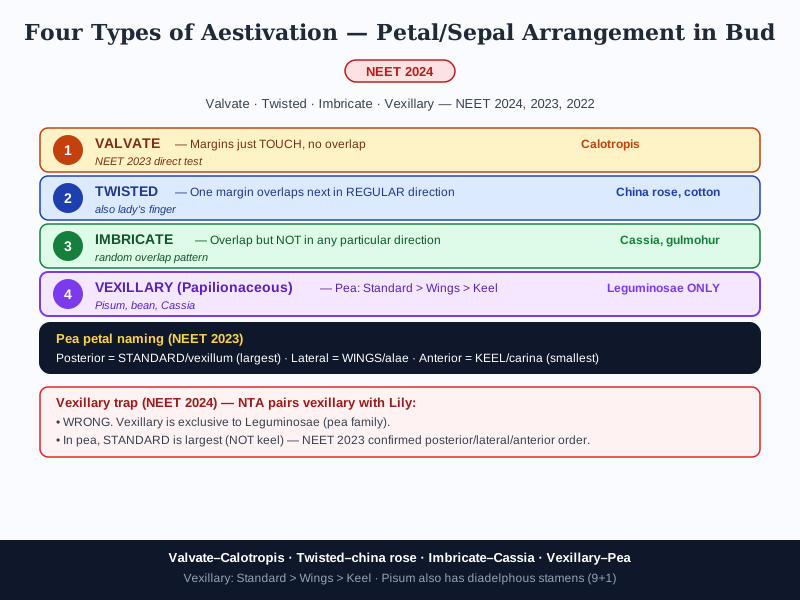
Aestivation is the mode of arrangement of sepals or petals within a floral bud BEFORE it opens. Four NCERT types: VALVATE — margins of sepals/petals just touch each other without overlapping (Calotropis). TWISTED — one margin of each appendage overlaps that of the next one in a regular direction (china rose, lady's finger, cotton). IMBRICATE — margins overlap one another but NOT in any particular direction (Cassia, gulmohur). VEXILLARY (papilionaceous) — five petals of pea/bean: the largest STANDARD (vexillum, posterior) overlaps the two lateral WINGS (alae), which in turn overlap the two smallest anterior KEEL (carina) petals enclosing stamens and pistil.
NEET tests aestivation almost every year (2024, 2023, 2022). The vexillary trap is most common: NTA pairs it with Lily instead of Pea (NEET 2024) — vexillary is exclusive to Leguminosae. Calotropis = valvate (NEET 2023 direct). The five-petal pea naming (NEET 2023) is asked as: posterior = Standard/vexillum, lateral = Wings/alae, anterior = Keel/carina. Diadelphous stamens (9 fused + 1 free) co-occur with vexillary aestivation in Pisum (NEET 2022).
Vexillary aestivation is characteristic of Lily flowers with one large posterior petal overlapping smaller anterior ones.
Vexillary (papilionaceous) is exclusive to PEA / LEGUMINOSAE — Pisum, bean, gulmohur, Cassia, Sesbania. Lily does NOT show vexillary aestivation.
VEXILLARY = pea family ONLY. VALVATE = Calotropis (just touch). TWISTED = china rose. IMBRICATE = Cassia (random overlap).
- Valvate: margins just touch without overlapping — Calotropis (NEET 2023).
- Twisted: one margin overlaps the next in a regular direction — china rose, lady's finger, cotton.
- Imbricate: overlapping but NOT in any particular direction — Cassia, gulmohur.
- Vexillary/Papilionaceous: pea — 1 Standard (largest, posterior) > 2 Wings (lateral) > 2 Keel (smallest, anterior); diadelphous stamens (9+1).
Consider the following statements about aestivation: S1: In valvate aestivation, the sepals/petals just touch one another at the margin without overlapping (e.g., Calotropis). S2: Twisted aestivation is characterised by margins overlapping in one regular direction (e.g., china rose, lady's finger, cotton). S3: In vexillary aestivation of pea, the keel petals are the largest and overlap the standard and wing petals. S4: Imbricate aestivation shows overlapping margins but not in any particular direction (e.g., Cassia, gulmohur). S5: Vexillary aestivation is exclusive to the Leguminosae (pea) family.
View bonus solution & explanation
Correct answer: A — S1, S2, S4 and S5
S1 CORRECT: Valvate = margins just touch, no overlap (Calotropis) — NEET 2023. S2 CORRECT: Twisted = regular directional overlap (china rose, lady's finger, cotton). S3 WRONG: STANDARD (vexillum) is the LARGEST and overlaps Wings, which overlap KEEL (smallest). Keel is the SMALLEST anterior pair. NEET 2023 confirmed: posterior = Standard, lateral = Wings, anterior = Keel. S4 CORRECT: Imbricate = overlap with no particular direction (Cassia, gulmohur). S5 CORRECT: Vexillary/papilionaceous is exclusive to Leguminosae.
What is Aestivation Types?
What did NEET 2024 ask on Aestivation Types?
What is the most common NEET trap on Aestivation Types?
How do you remember Aestivation Types for NEET?
What are the key components of Aestivation Types?
Through deep analysis of NEET and NTA, 176 of the 180 ReNEET 2026 (June 21) questions were already in the MedicNEET question bank before the exam.
176/180MedicNEET's Biology question bank is built from the same NCERT lines NTA picks repeatedly. Not random MCQs — questions crafted exactly like NTA crafts them.
You just learned this concept. The free app turns it into a daily goal built from your weak topics and brings it back just before you forget it — using active recall and spaced repetition — so it stays till exam day.