
Fermentation Energy Yield — Less Than 7% of Glucose Energy Released
✅ Asked in NEET 2022What amount of energy is released from glucose during lactic acid fermentation? (NEET 2022 Phase 1)
What amount of energy is released from glucose during lactic acid fermentation? (NEET 2022 Phase 1)
Answer & NCERT explanation
Correct answer: C — Less than 7%
In lactic acid fermentation, only glycolysis occurs which releases about 6.8% of total energy available in glucose. Since complete oxidation releases about 38% energy as ATP, fermentation releases less than 7% of glucose's total energy. Most energy remains trapped in lactate molecule.
Read more NCERT concept on the PYQ
In both lactic acid and alcohol fermentation not much energy is released; less than seven per cent of the energy in glucose is released and not all of it is trapped as high energy bonds of ATP. Also, the processes are hazardous – either acid or alcohol is produced. What is the net ATPs that is synthesised (calculate how many ATP are synthesised and deduct the number of ATP utilised during glycolysis) when one molecule of glucose is fermented to alcohol or lactic acid? Yeasts poison themselves to death when the concentration of alcohol reaches about 13 per cent. What then would be the maximum concentration of alcohol in beverages that are naturally fermented? How do you think alcoholic beverages of alcohol content greater than this concentration are obtained?
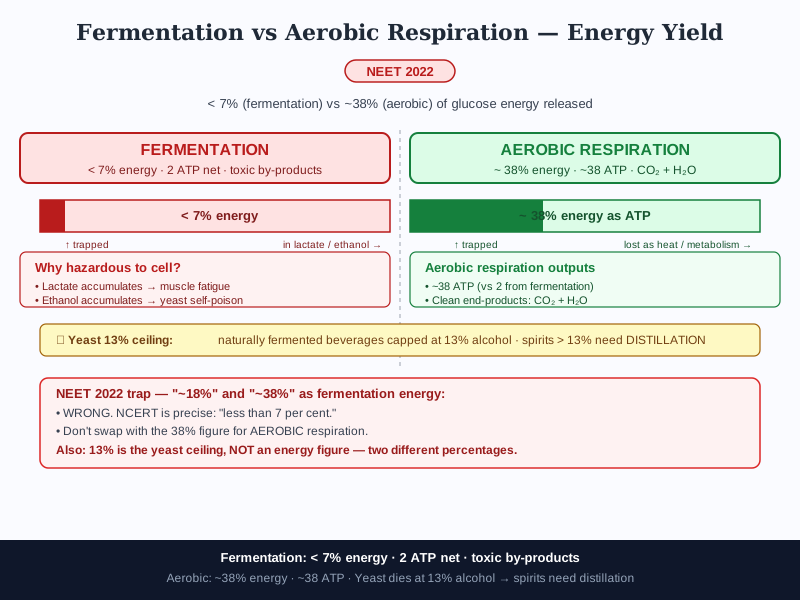
In both LACTIC ACID and ALCOHOL fermentation, very little of glucose's chemical energy is liberated — NCERT states LESS THAN 7 PER CENT of the energy in glucose is released, and not all of it is trapped as high-energy bonds of ATP. The processes are also HAZARDOUS to the cell — either lactic acid or alcohol accumulates as a toxic by-product. Yeasts poison themselves to death when alcohol concentration reaches ABOUT 13 PER CENT — this caps the maximum alcohol content of naturally fermented beverages. Higher concentrations (in spirits) are obtained by distillation, not fermentation. The contrast: aerobic respiration of glucose yields ~38 ATP and traps roughly 38% of glucose's energy.
Energy figures to memorise: fermentation = <7% of glucose energy released. Aerobic respiration = ~38% trapped as ATP. Yeast self-poisoning ceiling = 13% alcohol — naturally fermented beverages cannot exceed this; spirits require distillation. Net ATP from fermentation = 2 ATP (4 made minus 2 used in glycolysis). NEET 2022 directly asked the <7% figure. Glycolysis is common to both fermentation and aerobic respiration, but in fermentation it's the ONLY ATP-producing step.
Fermentation releases about 18% or more of glucose's energy as ATP, comparable to aerobic respiration.
Fermentation releases LESS THAN 7% of glucose energy (NCERT exact). Aerobic respiration releases ~38%. The bulk of glucose energy remains trapped in lactate or ethanol.
Fermentation = <7% (NCERT). Aerobic = ~38%. Yeast dies at 13% alcohol. Spirits > 13% = DISTILLED, not fermented.
- Fermentation releases LESS THAN 7% of glucose energy — most stays trapped in lactate or ethanol.
- Processes are hazardous: acid or alcohol accumulates as toxic by-product.
- Yeasts poison themselves to death when alcohol concentration reaches about 13%.
- Net ATP from fermentation = 2 (4 produced in glycolysis minus 2 invested); aerobic respiration yields ~38 ATP.
Consider the following statements about fermentation: S1: In lactic acid fermentation, less than 7% of glucose energy is released. S2: Alcohol fermentation releases approximately 38% of glucose energy as ATP. S3: The processes of fermentation are hazardous because acid or alcohol accumulates as a by-product. S4: Yeasts poison themselves to death when alcohol concentration reaches about 13 per cent. S5: Alcoholic beverages with more than 13% alcohol are obtained by distillation rather than direct fermentation.
View bonus solution & explanation
Correct answer: B — S1, S3, S4 and S5
S1 CORRECT: <7% of glucose energy released in fermentation (NEET 2022 answer). S2 WRONG: 38% figure applies to AEROBIC respiration, NOT fermentation — fermentation releases <7%. The swap of these two figures is the classic NEET trap. S3 CORRECT: Acid or alcohol accumulation makes the process hazardous to the cell (NCERT). S4 CORRECT: Yeast self-poisoning at ~13% alcohol (NCERT exact). S5 CORRECT: Beverages above 13% (spirits) require distillation, since natural fermentation is capped by yeast death.
What is Fermentation Energy Yield?
What did NEET 2022 ask on Fermentation Energy Yield?
What is the most common NEET trap on Fermentation Energy Yield?
How do you remember Fermentation Energy Yield for NEET?
What are the key components of Fermentation Energy Yield?
Through deep analysis of NEET and NTA, 176 of the 180 ReNEET 2026 (June 21) questions were already in the MedicNEET question bank before the exam.
176/180MedicNEET's Biology question bank is built from the same NCERT lines NTA picks repeatedly. Not random MCQs — questions crafted exactly like NTA crafts them.
You just learned this concept. The free app turns it into a daily goal built from your weak topics and brings it back just before you forget it — using active recall and spaced repetition — so it stays till exam day.