
Stamen Structure — Proximal End of Filament Attaches to Thalamus
✅ Asked in NEET 2016Proximal end of the filament of stamen is attached to the (NEET 2016)
Proximal end of the filament of stamen is attached to the (NEET 2016)
Answer & NCERT explanation
Correct answer: C — Thalamus or petal
The filament is the stalk portion of stamen that supports the anther. According to NCERT, the proximal end (base) of filament attaches to the thalamus (receptacle) or to petals in epipetalous flowers. The anther is at the distal end, connective connects anther lobes, and placenta bears ovules - none attach the filament base.
Read more NCERT concept on the PYQ
The proximal end of the filament is attached to the thalamus or the petal of the flower. The number and length of stamens are variable in flowers of different species. If you were to collect a stamen each from ten flowers (each from different species) and arrange them on a slide, you would be able to appreciate the large variation in size seen in nature. Careful observation of each stamen under a dissecting microscope and making neat diagrams would elucidate the range in shape and attachment of anthers in different flowers.
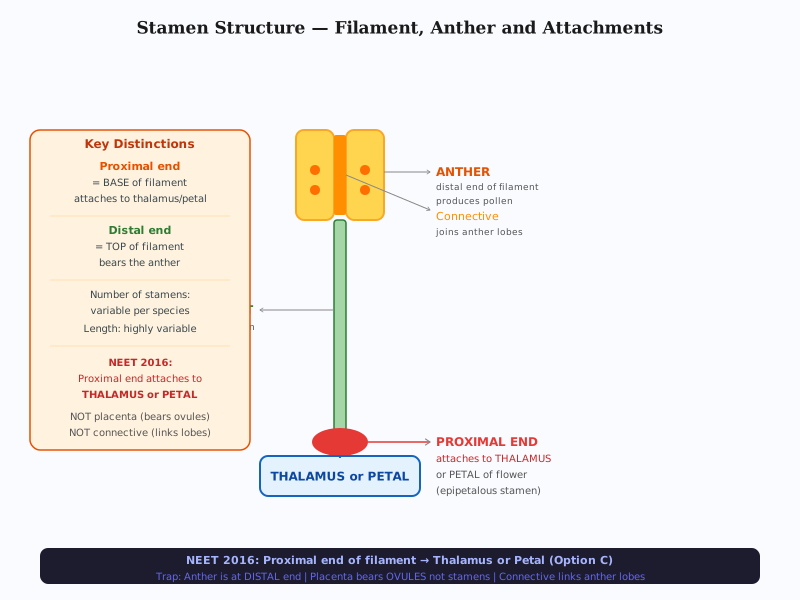
The stamen consists of two parts: the anther (pollen-producing structure) and the filament (slender stalk). The filament has two ends — the distal end attaches to the anther, and the proximal end (the base) is attached to the thalamus (receptacle) or to the petal of the flower. When stamens are attached to petals, they are called epipetalous (e.g., in mustard). The number and length of stamens varies widely between species. The anther is typically bilobed (two lobes connected by a structure called the connective), and each lobe contains two microsporangia where pollen is produced.
NCERT makes the proximal-distal distinction explicit but students often confuse 'proximal' (closer to plant body = base of filament) with 'distal' (farther = top bearing anther). The word 'thalamus' in botany refers to the receptacle — the region of the stem on which floral parts are borne. It is not related to the brain structure. Epipetalous stamens (attached to petals) are common in Solanaceae. Epiphyllous stamens are those attached to the perianth in monocots.
The proximal end of the filament is attached to the anther.
The proximal end (base) of the filament attaches to the THALAMUS or PETAL. The anther is at the DISTAL (top) end.
PROX = BASE = Thalamus. DIST = TOP = Anther. Think: roots are proximal (near base), flowers are distal.
- Proximal end of filament = attached to thalamus or petal | Distal end = bears the anther.
- Connective = tissue connecting the two anther lobes; connective continues into filament.
- Epipetalous stamen: filament fused with petal (e.g., mustard, brinjal).
- Anther is bilobed — each lobe contains 2 microsporangia = 4 microsporangia per anther total.
Match Column I (Stamen structure) with Column II (Correct description): Column I A. Proximal end of filament B. Distal end of filament C. Connective D. Microsporangia Column II I. Tissue joining the two anther lobes II. Attaches to thalamus or petal III. Site of pollen grain production IV. Bears the anther
View bonus solution & explanation
Correct answer: B — A-II, B-IV, C-I, D-III
A-II: Proximal end (base) of filament attaches to thalamus or petal (NCERT exact, NEET 2016). B-IV: Distal end of filament bears the anther. C-I: Connective is the tissue joining the two anther lobes. D-III: Microsporangia are the sites where pollen grains (microspores) are produced inside the anther.
What is Stamen Structure?
What did NEET 2016 ask on Stamen Structure?
What is the most common NEET trap on Stamen Structure?
How do you remember Stamen Structure for NEET?
What are the key components of Stamen Structure?
Through deep analysis of NEET and NTA, 176 of the 180 ReNEET 2026 (June 21) questions were already in the MedicNEET question bank before the exam.
176/180MedicNEET's Biology question bank is built from the same NCERT lines NTA picks repeatedly. Not random MCQs — questions crafted exactly like NTA crafts them.
You just learned this concept. The free app turns it into a daily goal built from your weak topics and brings it back just before you forget it — using active recall and spaced repetition — so it stays till exam day.