Which one of the following statements is not true? (1) Tapetum helps in the dehiscence of anther (2) Exine of pollen grains is made up of sporopollenin (3) Pollen grains of many species cause severe allegies (4) Stored pollen in liquid nitrogen can be used in the crop breeding programmes (NEET 2016)
Which of the following statements is not correct? (1) Pollen grains of many species can germinate on the stigma of a flower, but only one pollen tube of the same species grows into the style. (2) Insects that consume pollen or nectar without bringing about pollination are called pollen/nectar robbers. (3) Pollen germination and pollen tube growth are regulated by chemical components of pollen interacting with those of the pistil. (4) Some reptiles have also been reported as pollinators in some plant species. (NEET 2016)
Seed formation without fertilization in flowering plants involves the process of:
The ovule of an angiosperm is technically equivalent to
Cotyledon of maize grain is called:
The coconut water from tender coconut represents:
Two ways to go deeper on this chapter
Choose your next step
In majority of angiosperms
Proximal end of the filament of stamen is attached to the:
Pollination in water hyacinth and water lily is brought about by the agency of (NEET 2016 Phase-2)
The morphological nature of the edible part of coconut is
Double fertilization is exhibited by
Functional megaspore in an angiosperm develops into
Attractants and rewards are required for
Flowers which have single ovule in the ovary and are packed into inflorescence are usually pollinated by (NEET 2017)
Which one of the following plants shows a very close relationship with a species of moth, where none of the two can complete its life cycle without the other? (NEET 2018)
Double fertilization is
Which of the following has proved helpful in preserving pollen as fossils? (NEET 2018)
Pollen grains can be stored for several years in liquid nitrogen having a temperature of (NEET 2018)
What type of pollination takes place in Vallisneria?
In some plants, the female gamete develops into embryo without fertilization. This phenomenon is known as (NEET 2019)
What is the fate of the male gametes discharged in the synergid? (NEET 2019)
Persistent nucellus in the seed is known as
In which one of the following, both autogamy and geitonogamy are prevented?
Which one of the following statements regarding post-fertilization development in flowering plants is incorrect? (1) Ovary develops into fruit (2) Zygote develops into embryo (3) Central cell develops into endosperm (4) Ovules develop into embryo sac (NEET 2019)
Which is the most common type of embryo sac in angiosperms ?
In water hyacinth and water lily, pollination takes place by: (NEET 2020)
The body of the ovule is fused within the funicle at
The plant parts which consist of two generations one within the other: (a) Pollen grains inside the anther (b) Germinated pollen grain with two male gametes (c) Seed inside the fruit (d) Embryo sac inside the ovule (A) (c) and (d) (B) (a) and (d) (C) (a) only (D) (a), (b) and (c) (NEET 2020)
A typical angiosperm embryo sac at maturity is
In some members of which of the following pairs of families, pollen grains retain their viability for months after release ? (NEET 2021)
The term used for transfer of pollen grains from anthers of one plant to stigma of a different plant which, during pollination, brings genetically different types of pollen grains to stigma, is: (NEET 2021)
Given below are two statements: Assertion (A): Cells of the tapetum possess dense cytoplasm and generally have more than one nucleus. Reason (R): Presence of more than one nucleus in the tapetum increases the efficiency of nourishing the developing microspore mother cells. In the light of the above statements, choose the correct answer: (NEET 2025)
Which part of the fruit, labelled in the given figure makes it a false fruit? (NEET 2022)
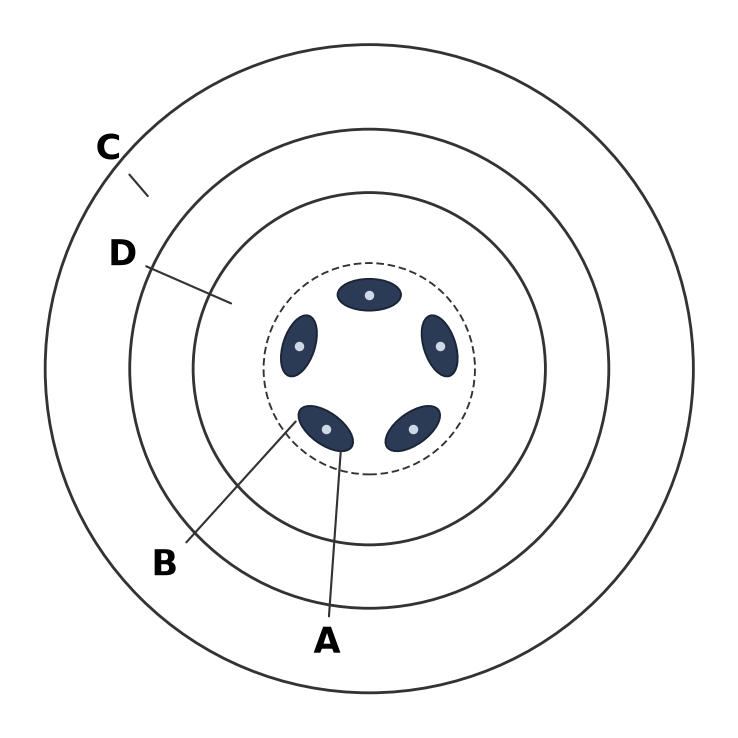
Identify the incorrect statement related to Pollination:
Given below are two statements: Statement I : Cleistogamous flowers are invariably autogamous Statement II : Cleistogamy is disadvantageous as there is no chance for cross pollination In the light of the above statements, choose the correct answer from the options given below: (NEET 2022)
In angiosperms the correct sequence of events in formation of female gametophyte in the ovule is (A) 3 successive free nuclear divisions in functional megaspores. (B) Degeneration of 3 megaspores. (C) Meiotic division in megaspore mother cell. (D) Migration of 3 nuclei towards each pole. (E) Formation of wall resulting in seven celled embryo sac. Choose the correct answer from the options given below. (NEET 2023 Phase-2)
What is the function of tassels in the corn cob?
Given below are two statements: One is labelled as Assertion A and the other is labelled as Reason R: Assertion A: A flower is defined as modified shoot wherein the shoot apical meristem changes to floral meristem. Reason R: Internode of the shoot gets condensed to produce different floral appendages laterally at successive nodes instead of leaves. In the light of the above statements, choose the correct answer from the options given below: (NEET 2023)
Large, colourful, fragrant flowers with nectar are seen in:
Transfer of pollen grains from anther to stigma of another flower of same plant is known as:
In which of the following sets of families, the pollen grains are viable for months?
In angiosperm, the haploid, diploid and triploid structures of a fertilized embryo sac sequentially are: (NEET 2023)
Identify the part seed from the given figure which is destined to form root when the seed germinates.
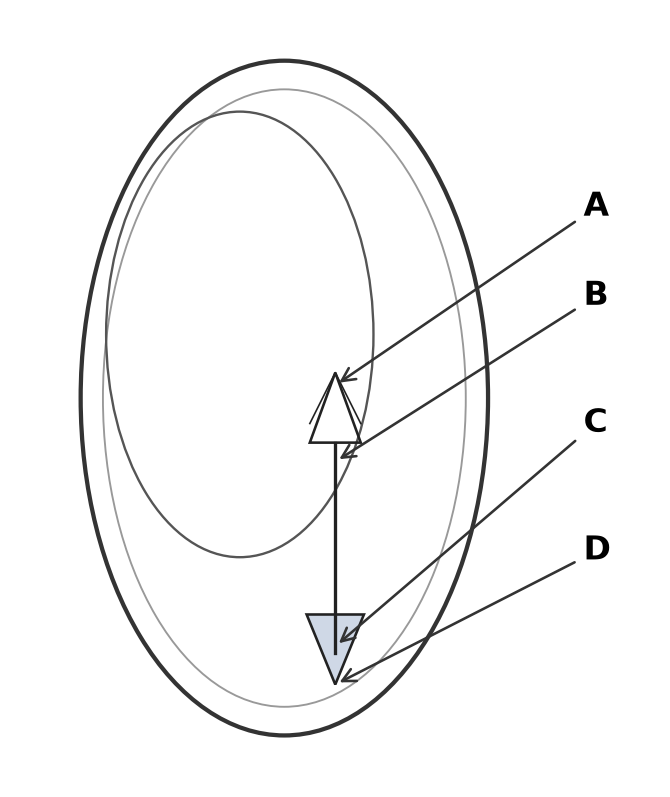
Identify the set of correct statements: A. The flowers of Vallisneria are colorful and produce nectar. B. The flowers of waterlily are not pollinated by water. C. In most of water pollinated species, the pollen grains are protected from wetting. D. Pollen grains of some hydrophytes are long and ribbon like. E. In sumo hydrophytes, the pollen grains are carried passively inside water. Choose the correct answer from the options given below: (NEET 2024)
Identify the correct description about given figure.
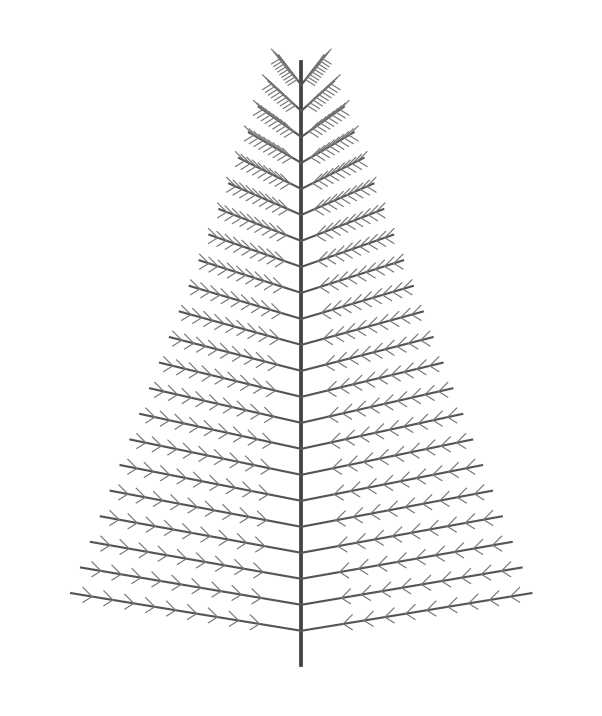
Given below are two statements: Assertion (A): A typical unfertilized, angiosperm embryo sac at maturity is 8 nucleate and 7-celled. Reason (R): The egg apparatus has 2 polar nuclei. In the light of the above statements, choose the correct answer: (NEET 2025)
Given below are two statements: Assertion (A): Both wind and water pollinated flowers are not very colourful and do not produce nectar. Reason (R): The flowers produce enormous amount of pollen grains in wind and water pollinated flowers. In the light of the above statements, choose the correct answer: (NEET 2025)
Match List I with List II: List I A. Scutellum B. Non-albuminous seed C. Epiblast D. Perisperm List II I. Persistent nucellus II. Cotyledon of Monocot seed III. Groundnut IV. Rudimentary cotyledon Choose the option with all correct matches: (NEET 2025)
In the seeds of cereals, the outer covering of endosperm separates the embryo by a protein-rich layer called : (NEET 2025)
How many meiotic and mitotic divisions need to occur for the development of a mature female gametophyte from the megaspore mother cell in an angiosperm plant? (NEET 2025)
Which of the following in the female gametophyte of an angiosperm helps in guiding the pollen tube for fertilizing the eggs?
If the diploid chromosome number of a typical angiosperm is 36, what would be the chromosome number in its endosperm?
Arrange the following in the correct developmental sequence related to microsporogenesis: A. Microspore tetrads B. Sporogenous tissue C. Pollen grains D. Pollen mother cells Choose the correct answer from the options given below: (NEET 2026)
Which one of the following is a triploid cell?
Which one of the following types of pollination brings genetically different types of pollen grains to the stigma?
How many theca are present in each lobe of a typical bilobed angiosperm anther?
Which of the following plants produces non-albuminous seeds?
Match List-I with List-II: List-I A. Marginal placentation B. Axile placentation C. Parietal placentation D. Free central placentation List-II I. Argemone II. Tomato III. Primrose IV. Pea Choose the correct answer from the options given below:
Want more Sexual Reproduction in Flowering Plants questions?
MedicNEET has 43,000+ NEET-style questions across Physics, Chemistry & Biology with detailed NCERT-based explanations — including the long, tricky questions that actually come in the exam.
Download MedicNEET App — Free