
Albuminous vs Non-Albuminous Seeds — Endosperm and Perisperm
📚 Practice ConceptIn angiosperms, the seed is the final product of sexual reproduction. It is often described as a fertilised ovule. Seeds are formed inside fruits. A seed typically consists of seed coat(s), cotyledon(s) and an embryo axis. The cotyledons of the embryo are simple structures, generally thick and swollen due to storage of food reserves (as in legumes). Mature seeds may be non-albuminous or ex-albuminous. Non-albuminous seeds have no residual endosperm as it is completely consumed during embryo development (e.g., pea, groundnut). Albuminous seeds retain a part of endosperm as it is not completely used up during embryo development (e.g., wheat, maize, barley, castor). Occasionally, in some seeds such as black pepper and beet, remnants of nucellus are also persistent. This residual, persistent nucellus is the perisperm.
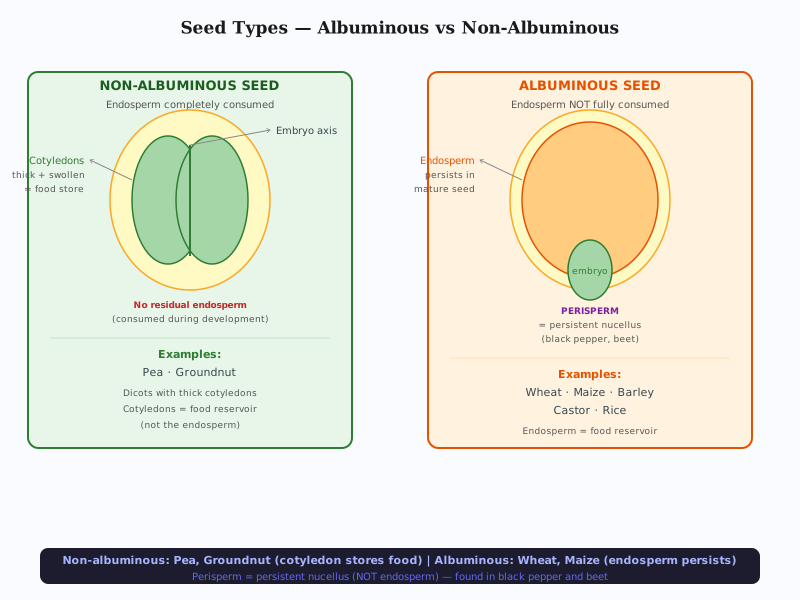
In albuminous seeds like wheat, the cotyledons are thick and swollen due to stored food reserves.
In albuminous seeds, cotyledons are THIN — food is stored in the endosperm. Thick swollen cotyledons = NON-albuminous seeds (pea, groundnut).
ALBUMinous = ALBUMIN-like protein in endosperm. Non-alb = cotyledons thick. Alb = cotyledons thin, endosperm thick.
- Non-albuminous: Pea, Groundnut — endosperm fully consumed; cotyledons store food (thick and swollen).
- Albuminous: Wheat, Maize, Barley, Castor, Rice — endosperm persists in mature seed as food reserve.
- Perisperm = persistent nucellus (not endosperm) — found in black pepper and beet seeds.
- Monocot seeds are albuminous — single thin cotyledon (scutellum in grass) absorbs endosperm food during germination.
Which of the following correctly matches the seed type with its food storage location and an example? Column I (Seed type) A. Non-albuminous seed B. Albuminous seed C. Perisperm D. Monocot seed (grass) Column II (Food storage / Feature) I. Persistent nucellus — black pepper II. Thick swollen cotyledons — pea III. Thin cotyledon (scutellum) absorbs endosperm food IV. Endosperm persists — wheat
View bonus solution & explanation
Correct answer: A — A-II, B-IV, C-I, D-III
A-II: Non-albuminous seeds (pea, groundnut) have thick swollen cotyledons as food store — endosperm completely consumed. B-IV: Albuminous seeds (wheat, maize) have persistent endosperm as food reserve. C-I: Perisperm = persistent nucellus found in black pepper and beet — NOT endosperm. D-III: Monocot grass seeds have a single thin cotyledon (scutellum) that absorbs digested endosperm food during germination.
What is Albuminous vs Non-Albuminous Seeds?
What did NEET previous years ask on Albuminous vs Non-Albuminous Seeds?
What is the most common NEET trap on Albuminous vs Non-Albuminous Seeds?
How do you remember Albuminous vs Non-Albuminous Seeds for NEET?
What are the key components of Albuminous vs Non-Albuminous Seeds?
Through deep analysis of NEET and NTA, 176 of the 180 ReNEET 2026 (June 21) questions were already in the MedicNEET question bank before the exam.
176/180MedicNEET's Biology question bank is built from the same NCERT lines NTA picks repeatedly. Not random MCQs — questions crafted exactly like NTA crafts them.
You just learned this concept. The free app turns it into a daily goal built from your weak topics and brings it back just before you forget it — using active recall and spaced repetition — so it stays till exam day.