How many questions from Reproductive Health in NEET?
1–2 questions per year from Reproductive Health in NEET (avg 2.3/yr, 34 PYQs from 2015–2026). That's ~2% of NEET Biology (4–8 marks). High-yield: contraception (IUDs, Saheli), MTP Act (legal abortion up to 20 weeks), STIs (AIDS incurable; gonorrhoea curable), and infertility treatments (IVF, GIFT, ZIFT). Practice all 34 questions free in bilingual Hindi & English in the MedicNEET app.
Practice 34 Reproductive Health PYQs free — bilingual Hindi & English, with NCERT explanations
Practice Free →Year-wise NEET Questions — Reproductive Health
| Year | Questions | Marks |
|---|---|---|
| NEET 2026 | 3 | 12 |
| NEET 2025 | 1 | 4 |
| NEET 2024 | 2 | 8 |
| NEET 2023 | 7 | 28 |
| NEET 2022 | 3 | 12 |
| NEET 2021 | 2 | 8 |
| NEET 2020 | 2 | 8 |
| NEET 2019 | 5 | 20 |
| NEET 2018 | 1 | 4 |
| NEET 2017 | 3 | 12 |
| NEET 2016 | 6 | 24 |
Topics in Reproductive Health (NCERT Ch 4, Class 12)
Sample NEET PYQs — Reproductive Health
Embryo with more than 16 blastomeres formed due to in-vitro fertilization is transferred into (NEET 2016 Phase-2)
- A. Uterus
- B. Fallopian tube
- C. Fimbriae
- D. Cervix
Explanation: Answer: (a) Uterus Solution: In intra uterine transfer (IUT), an embryo with more than 8 blastomeres formed by IVF is transferred into the uterus; an embryo with 16 blastomeres (>8) therefore goes to the uterus. The fallopian tube receives only the zygote or early embryo (up to 8 blastomeres) in ZIFT, so the tube, fimbriae and cervix are not the correct transfer sites here. NCERT Reference: Reproductive Health, p.48 — "embryos with more than 8 blastomeres, into the uterus (IUT – intra uterine transfer), to complete its further development"
Which of the following is hormone releasing IUD?
- A. LNG-20
- B. Multiload-375
- C. Lippes loop
- D. Cu7
Explanation: Answer: (a) LNG-20 Solution: LNG-20 (along with Progestasert) is a hormone-releasing IUD that, in addition to the usual IUD action, makes the uterus unsuitable for implantation and the cervix hostile to sperms. Multiload-375 and Cu7 are copper-releasing IUDs, while Lippes loop is a non-medicated IUD, so none of these is hormone-releasing. NCERT Reference: Reproductive Health, p.44 — "the hormone releasing IUDs (Progestasert, LNG-20)"
Which of the following approaches does not give the defined action of contraceptive? (a) Barrier methods – Prevent fertilization (b) Intra uterine devices – Increase phagocytosis of sperms, suppress sperm motility and fertilizing capacity of sperms (c) Hormonal contraceptives – Prevent / retard entry of sperms, prevent ovulation and fertilization (d) Vasectomy – Prevents spermatogenesis Choose the correct answer: (NEET 2016)
- A. Barrier methods – Prevent fertilization
- B. Intra uterine devices – Increase phagocytosis of sperms, suppress sperm motility and fertilizing capacity of sperms
- C. Hormonal contraceptives – Prevent / retard entry of sperms, prevent ovulation and fertilization
- D. Vasectomy – Prevents spermatogenesis
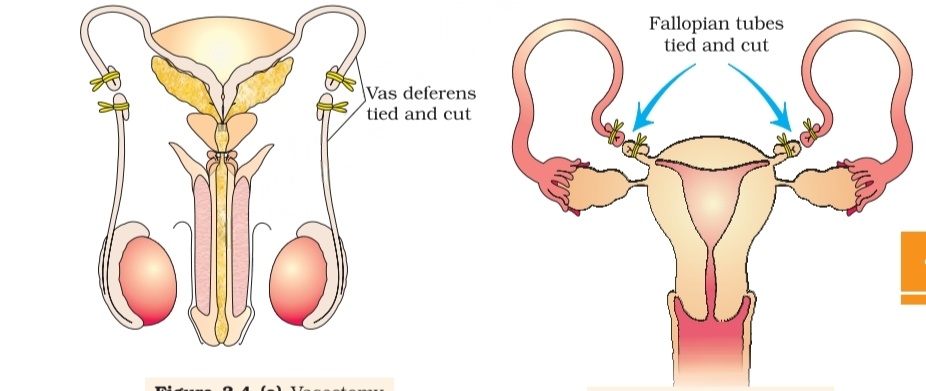
Explanation: Answer: (d) Vasectomy – Prevents spermatogenesis Solution: In vasectomy a part of the vas deferens is cut/tied, which blocks gamete transport so sperms cannot reach the semen — it does NOT stop spermatogenesis, which continues in the testes; hence pairing (4) is wrong. Barrier methods physically prevent ovum and sperm meeting (fertilization), IUDs increase phagocytosis and suppress sperm motility/fertilising capacity, and hormonal contraceptives inhibit ovulation/implantation and alter cervical mucus — all three (1),(2),(3) are correctly defined. NCERT Reference: Reproductive Health, p.46 — "Surgical intervention blocks gamete transport and thereby prevent conception."
In context of Amniocentesis, which of the following statement is incorrect?
- A. It is usually done when a woman is between 14 – 16 weeks pregnant
- B. It is used for prenatal sex determination
- C. It can be used for detection of Down syndrome
- D. It can be used for detection of Cleft palate
Explanation: Answer: (d) It can be used for detection of Cleft palate Solution: Amniocentesis analyses fetal cells and dissolved substances in the amniotic fluid to detect chromosomal/genetic disorders such as Down syndrome, haemophilia and sickle-cell anaemia — it cannot detect cleft palate, a structural malformation, so statement (4) is incorrect. Although it can reveal the foetus's sex, this misuse for prenatal sex-determination is statutorily banned but technically possible, so (2) is a correct statement. Statements (1) and (3) describe genuine, correct uses of the test. NCERT Reference: Reproductive Health, p.42 — "This procedure is used to test for the presence of certain genetic disorders such as, down syndrome, haemoplilia, sickle-cell anemia, etc."
Which of the following is incorrect regarding vasectomy?
- A. No sperm occurs in seminal fluid
- B. No sperm occurs in epididymis
- C. Vasa deferentia is cut and tied
- D. Irreversible sterility
Explanation: Answer: (b) No sperm occurs in epididymis Solution: In vasectomy the vas deferens is cut/tied, so sperms produced in the testes still reach and remain present in the epididymis — they simply cannot pass beyond the block into the semen; hence statement (2) is incorrect. Because the transport is blocked, no sperm occurs in the seminal fluid (1) and the procedure has very poor reversibility, effectively producing terminal sterility (4); the vasa deferentia being cut and tied (3) is the procedure itself. NCERT Reference: Reproductive Health, p.46 — "In vasectomy, a small part of the vas deferens is removed or tied up through a small incision on the scrotum"
Bilingual Hindi & English · NCERT explanations · Free
Practise Reproductive Health MCQs — Free
Every question format NEET uses, starting with the newest ReNEET 2026-style reasoning MCQs. Tap an option for the answer + NCERT explanation. Bilingual in the app.
✨ Reproductive Health — ReNEET 2026-Style Reasoning Questions
The newest, most exam-current format — reasoning-based questions modelled on ReNEET 2026. This is where NEET is heading; practise the pattern before the exam does.
- Q1. How does development of Saheli reflect progress in reproductive care?
- Q2. What is the main reason India launched family planning as early as 1951?
- Q3. Why is media involvement crucial in spreading reproductive health awareness?
- Q4. How do oral pills prevent conception?
- Q5. Why did India’s population grow rapidly after independence despite development in multiple sectors?
- Q6. Why should continuation of pregnancy be avoided in some cases as per the Act?
- Q7. Why is the MTP Amendment Act, 2017 significant in modern reproductive healthcare?
- Q8. Why is avoiding sex with unknown or multiple partners important?
- Q9. Why does social stigma surrounding STIs reduce treatment-seeking behaviour?
- Q10. Why might a couple opt for ICSI rather than IVF?
You’ve practised 10 of 60 Reproductive Health questions in this set.
Practise all 60 + every chapter — free app →📑 Reproductive Health — NEET 2025 & 2026 Long-Form MCQs
The long, multi-statement questions that dominated NEET 2025 & 2026 — each covers 5-6 concepts at once, so they double as fast full-chapter revision.
- Q1. Which of the following statements correctly indicate an improvement in the reproductive health of a society? S1: An increase in maternal and infant mortality rates signifies improved reproductive health. S2: Better detection and effective cure of Sexually Transmitted Diseases (STDs) contribute to a reproductively healthy society. S3: A higher rate of medically assisted deliveries is a parameter reflecting improved reproductive health. S4: The trend of more couples opting for smaller families indicates successful reproductive health initiatives. S5: Decreased overall medical facilities for sex-related problems are a key indicator of reproductive health success.
- Q2. Match the following items in Column I with their corresponding characteristics in Column II and their primary function/description in Column III. Column I A. RCH programme B. Amniocentesis C. Saheli D. Lippes loop Column II I. Fetal cell analysis II. Non-steroidal preparation III. National level initiative IV. Non-medicated IUD Column III 1. Developed by CDRI, Lucknow 2. Awareness and facilities for reproductive health 3. Detection of genetic disorders 4. Increase phagocytosis of sperms
- Q3. Which of the following statements are correct regarding Medical Termination of Pregnancy (MTP) as per the MTP Act 2017 and general MTP practices mentioned in NCERT? S1: The opinion of two registered medical practitioners is mandatory for termination of pregnancy between 12 and 24 weeks. S2: Termination of a 10-week pregnancy requires the consent of only one registered medical practitioner. S3: MTPs are considered relatively safe during the first trimester, but much riskier in the second trimester. S4: The continuation of pregnancy involving a risk of grave injury to the pregnant woman's physical or mental health is a legal ground for MTP. S5: For pregnancies lasting beyond 24 weeks, the MTP Act 2017 states that two registered medical practitioners' opinion is sufficient for termination. S6: MTPs are primarily performed to promote female fertility.
- Q4. Which of the following statements correctly describe the best practices for managing and preventing Sexually Transmitted Infections (STIs)? S1: Self-medication with broad-spectrum antibiotics, based on prior prescriptions, is an appropriate initial response to mild genital symptoms. S2: Prompt consultation with a qualified medical professional is crucial for early detection and proper treatment of any suspected STI. S3: Social stigma associated with STIs often acts as a barrier, preventing individuals from seeking timely medical help. S4: Ignoring minor genital symptoms, hoping they will resolve spontaneously, is a safe approach to avoid unnecessary medical visits. S5: Avoiding sex with multiple partners and consistent condom use are key preventive measures against STIs.
You’ve practised 4 of 59 Reproductive Health questions in this set.
Practise all 59 + every chapter — free app →🧩 Reproductive Health — All-Format Questions — Match, Assertion-Reason, Statement & Image-Based
Every question format NEET uses — match-the-column, assertion-reason, statement-based, and image/diagram questions — not just plain MCQs. Each with an instant NCERT-referenced solution.
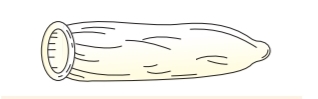
- Q1. The structure shown in Figure 3.1(a) primarily prevents pregnancy by:
- Q2. Which of the following statements is incorrect regarding the surgical methods shown in the figure ?
- Q3. Match the column:- Column I A. Gonorrhoea B. Genital herpes C. Chlamydiasis D. Hepatitis-B E. Trichomoniasis Column II 1. Viral, incurable, associated with AIDS 2. Bacterial, causes discharge and pain 3. Often asymptomatic in females, curable 4. Viral, spreads via blood transfusion/needles 5. Protozoan infection, curable
- Q4. Match the column:- Column I A. ZIFT B. IUT C. GIFT D. ICSI E. AI/IUI Column II 1. Ovum from donor transferred into fallopian tube of another female 2. Sperm directly injected into ovum in lab 3. Embryos with >8 blastomeres transferred to uterus 4. Early embryos with ≤8 blastomeres transferred to fallopian tube 5. Semen from husband/donor artificially introduced into female tract
- Q5. Assertion (A): Introduction of sex education in schools is encouraged by RCH programmes. Reason (R): It helps students believe in traditional myths regarding sexuality.
- Q6. Assertion (A): Creating awareness about sex-related aspects is important for reproductive health. Reason (R): It ensures people continue believing myths passed through generations.
- Q7. Consider the following statements : 1. According to WHO, reproductive health means total well-being in all aspects of reproduction, i.e., physical, emotional, behavioural and social. 2. A reproductively healthy society has people with normal reproductive organs and normal emotional and behavioural interactions in sex-related aspects. 3. India was among the first countries in the world to initiate national level programmes for reproductive health called family planning in 1952. 4. Statutory ban on amniocentesis for sex determination was implemented to check female foeticides. 5. Amniocentesis involves analysis of foetal cells and dissolved substances from amniotic fluid to detect genetic disorders like Down syndrome, haemophilia, and sickle-cell anaemia.
- Q8. Which of the following statements are correct? 1. STIs most common in 15–24 years. 2. HIV, genital herpes, and hepatitis-B are incurable. 3. Early symptoms are usually severe. 4. Trichomoniasis is protozoan and curable. 5. Social stigma prevents early treatment.
- Q9. Which of the following statements are correct? 1. MTP = intentional medical termination of pregnancy. 2. Legalised in India in 1971. 3. Safer during first trimester (≤12 weeks). 4. Beyond 12 weeks, two doctors’ opinion required (2017 amendment). 5. Amniocentesis is legally used for sex determination before MTP.
- Q10. Which of the following statements are correct? 1. Infertility = inability to produce children after 2 years of unprotected intercourse. 2. IVF followed by embryo transfer = test-tube baby programme. 3. ZIFT transfers ovum to fallopian tube. 4. ICSI = sperm injected into ovum. 5. Legal adoption is also a valid option for childless couples.
You’ve practised 10 of 245 Reproductive Health questions in this set.
Practise all 245 + every chapter — free app →Frequently Asked Questions — Reproductive Health NEET
How many questions come from Reproductive Health in NEET?+
What are the high-yield topics in Reproductive Health for NEET 2027?+
What is Saheli? Why is it asked in NEET?+
What is the MTP Act in the context of NEET Biology?+
Which STIs are completely curable according to NEET Biology?+
Practice Reproductive Health — Free
All 34 NEET PYQs · 385 practice questions · Bilingual Hindi & English · NCERT-mapped explanations · No paywall