
Placental Hormones and Pregnancy — hCG, hPL, Relaxin
✅ Asked in NEET 2018Hormones secreted by the placenta to maintain pregnancy are:
Hormones secreted by the placenta to maintain pregnancy are:
[NEET 2016 Phase 2] Several hormones like hCG, hPL, estrogen, progesterone are produced by:
Answer & NCERT explanation
Correct answer: C — HCG, hPL, progestogens, estrogens
Placenta secretes hCG (maintains corpus luteum), hPL (metabolic functions), progestogens (maintains pregnancy), and estrogens (growth and development). Prolactin is from anterior pituitary, relaxin from corpus luteum, oxytocin from posterior pituitary, glucocorticoids from adrenal cortex. NCERT describes placenta as major endocrine organ during pregnancy.
Read more NCERT concept on the PYQ
After implantation, finger-like projections appear on the trophoblast called chorionic villi which are surrounded by the uterine tissue and maternal blood. The chorionic villi and uterine tissue become interdigitated with each other and jointly form a structural and functional unit between developing embryo (foetus) and maternal body called placenta. The placenta facilitate the supply of oxygen and nutrients to the embryo and also removal of carbon dioxide and excretory/waste materials produced by the embryo. The placenta is connected to the embryo through an umbilical cord which helps in the transport of substances to and from the embryo. Placenta also acts as an endocrine tissue and produces several hormones like human chorionic gonadotrophin (hCG), human placental lactogen (hPL), estrogens, progestogens, etc. In the later phase of pregnancy, a hormone called relaxin is also secreted by the ovary. Let us remember that hCG, hPL and relaxin are produced in women only during pregnancy. In addition, during pregnancy the levels of other hormones like estrogens, progestogens, cortisol, prolactin, thyroxine, etc., are increased several-folds in the maternal blood. Increased production of these hormones is essential for supporting the fetal growth, metabolic changes in the mother and maintenance of pregnancy.
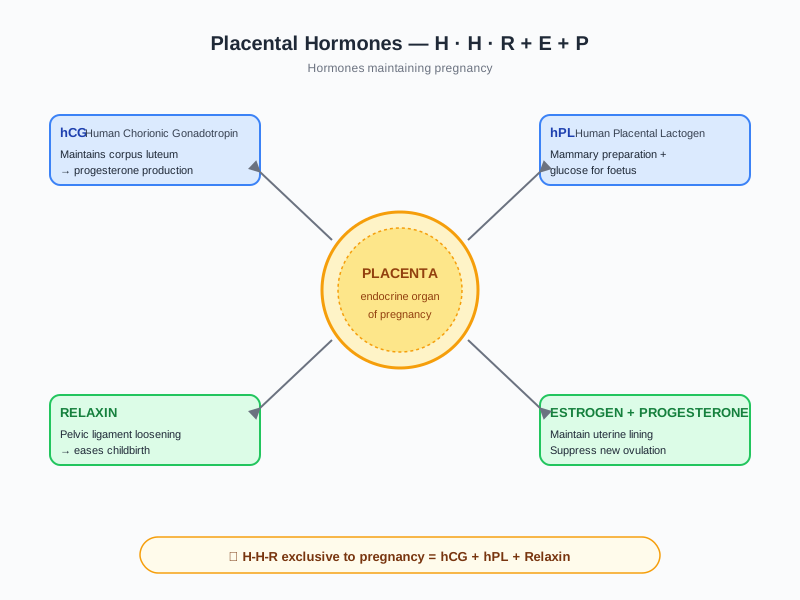
After implantation, the trophoblast develops chorionic villi that interdigitate with uterine tissue to form the placenta — a temporary endocrine organ. The placenta secretes four hormones: hCG (maintains corpus luteum in early pregnancy, preventing menstruation), hPL (has growth hormone-like and prolactin-like effects, helps regulate maternal metabolism), estrogens (multiple forms, promote uterine growth and prepare mammary glands), and progestogens (maintain the uterine lining and suppress uterine contractions). Additionally, in the LATER phase of pregnancy, the OVARY secretes relaxin — which softens the symphysis pubis and relaxes pelvic ligaments to facilitate delivery.
NCERT lists the hormones but the critical distinction — what's exclusive to pregnancy vs what just increases — is buried. Deeper: Three hormones are EXCLUSIVE to pregnancy (only produced during pregnancy): hCG, hPL, and Relaxin. Estrogens and progestogens exist in the non-pregnant female but their levels INCREASE several-fold during pregnancy. hCG is detectable in urine within 10 days of fertilisation — this is the basis of home pregnancy tests. hPL peaks at 34-36 weeks and then declines — a falling hPL can indicate placental insufficiency.
Exclusive to pregnancy: H-H-R = hCG + hPL + Relaxin (3 hormones only)
What is Placental Hormones and Pregnancy?
Has Placental Hormones and Pregnancy been asked in NEET?
How do you remember Placental Hormones and Pregnancy for NEET?
Through deep analysis of NEET and NTA, 176 of the 180 ReNEET 2026 (June 21) questions were already in the MedicNEET question bank before the exam.
176/180MedicNEET's Biology question bank is built from the same NCERT lines NTA picks repeatedly. Not random MCQs — questions crafted exactly like NTA crafts them.
You just learned this concept. The free app turns it into a daily goal built from your weak topics and brings it back just before you forget it — using active recall and spaced repetition — so it stays till exam day.