
Ploidy in Plant Life Cycles — From Haploid to Triploid
📚 Practice ConceptMention the ploidy of the following: protonematal cell of a moss; primary endosperm nucleus in dicot; leaf cell of a moss; prothallus cell of a fern; gemma cell in Marchantia; meristem cell of monocot; ovary of a flower; and zygote of a fern.
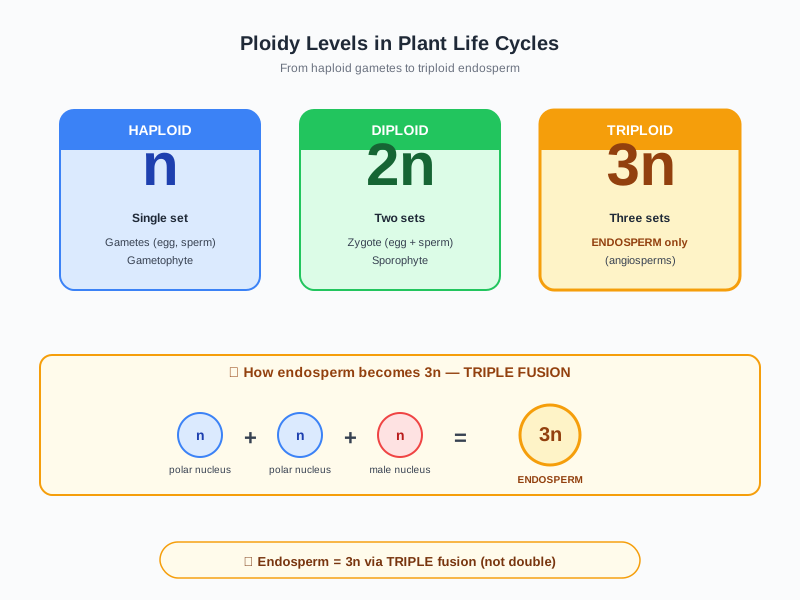
Primary endosperm nucleus is diploid (2n)
Primary endosperm nucleus is TRIPLOID (3n) — formed by triple fusion
Double fertilisation: zygote (2n) + primary endosperm nucleus (3n)
What is Ploidy in Plant Life Cycles?
What is the most common NEET trap on Ploidy in Plant Life Cycles?
How do you remember Ploidy in Plant Life Cycles for NEET?
Through deep analysis of NEET and NTA, 176 of the 180 ReNEET 2026 (June 21) questions were already in the MedicNEET question bank before the exam.
176/180MedicNEET's Biology question bank is built from the same NCERT lines NTA picks repeatedly. Not random MCQs — questions crafted exactly like NTA crafts them.
You just learned this concept. The free app turns it into a daily goal built from your weak topics and brings it back just before you forget it — using active recall and spaced repetition — so it stays till exam day.