
Natural Contraceptive Methods — Periodic Abstinence, Withdrawal, Lactational Amenorrhoea
✅ Asked in NEET 2024Which of the following is not a natural/traditional contraceptive method? (NEET 2024)
Which of the following is not a natural/traditional contraceptive method? (NEET 2024)
Answer & NCERT explanation
Correct answer: A — Vaults
Vaults (diaphragms) are artificial barrier contraceptives, not natural/traditional methods. They are rubber/latex devices inserted into vagina to cover cervix. Periodic abstinence (avoiding intercourse during fertile period), lactational amenorrhea (breastfeeding suppressing ovulation), and coitus interruptus (withdrawal method) are all natural/traditional contraceptive methods practiced since ancient times.
Read more NCERT concept on the PYQ
Natural methods work on the principle of avoiding chances of ovum and sperms meeting. Periodic abstinence is one such method in which the couples avoid or abstain from coitus from day 10 to 17 of the menstrual cycle when ovulation could be expected. As chances of fertilisation are very high during this period, it is called the fertile period. Therefore, by abstaining from coitus during this period, conception could be prevented. Withdrawal or coitus interruptus is another method in which the male partner withdraws his penis from the vagina just before ejaculation so as to avoid insemination. Lactational amenorrhoea (absence of menstruation) method is based on the fact that ovulation and therefore the cycle do not occur during the period of intense lactation following parturition. Therefore, as long as the mother breast feeds the child fully, chances of conception are almost nil. However, this method has been reported to be effective only upto a maximum period of six months following parturition. As no medicines or devices are used in these methods, side effects are almost nil. Chances of failure, though, of this method are also high.
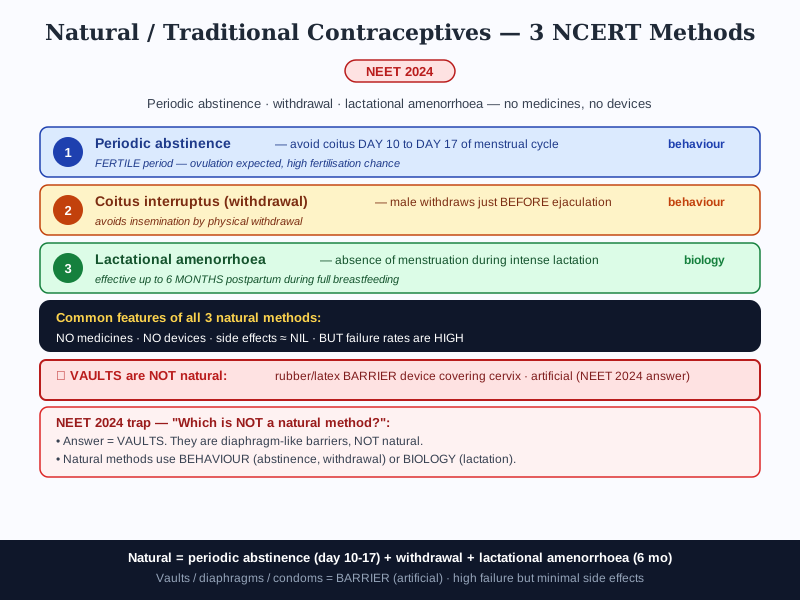
NATURAL/TRADITIONAL contraceptive methods avoid the meeting of ovum and sperm WITHOUT medicines or devices. NCERT lists THREE: (1) PERIODIC ABSTINENCE — couples abstain from coitus DAY 10 TO DAY 17 of the menstrual cycle (the FERTILE PERIOD when ovulation is expected and fertilisation chances are very high). (2) WITHDRAWAL / COITUS INTERRUPTUS — male partner withdraws penis from vagina just BEFORE EJACULATION to avoid insemination. (3) LACTATIONAL AMENORRHOEA — absence of menstruation during INTENSE LACTATION following parturition; effective up to a maximum of 6 MONTHS postpartum during full breastfeeding. Side effects = ALMOST NIL (no medicines/devices). Chances of FAILURE = HIGH. VAULTS, diaphragms, condoms are BARRIER methods (artificial, not natural).
NEET 2024 direct: 'Which is NOT a natural/traditional method?' → VAULTS (diaphragm-like rubber barrier covering cervix). Periodic abstinence, lactational amenorrhoea, and coitus interruptus ARE natural. Memory: natural methods use BEHAVIOUR + BIOLOGY (timing, withdrawal, breastfeeding); barrier methods use DEVICES (vaults, condoms, diaphragms). Lactational amenorrhoea is also HORMONAL but classified as NATURAL because no external hormone is given. Fertile period in NCERT = days 10-17 of menstrual cycle.
Vaults are a natural/traditional contraceptive method along with periodic abstinence and lactational amenorrhoea.
VAULTS are ARTIFICIAL BARRIER contraceptives (rubber/latex devices covering cervix). Natural methods = periodic abstinence + withdrawal + lactational amenorrhoea.
Natural = behaviour + biology (timing, withdrawal, breastfeeding). Vaults/diaphragms/condoms = BARRIER (artificial). Fertile period = day 10-17.
- Periodic abstinence: avoid coitus from DAY 10 to DAY 17 of menstrual cycle (the fertile period when ovulation is expected).
- Coitus interruptus (withdrawal): male withdraws just before ejaculation to avoid insemination.
- Lactational amenorrhoea: effective up to 6 MONTHS postpartum during INTENSE/full breastfeeding.
- Side effects ≈ nil (no medicines/devices), but failure rates are HIGH for all natural methods.
What is Natural Contraceptive Methods?
What did NEET 2024 ask on Natural Contraceptive Methods?
What is the most common NEET trap on Natural Contraceptive Methods?
How do you remember Natural Contraceptive Methods for NEET?
What are the key components of Natural Contraceptive Methods?
Through deep analysis of NEET and NTA, 176 of the 180 ReNEET 2026 (June 21) questions were already in the MedicNEET question bank before the exam.
176/180MedicNEET's Biology question bank is built from the same NCERT lines NTA picks repeatedly. Not random MCQs — questions crafted exactly like NTA crafts them.
You just learned this concept. The free app turns it into a daily goal built from your weak topics and brings it back just before you forget it — using active recall and spaced repetition — so it stays till exam day.