
Anther Structure — Bilobed, Dithecous and Tetrasporangiate
📚 Practice ConceptA typical angiosperm anther is bilobed with each lobe having two theca, i.e., they are dithecous. Often a longitudinal groove runs lengthwise separating the theca. Let us understand the various types of tissues and their organisation in the transverse section of an anther. The bilobed nature of an anther is very distinct in the transverse section of the anther. The anther is a four-sided (tetragonal) structure consisting of four microsporangia located at the corners, two in each lobe.
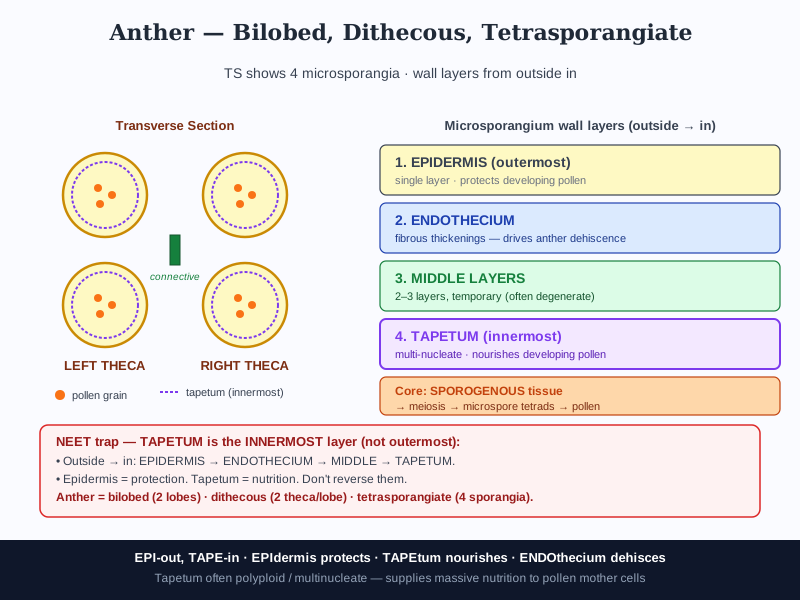
The tapetum is the outermost wall layer that protects the microsporangia during development.
Tapetum is the INNERMOST wall layer — it NOURISHES developing pollen grains (not protection). Epidermis is outermost.
TAPEN inside = Tapetum nourishes. EPIT outside = Epidermis protects. Endothecium = dehiscence.
- Anther = bilobed (two lobes), dithecous (each lobe has 2 theca = 4 theca total), tetrasporangiate (4 microsporangia).
- Tapetum = innermost wall layer of microsporangium; often contains more than one nucleus; nourishes pollen.
- Sporogenous tissue = cells undergoing meiosis to produce microspore tetrads — core of microsporangium.
- Three outer wall layers (epidermis + endothecium + middle) = protection and dehiscence of anther.
Match Column I (Anther structure) with Column II (Description): Column I A. Typical angiosperm anther B. Each anther lobe C. Three outer wall layers D. Tapetum E. Sporogenous tissue Column II I. Nourishes developing pollen; often multinucleate II. Undergoes meiosis to form microspore tetrads III. Protection and assists in anther dehiscence IV. Contains two microsporangia V. Tetragonal and tetrasporangiate
View bonus solution & explanation
Correct answer: B — A-V, B-IV, C-III, D-I, E-II
A-V: Anther is tetragonal (4-sided) and tetrasporangiate (4 microsporangia) — V. B-IV: Each lobe contains 2 microsporangia — IV. C-III: Three outer wall layers (epidermis, endothecium, middle) = protection + dehiscence — III. D-I: Tapetum = innermost wall, nourishes pollen, often multinucleate — I. E-II: Sporogenous tissue undergoes meiosis → microspore tetrads — II. This exact match appears as practice Q in the NCERT enrichment bundle.
What is Anther Structure?
What did NEET previous years ask on Anther Structure?
What is the most common NEET trap on Anther Structure?
How do you remember Anther Structure for NEET?
What are the key components of Anther Structure?
Through deep analysis of NEET and NTA, 176 of the 180 ReNEET 2026 (June 21) questions were already in the MedicNEET question bank before the exam.
176/180MedicNEET's Biology question bank is built from the same NCERT lines NTA picks repeatedly. Not random MCQs — questions crafted exactly like NTA crafts them.
You just learned this concept. The free app turns it into a daily goal built from your weak topics and brings it back just before you forget it — using active recall and spaced repetition — so it stays till exam day.