
Artificial Hybridisation — Emasculation, Bagging, Controlled Pollination Steps
✅ Asked in NEET 2022To ensure that only the desired pollens fall on the stigma in artificial hybridization process [NEET 2022 Phase 2] (a) the female flower buds of plant producing unisexual flowers need not be bagged. (b) there is no need to emasculate unisexual flowers of selected female parent. (c) emasculated flowers are to be bagged immediately after cross pollination. (d) emasculated flowers are to be bagged after removal of anthers. (e) bisexual flowers, showing protogyny are never selected for cross. Choose the correct answer from the options given below:
To ensure that only the desired pollens fall on the stigma in artificial hybridization process [NEET 2022 Phase 2] (a) the female flower buds of plant producing unisexual flowers need not be bagged. (b) there is no need to emasculate unisexual flowers of selected female parent. (c) emasculated flowers are to be bagged immediately after cross pollination. (d) emasculated flowers are to be bagged after removal of anthers. (e) bisexual flowers, showing protogyny are never selected for cross. Choose the correct answer from the options given below:
Answer & NCERT explanation
Correct answer: C — , (c) and (d) only
In artificial hybridization: (b) Unisexual flowers don't need emasculation as they naturally lack anthers on female flowers. (c) After cross pollination, emasculated flowers must be bagged to prevent unwanted pollen contamination. (d) Emasculated flowers are bagged immediately after anther removal to prevent contamination before intended cross pollination. Options (a) and (e) are incorrect - female buds need bagging, and protogynous flowers can be used for crosses.
Read more NCERT concept on the PYQ
If the female parent produces unisexual flowers, there is no need for emasculation. The female flower buds are bagged before the flowers open. When the stigma becomes receptive, pollination is carried out using the desired pollen and the flower rebagged.
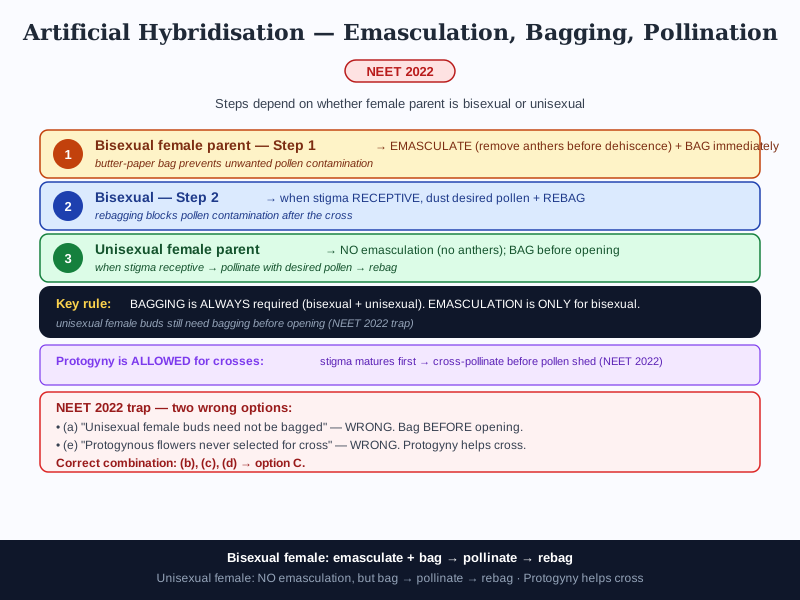
ARTIFICIAL HYBRIDISATION is a controlled cross-pollination technique used in crop improvement. The steps depend on whether the female parent is bisexual or unisexual. If the female parent has BISEXUAL FLOWERS, the anthers MUST be removed before they shed pollen — this is EMASCULATION. Emasculated flowers are then BAGGED with butter-paper to prevent contamination by unwanted pollen. When the stigma becomes RECEPTIVE, the desired pollen is dusted on it and the flower is REBAGGED. If the female parent produces UNISEXUAL FLOWERS, there is NO NEED FOR EMASCULATION (female flowers lack anthers). Female flower buds are simply bagged BEFORE opening; when the stigma becomes receptive, pollinate with desired pollen and rebag.
NEET 2022 Phase 2 tested the procedure with 5 statements. Correct: (b) unisexual flowers don't need emasculation; (c) emasculated flowers must be bagged immediately after cross pollination; (d) emasculated flowers must be bagged after anther removal (before pollination). Wrong: (a) female buds of unisexual flowers DO need bagging (before opening); (e) bisexual protogynous flowers CAN be selected for crosses. Answer: (b), (c), (d) → option C. Key memory: emasculation removes male parts; bagging blocks unwanted pollen.
Female flower buds of plants producing unisexual flowers do not need to be bagged in artificial hybridisation.
Unisexual female flowers do NOT need emasculation (they lack anthers), BUT they STILL NEED BAGGING before opening to prevent contamination by unwanted pollen.
Emasculation = remove anthers (bisexual only). Bagging = always required (both bisexual + unisexual female parents). Bag → pollinate → rebag.
- Bisexual female parent → EMASCULATION (remove anthers) + BAGGING + controlled pollination + REBAGGING.
- Unisexual female parent → NO emasculation needed; bag female flower buds BEFORE opening + pollinate + rebag.
- Emasculated flowers must be bagged IMMEDIATELY after anther removal AND after cross-pollination.
- Protogynous bisexual flowers (stigma matures before anthers) can still be selected for cross-pollination.
What is Artificial Hybridisation?
What did NEET 2022 ask on Artificial Hybridisation?
What is the most common NEET trap on Artificial Hybridisation?
How do you remember Artificial Hybridisation for NEET?
What are the key components of Artificial Hybridisation?
Through deep analysis of NEET and NTA, 176 of the 180 ReNEET 2026 (June 21) questions were already in the MedicNEET question bank before the exam.
176/180MedicNEET's Biology question bank is built from the same NCERT lines NTA picks repeatedly. Not random MCQs — questions crafted exactly like NTA crafts them.
You just learned this concept. The free app turns it into a daily goal built from your weak topics and brings it back just before you forget it — using active recall and spaced repetition — so it stays till exam day.