
Apomixis — Seed Formation Without Meiosis or Fertilisation
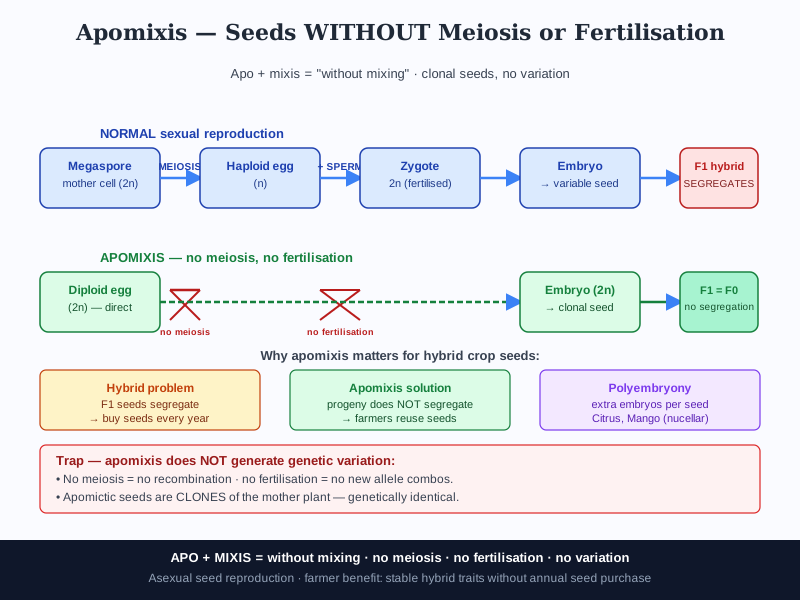
📚 Practice ConceptHybrid varieties of several of our food and vegetable crops are being extensively cultivated. Cultivation of hybrids has tremendously increased productivity. One of the problems of hybrids is that hybrid seeds have to be produced every year. If the seeds collected from hybrids are sown, the plants in the progeny will segregate and do not maintain hybrid characters. Production of hybrid seeds is costly and hence the cost of hybrid seeds become too expensive for the farmers. If these hybrids are made into apomicts, there is no segregation of characters in the hybrid progeny. Then the farmers can keep on using the hybrid seeds to raise new crop year after year and he does not have to buy hybrid seeds every year. Because of the importance of apomixis in hybrid seed industry, active research is going on in many laboratories around the world to understand the genetics of apomixis and to transfer apomictic genes into hybrid varieties.
Apomixis introduces genetic variation since it involves a modified form of meiosis before embryo development.
Apomixis does NOT involve meiosis — the diploid egg develops directly. No meiosis = no variation. It is strictly clonal.
APO-mixis = APO (without) + mixis (mixing) = without mixing = no meiosis, no fertilisation, no variation.
- Apomixis: seed formation without meiosis or fertilisation — diploid egg → embryo directly.
- Benefit: hybrid progeny does not segregate → farmers reuse seeds annually.
- Polyembryony: multiple embryos per seed — from nucellar cells or adventive embryony (Citrus, Mango).
- Production of hybrid seeds is costly — apomixis would eliminate this annual expense for farmers.
Which of the following statements regarding apomixis and polyembryony are CORRECT? 1. In apomixis, a diploid egg cell may develop into an embryo without meiosis and fertilisation. 2. Farmers benefit from apomixis because they can reuse hybrid seeds without purchasing new ones every year. 3. Polyembryony arises when nucellar cells or adventive embryo tissue contributes additional embryos. 4. Apomixis introduces genetic variation since it involves meiosis before embryo development. 5. Polyembryony is reported in Citrus and Mango.
View bonus solution & explanation
Correct answer: C — 1, 2, 3 and 5 only
S1 CORRECT: Apomixis = diploid egg develops into embryo without meiosis or fertilisation. S2 CORRECT: Farmers benefit — if hybrids are apomicts, no segregation in progeny → seeds can be reused. S3 CORRECT: Polyembryony = nucellar cells or zygotic tissue give rise to additional embryos. S4 WRONG: Apomixis does NOT involve meiosis, therefore it cannot generate variation — it is clonal. S5 CORRECT: Polyembryony reported in Citrus and Mango (NCERT).
What is Apomixis?
What did NEET previous years ask on Apomixis?
What is the most common NEET trap on Apomixis?
How do you remember Apomixis for NEET?
What are the key components of Apomixis?
Through deep analysis of NEET and NTA, 176 of the 180 ReNEET 2026 (June 21) questions were already in the MedicNEET question bank before the exam.
176/180MedicNEET's Biology question bank is built from the same NCERT lines NTA picks repeatedly. Not random MCQs — questions crafted exactly like NTA crafts them.
You just learned this concept. The free app turns it into a daily goal built from your weak topics and brings it back just before you forget it — using active recall and spaced repetition — so it stays till exam day.