
Primary vs Secondary Metabolites — Ricin, Vinblastin, Concanavalin A, Gums
✅ Asked in NEET 2024Match List-I with List-IIList-I A. Toxin B. Polymeric substance C. Lectin D. Drug List-II I. Gum II. Concanavalin A III. Ricin IV. Vinblastin Choose the correct answer from the options given below:
Match List-I with List-IIList-I A. Toxin B. Polymeric substance C. Lectin D. Drug List-II I. Gum II. Concanavalin A III. Ricin IV. Vinblastin Choose the correct answer from the options given below:
Which of the following is not a secondary metabolite? (NEET 2023)
Which of the following are not secondary metabolites in plants? (NEET 2021)
Answer & NCERT explanation
Correct answer: C — A–III, B–I, C–II, D–IV
Ricin is a toxin from castor seeds. Gum is a polymeric substance (polysaccharide). Concanavalin A is a lectin (carbohydrate-binding protein). Vinblastin is an anticancer drug from periwinkle plant. These are classic examples of plant secondary metabolites with specific biological functions.
Read more NCERT concept on the PYQ
If one were to make a list of biomolecules, such a list would have thousands of organic compounds including amino acids, sugars, etc. For reasons that are given in section 9.10, we can call these biomolecules as 'metabolites'. In animal tissues, one notices the presence of all such categories of compounds These are primary metabolites. However, when one analyses plant, fungal and microbial cells, one would see thousands of compounds other than these primary metabolites, e.g. alkaloids, flavonoids, rubber, essential oils, antibiotics, coloured pigments, scents, gums, spices. These are called secondary metabolites (Table 9.3). While primary metabolites have identifiable functions and play known roles in normal physiological processes, we do not at the moment, understand the role or functions of all the 'secondary metabolites' in host organisms. However, many of them are useful to 'human welfare' (e.g., rubber, drugs, spices, scents and pigments). Some secondary metabolites have ecological importance. In the later chapters and years you will learn more about this.
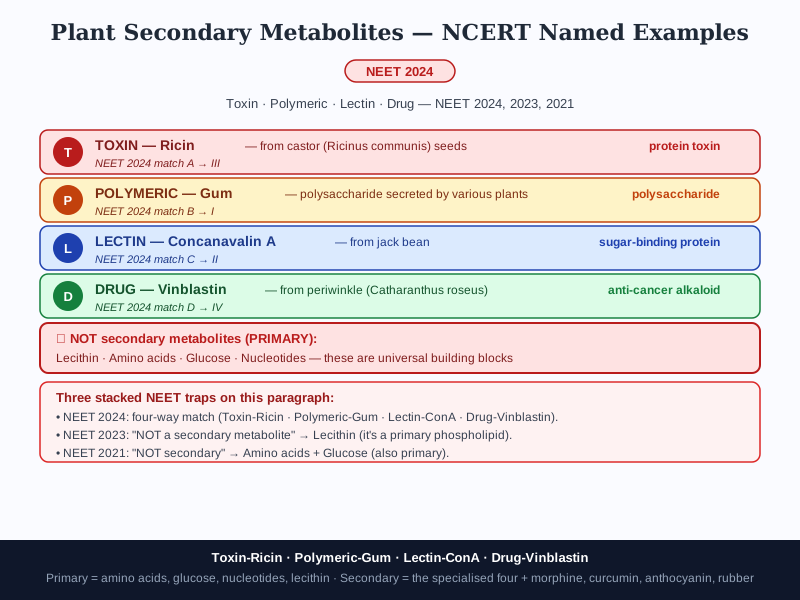
Biomolecules in living tissue can be classified as PRIMARY metabolites (amino acids, sugars, nucleotides, lipids — universal, with identifiable functions in normal physiology) and SECONDARY metabolites (alkaloids, flavonoids, rubber, essential oils, antibiotics, coloured pigments, scents, gums, spices — mainly in plant, fungal and microbial cells). Functions of all secondary metabolites are not yet fully understood, but many serve human welfare and have ecological roles. NCERT's named examples for NEET: TOXIN = Ricin (castor seed). POLYMERIC SUBSTANCE = Gum (polysaccharide). LECTIN = Concanavalin A (carbohydrate-binding protein). DRUG = Vinblastin (anti-cancer alkaloid from periwinkle). Morphine, codeine, curcumin, anthocyanin, rubber are also secondary metabolites.
NEET 2024 directly tested the four-way match: Toxin–Ricin, Polymeric–Gum, Lectin–Concanavalin A, Drug–Vinblastin. NEET 2023 tested an exception trap: 'which is NOT a secondary metabolite?' — answer Lecithin (a primary metabolite phospholipid). NEET 2021 trap: 'which pair is NOT secondary metabolite?' — answer Amino acids + Glucose. Memory rule: amino acids, sugars (glucose), nucleotides, lipids (lecithin) = PRIMARY; everything 'specialised' (toxins, drugs, dyes, scents, alkaloids, antibiotics) = SECONDARY.
Lecithin, amino acids and glucose are secondary metabolites with specialised plant functions.
Lecithin (phospholipid), amino acids and glucose are PRIMARY metabolites — universal building blocks. Secondary metabolites = alkaloids, lectins, gums, drugs, pigments, scents.
Primary = universal building blocks (amino acids, glucose, nucleotides, lecithin). Secondary = specialised (ricin, vinblastin, ConA, gum, morphine).
- Ricin = toxin from castor (Ricinus communis) seeds — secondary metabolite.
- Vinblastin = anti-cancer drug from periwinkle (Catharanthus roseus) — secondary metabolite.
- Concanavalin A = lectin (carbohydrate-binding protein) — secondary metabolite.
- Lecithin = phospholipid = PRIMARY metabolite (not secondary) — NEET 2023 trap. Amino acids + glucose = primary.
Consider the following classifications of biomolecules: S1: Ricin (castor seed) is a toxin and a secondary metabolite. S2: Gum is a polymeric substance (polysaccharide) classified as a secondary metabolite. S3: Concanavalin A is a lectin and a secondary metabolite. S4: Lecithin is a secondary metabolite produced by plants for specialised defence functions. S5: Vinblastin is an anti-cancer drug obtained as a secondary metabolite from periwinkle (Catharanthus roseus).
View bonus solution & explanation
Correct answer: B — S1, S2, S3 and S5
S1 CORRECT: Ricin = toxin (NEET 2024 match A-III). S2 CORRECT: Gum = polymeric substance (NEET 2024 match B-I). S3 CORRECT: Concanavalin A = lectin (NEET 2024 match C-II). S4 WRONG: Lecithin is a PHOSPHOLIPID and PRIMARY metabolite — NEET 2023 explicitly flagged it as 'NOT a secondary metabolite'. S5 CORRECT: Vinblastin = anti-cancer drug from periwinkle (NEET 2024 match D-IV).
What is Primary vs Secondary Metabolites?
What did NEET 2024 ask on Primary vs Secondary Metabolites?
What is the most common NEET trap on Primary vs Secondary Metabolites?
How do you remember Primary vs Secondary Metabolites for NEET?
What are the key components of Primary vs Secondary Metabolites?
Through deep analysis of NEET and NTA, 176 of the 180 ReNEET 2026 (June 21) questions were already in the MedicNEET question bank before the exam.
176/180MedicNEET's Biology question bank is built from the same NCERT lines NTA picks repeatedly. Not random MCQs — questions crafted exactly like NTA crafts them.
You just learned this concept. The free app turns it into a daily goal built from your weak topics and brings it back just before you forget it — using active recall and spaced repetition — so it stays till exam day.