
Acid-Insoluble Fraction — Four Macromolecules: Proteins, Nucleic Acids, Polysaccharides, Lipids
✅ Asked in NEET 2026Identify the correct statements about biomolecules. A. Lipids are generally water soluble. B. Proteins are polypeptides. C. Polysaccharides are long chains of sugars. D. Adenine and guanine are substituted pyrimidines. E. Almost all enzymes are proteins.
Identify the correct statements about biomolecules. A. Lipids are generally water soluble. B. Proteins are polypeptides. C. Polysaccharides are long chains of sugars. D. Adenine and guanine are substituted pyrimidines. E. Almost all enzymes are proteins.
Answer & NCERT explanation
Correct answer: B — B, C and E only
Lipids are generally water-insoluble (A wrong). Adenine and guanine are substituted purines, not pyrimidines (D wrong). Statements B, C and E are correct.
Read more NCERT concept on the PYQ
The acid insoluble fraction, has only four types of organic compounds i.e., proteins, nucleic acids, polysaccharides and lipids. These classes of compounds with the exception of lipids, have molecular weights in the range of ten thousand daltons and above. For this very reason, biomolecules, i.e., chemical compounds found in living organisms are of two types. One, those which have molecular weights less than one thousand dalton and are usually referred to as micromolecules or simply biomolecules while those which are found in the acid insoluble fraction are called macromolecules or biomacromolecules.
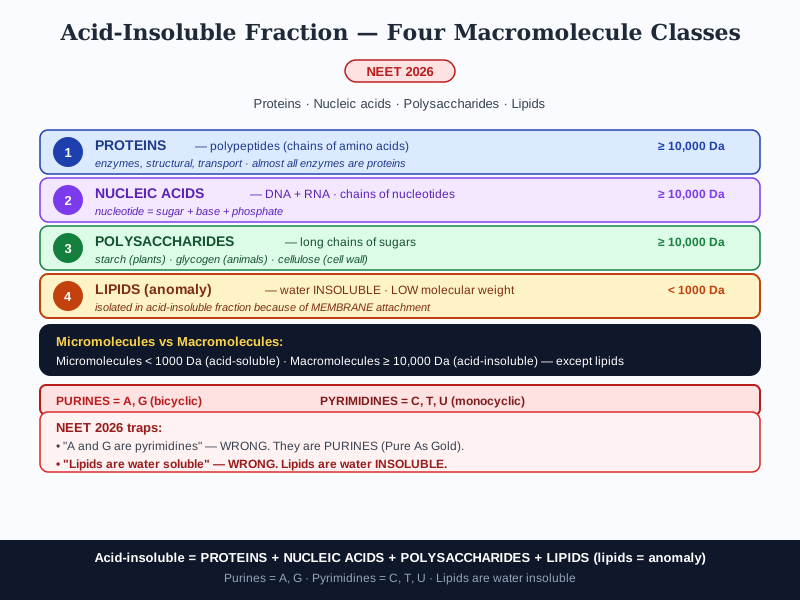
The ACID-INSOLUBLE FRACTION of living tissue contains only FOUR types of organic compounds: PROTEINS, NUCLEIC ACIDS, POLYSACCHARIDES and LIPIDS. With the EXCEPTION of LIPIDS, these have molecular weights in the range of TEN THOUSAND DALTONS AND ABOVE. Based on size, biomolecules fall into TWO TYPES: MICROMOLECULES (also called simply 'biomolecules' — molecular weight LESS THAN 1000 daltons, found in acid-soluble fraction) and MACROMOLECULES (also called BIOMACROMOLECULES — found in acid-insoluble fraction, molecular weight 10,000+ daltons). LIPIDS are an ANOMALY — although they appear in the acid-insoluble fraction, their molecular weights are typically LOW (under 1000 daltons). Lipids are isolated in the acid-insoluble fraction because they exist as PART OF MEMBRANE STRUCTURES, not because they're individually large.
NEET 2026 tested five biomolecule statements: A 'lipids water soluble' — FALSE (lipids are water INSOLUBLE). B 'proteins are polypeptides' — TRUE. C 'polysaccharides are long sugar chains' — TRUE. D 'A and G are substituted pyrimidines' — FALSE (they are substituted PURINES). E 'almost all enzymes are proteins' — TRUE. Correct: B, C, E → option B. Memory: A and G = purines; C, T, U = pyrimidines. Enzymes are proteins (rare ribozyme exceptions).
Adenine and guanine are substituted pyrimidines, and lipids are generally water-soluble organic compounds.
Adenine and guanine are substituted PURINES (NOT pyrimidines). Lipids are generally water INSOLUBLE (NOT soluble).
Purines: A, G (Pure As Gold). Pyrimidines: C, T, U. Lipids = water INSOLUBLE. Enzymes = proteins. Polysaccharides = sugar chains.
- Acid-insoluble fraction: proteins + nucleic acids + polysaccharides + lipids (4 macromolecule classes).
- Macromolecules: ≥ 10,000 daltons (except lipids, which are anomalously low).
- Micromolecules (biomolecules sensu stricto): < 1000 daltons; in acid-soluble fraction.
- Adenine (A) and Guanine (G) are PURINES (NOT pyrimidines). Pyrimidines = Cytosine, Thymine, Uracil.
What is Acid-Insoluble Fraction?
What did NEET 2026 ask on Acid-Insoluble Fraction?
What is the most common NEET trap on Acid-Insoluble Fraction?
How do you remember Acid-Insoluble Fraction for NEET?
What are the key components of Acid-Insoluble Fraction?
Through deep analysis of NEET and NTA, 176 of the 180 ReNEET 2026 (June 21) questions were already in the MedicNEET question bank before the exam.
176/180MedicNEET's Biology question bank is built from the same NCERT lines NTA picks repeatedly. Not random MCQs — questions crafted exactly like NTA crafts them.
You just learned this concept. The free app turns it into a daily goal built from your weak topics and brings it back just before you forget it — using active recall and spaced repetition — so it stays till exam day.