
Pollination Types — Autogamy, Geitonogamy, Xenogamy, Cleistogamy, Chasmogamy
📚 Practice ConceptPollination is the mechanism to achieve this objective. Transfer of pollen grains (shed from the anther) to the stigma of a pistil is termed pollination. Flowering plants have evolved an amazing array of adaptations to achieve pollination. They make use of external agents to achieve pollination. Can you list the possible external agents?
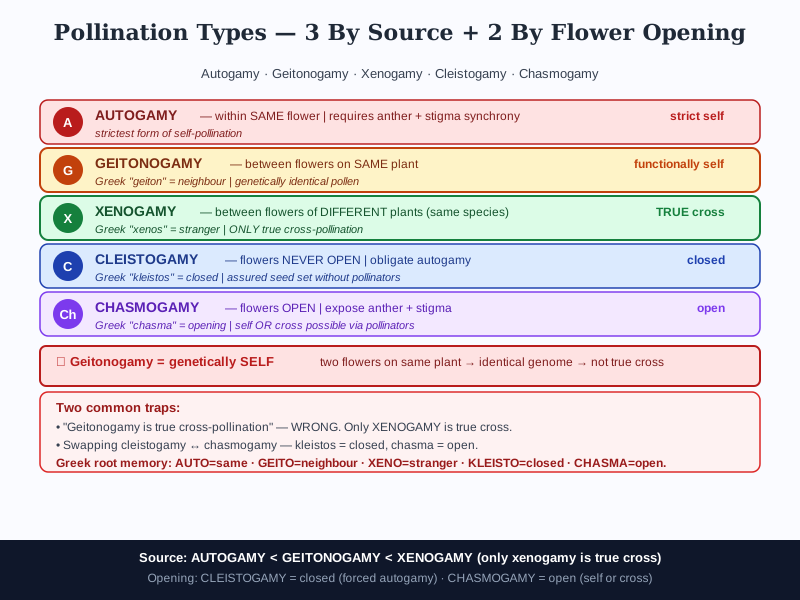
Geitonogamy is true cross-pollination because pollen is transferred between two different flowers.
Geitonogamy is FUNCTIONALLY SELF-POLLINATION — the two flowers are on the SAME PLANT and the pollen is genetically identical to the recipient. Only XENOGAMY is true cross-pollination.
AUTO = same flower | GEITO = neighbour flower (same plant, still genetically self) | XENO = stranger plant (true cross). CLEISTO closed; CHASMO open.
- Autogamy = pollen transfer within the same flower (requires synchrony of anther + stigma).
- Geitonogamy = pollen transfer between two flowers of the same plant — functionally self-pollination (genetically identical pollen).
- Xenogamy = pollen transfer from a flower of one plant to a flower of a genetically different plant — the only true cross-pollination.
- Cleistogamous flowers NEVER OPEN (obligate autogamy, assured seed set); Chasmogamous flowers OPEN (self or cross possible).
Match the types of pollination/floral conditions with their descriptions: Column I: 1. Autogamy 2. Geitonogamy 3. Xenogamy 4. Cleistogamy 5. Chasmogamy Column II: A. Flowers remain closed; obligate self-pollination without external agents B. Pollen transfer within the same flower; requires synchrony of anther and stigma C. Cross-pollination between two genetically different plants D. Flowers open; expose anthers and stigma, permitting self- or cross-pollination E. Pollen transfer from one flower to another flower of the same plant
View bonus solution & explanation
Correct answer: A — 1-B, 2-E, 3-C, 4-A, 5-D
1-B: Autogamy = pollen transfer within the same flower (requires synchrony). 2-E: Geitonogamy = pollen transfer between different flowers on the same plant. 3-C: Xenogamy = cross-pollination between genetically different plants (only true outcross). 4-A: Cleistogamy = flowers never open, obligate self-pollination. 5-D: Chasmogamy = flowers open and expose anthers + stigma, permitting self or cross-pollination. Correct option A. Common trap: swapping cleistogamy (closed) and chasmogamy (open) — Greek 'kleistos' = closed, 'chasma' = opening.
What is Pollination Types?
What did NEET previous years ask on Pollination Types?
What is the most common NEET trap on Pollination Types?
How do you remember Pollination Types for NEET?
What are the key components of Pollination Types?
Through deep analysis of NEET and NTA, 176 of the 180 ReNEET 2026 (June 21) questions were already in the MedicNEET question bank before the exam.
176/180MedicNEET's Biology question bank is built from the same NCERT lines NTA picks repeatedly. Not random MCQs — questions crafted exactly like NTA crafts them.
You just learned this concept. The free app turns it into a daily goal built from your weak topics and brings it back just before you forget it — using active recall and spaced repetition — so it stays till exam day.