
Anemophily (Wind Pollination) — Light Non-Sticky Pollen, Feathery Stigma, Corn Cob
✅ Asked in NEET 2023What is the function of tassels in the corn cob? (NEET 2023)
What is the function of tassels in the corn cob? (NEET 2023)
Flowers which have single ovule in the ovary and are packed into inflorescence are usually pollinated by (NEET 2017)
Answer & NCERT explanation
Correct answer: D — To disperse pollen grains
Tassels are the male inflorescence of corn containing anthers that produce and release pollen grains. They are positioned at the top of the plant to effectively disperse pollen through wind. Corn silk (not tassels) traps pollen grains. This is a classic example of wind pollination adaptation.
Read more NCERT concept on the PYQ
Pollination by wind is more common amongst abiotic pollinations. Wind pollination also requires that the pollen grains are light and non-sticky so that they can be transported in wind currents. They often possess well-exposed stamens (so that the pollens are easily dispersed into wind currents,) and large often-feathery stigma to easily trap air-borne pollen grains. Wind-pollinated flowers often have a single ovule in each ovary and numerous flowers packed into an inflorescence; a familiar example is the corn cob – the ears you see are nothing but the stigma and style which wave in the wind to trap pollen grains. Wind-pollination is quite common in grasses.
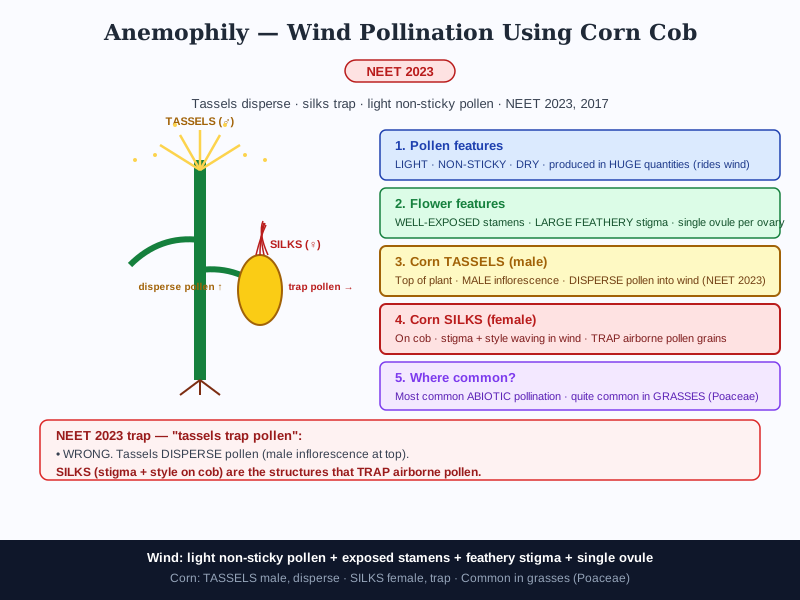
WIND POLLINATION (anemophily) is the MOST COMMON form of ABIOTIC pollination. Adaptations required: (1) pollen grains are LIGHT and NON-STICKY so they can ride wind currents; (2) flowers possess WELL-EXPOSED STAMENS so pollen is easily released; (3) the stigma is LARGE and OFTEN FEATHERY to trap airborne pollen; (4) flowers often have a SINGLE OVULE per ovary and NUMEROUS FLOWERS PACKED INTO AN INFLORESCENCE. The classic NCERT example is the CORN COB — the 'ears' you see are the stigma and style waving in the wind to trap pollen. The TASSELS at the top of a corn plant are the male inflorescence — they RELEASE/DISPERSE pollen, while the silks (stigma/style) TRAP it. Wind pollination is common in GRASSES (Poaceae).
NEET 2023 direct: 'function of tassels in corn cob' → DISPERSE POLLEN GRAINS (NOT trap them — that's the silks/stigma). NEET 2017: 'flowers with single ovule packed into inflorescence are usually pollinated by' → WIND. Five wind-pollinated features for NEET: light non-sticky pollen; exposed stamens; feathery stigma; single ovule per ovary; numerous flowers in inflorescence. Don't confuse tassels (male, disperse) with silks (female, trap). Common in grasses; produces huge pollen quantities to compensate for inefficiency.
The function of tassels in a corn cob is to trap pollen grains as they are blown by wind.
TASSELS are the MALE inflorescence at the TOP of corn — they DISPERSE pollen into wind. The SILKS (stigma + style projecting from the cob) are the structures that TRAP pollen.
Tassels = MALE, top, DISPERSE pollen. Silks = FEMALE, on cob, TRAP pollen. Wind pollen: light, non-sticky, feathery stigma, single ovule, packed inflorescence.
- Wind pollen: LIGHT and NON-STICKY (rides wind currents).
- Wind flowers: well-exposed stamens + large feathery stigma.
- Wind flowers often have a SINGLE OVULE per ovary with numerous flowers packed into an inflorescence.
- Corn: tassels = male (disperse pollen, NEET 2023) | silks/stigma = trap pollen. Common in grasses (Poaceae).
Consider the following statements about wind pollination (anemophily): S1: Pollen grains are light and non-sticky so they can be transported in wind currents. S2: Wind-pollinated flowers possess well-exposed stamens and large, often feathery stigma. S3: Wind-pollinated flowers often have a single ovule in each ovary and numerous flowers packed into an inflorescence. S4: In corn, the tassels are the female structures that trap airborne pollen grains. S5: Wind pollination is more common amongst abiotic pollinations and is quite common in grasses.
View bonus solution & explanation
Correct answer: B — S1, S2, S3 and S5
S1 CORRECT: Light + non-sticky for wind transport. S2 CORRECT: Exposed stamens + feathery stigma. S3 CORRECT: Single ovule per ovary + packed inflorescence (NEET 2017). S4 WRONG: TASSELS are the MALE inflorescence and DISPERSE pollen (NEET 2023 answer). The SILKS (stigma/style) on the cob TRAP airborne pollen. This is the classic reversal trap. S5 CORRECT: Wind pollination is the most common abiotic form, common in grasses (Poaceae).
What is Anemophily (Wind Pollination)?
What did NEET 2023 ask on Anemophily (Wind Pollination)?
What is the most common NEET trap on Anemophily (Wind Pollination)?
How do you remember Anemophily (Wind Pollination) for NEET?
What are the key components of Anemophily (Wind Pollination)?
Through deep analysis of NEET and NTA, 176 of the 180 ReNEET 2026 (June 21) questions were already in the MedicNEET question bank before the exam.
176/180MedicNEET's Biology question bank is built from the same NCERT lines NTA picks repeatedly. Not random MCQs — questions crafted exactly like NTA crafts them.
You just learned this concept. The free app turns it into a daily goal built from your weak topics and brings it back just before you forget it — using active recall and spaced repetition — so it stays till exam day.