
Floral Rewards — Amorphophallus (6 ft Tallest Flower) and Yucca-Moth Mutualism
✅ Asked in NEETThe flowers of Amorphophallus provide a safe place for the pollinator to lay eggs. This is an example of:
The flowers of Amorphophallus provide a safe place for the pollinator to lay eggs. This is an example of:
Answer & NCERT explanation
Correct answer: C — Floral reward
When Amorphophallus flowers provide a safe place for pollinators to lay eggs, this represents a floral reward. The plant offers shelter and breeding site to the pollinator in exchange for pollination services. This is a mutualistic relationship where both organisms benefit. It's not commensalism (only one benefits) or amensalism (one is harmed). Anemophily refers to wind pollination, which is irrelevant here.
Read more NCERT concept on the PYQ
In some species floral rewards are in providing safe places to lay eggs; an example is that of the tallest flower of Amorphophallus (the flower itself is about 6 feet in height). A similar relationship exists between a species of moth and the plant Yucca where both species – moth and the
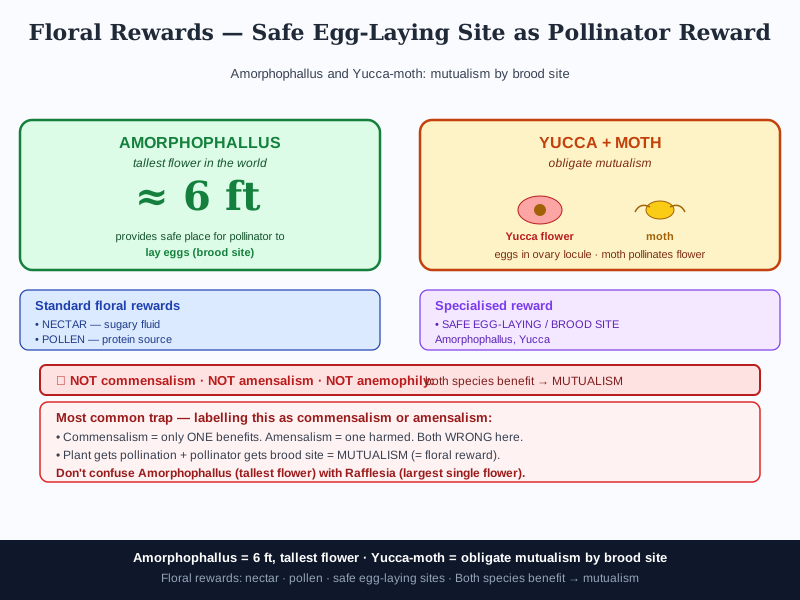
Plants offer FLORAL REWARDS to attract pollinators — usually NECTAR and POLLEN — but in some species the reward is a SAFE PLACE TO LAY EGGS. The NCERT example is AMORPHOPHALLUS, the TALLEST FLOWER in the world (about 6 FEET in height), which provides a safe brood site for its pollinator. A parallel obligate mutualism exists between the YUCCA PLANT and a species of MOTH — neither can complete its life cycle without the other. The moth lays its eggs in the locule of the ovary; in return the moth pollinates the flower. Both species need each other for reproduction — a textbook example of co-evolved interdependence.
Two NCERT facts to lock: (1) Amorphophallus = about 6 FEET in height (NCERT exact 'tallest flower' number). (2) Yucca-moth mutualism is OBLIGATE — without the moth, Yucca can't reproduce; without Yucca, the moth has nowhere to lay eggs. This is FLORAL REWARD by safe-egg-laying site, NOT commensalism (only one benefits) and NOT amensalism (one harmed). Wind pollination (anemophily) is irrelevant. Don't confuse Amorphophallus (tallest individual flower) with Rafflesia (largest single flower).
Amorphophallus providing a safe egg-laying site for its pollinator is an example of commensalism or amensalism.
It is a FLORAL REWARD — a mutualistic relationship where both plant and pollinator benefit. Plant gets pollination; pollinator gets safe brood site.
Amorphophallus (6 ft tallest flower) + Yucca-moth = floral reward by SAFE EGG-LAYING SITE. Mutualism, not commensalism.
- Amorphophallus = tallest flower in the world (about 6 FEET in height).
- Floral reward = safe place to lay eggs (in addition to standard rewards of nectar and pollen).
- Yucca-moth mutualism is OBLIGATE — neither can complete life cycle without the other.
- Both partners benefit: plant gets pollinated, pollinator gets safe brood site → mutualism (not commensalism).
Consider the following statements about floral rewards and pollinator mutualisms: S1: Amorphophallus, the tallest flower in the world (about 6 feet in height), provides a safe place for pollinators to lay eggs. S2: The Yucca-moth relationship is an obligate mutualism — neither partner can complete its life cycle without the other. S3: Providing a safe egg-laying site for the pollinator is an example of commensalism, where only one species benefits. S4: Standard floral rewards include nectar and pollen, in addition to specialised rewards like safe egg-laying sites. S5: Anemophily (wind pollination) is the underlying mechanism of the Amorphophallus-pollinator relationship.
View bonus solution & explanation
Correct answer: A — S1, S2 and S4
S1 CORRECT: Amorphophallus is the tallest flower, about 6 feet in height (NCERT exact). S2 CORRECT: Yucca-moth is an obligate mutualism (NCERT). S3 WRONG: Both species benefit → MUTUALISM, not commensalism. Plant gets pollination; pollinator gets brood site. S4 CORRECT: Nectar and pollen are standard rewards; safe egg-laying sites are an additional specialised reward. S5 WRONG: Anemophily = wind pollination, irrelevant here. Amorphophallus-pollinator is animal-mediated (entomophily), not anemophily.
What is Floral Rewards?
What did NEET previous years ask on Floral Rewards?
What is the most common NEET trap on Floral Rewards?
How do you remember Floral Rewards for NEET?
What are the key components of Floral Rewards?
Through deep analysis of NEET and NTA, 176 of the 180 ReNEET 2026 (June 21) questions were already in the MedicNEET question bank before the exam.
176/180MedicNEET's Biology question bank is built from the same NCERT lines NTA picks repeatedly. Not random MCQs — questions crafted exactly like NTA crafts them.
You just learned this concept. The free app turns it into a daily goal built from your weak topics and brings it back just before you forget it — using active recall and spaced repetition — so it stays till exam day.