
Seed Coat and Micropyle — 10-15% Moisture, Dormancy, Oxygen and Water Entry
📚 Practice ConceptInteguments of ovules harden as tough protective seed coats. The micropyle remains as a small pore in the seed coat. This facilitates entry of oxygen and water into the seed during germination. As the seed matures, its water content is reduced and seeds become relatively dry (10-15 per cent moisture by mass). The general metabolic activity of the embryo slows down. The embryo may enter a state of inactivity called dormancy, or if favourable conditions are available (adequate moisture, oxygen and suitable temperature), they germinate.
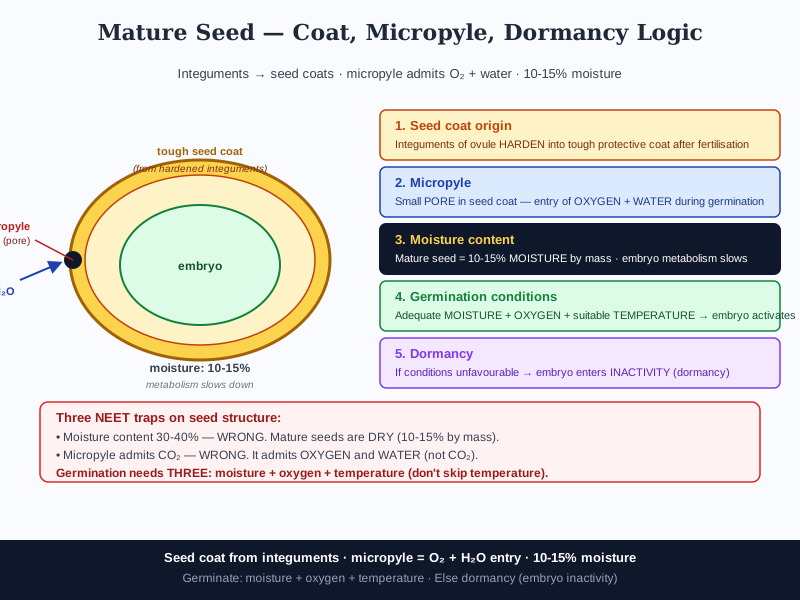
Mature seeds have 30-40% moisture and the micropyle facilitates entry of carbon dioxide for germination.
Mature seeds have 10-15% moisture (NCERT exact). Micropyle facilitates entry of OXYGEN and WATER (NOT CO₂) during germination.
Seed = 10-15% moisture, dry. Micropyle = pore for O₂ + H₂O entry. Germination needs moisture + oxygen + temperature.
- Integuments of ovule HARDEN into tough protective seed coats after fertilisation.
- Micropyle remains as a SMALL PORE in the seed coat → entry of OXYGEN and WATER during germination.
- Mature seed moisture content = 10-15% by mass — embryo metabolism slows.
- Three conditions for germination: adequate MOISTURE + OXYGEN + suitable TEMPERATURE; otherwise embryo enters DORMANCY.
Consider the following statements about seed coats, micropyle and seed dormancy: S1: The integuments of the ovule harden into the tough protective seed coats after fertilisation. S2: The micropyle persists as a small pore in the seed coat and facilitates entry of oxygen and water during germination. S3: A mature seed contains about 30-40 per cent moisture by mass. S4: Germination requires adequate moisture, oxygen and a suitable temperature. S5: If conditions are unfavourable, the embryo enters a state of inactivity called dormancy.
View bonus solution & explanation
Correct answer: B — S1, S2, S4 and S5
S1 CORRECT: Integuments harden into seed coats (NCERT exact). S2 CORRECT: Micropyle = small pore in seed coat → entry of O₂ + water during germination. S3 WRONG: Mature seed moisture is 10-15% by mass (NCERT), NOT 30-40%. Common numerical trap. S4 CORRECT: Three germination conditions = moisture + oxygen + temperature. S5 CORRECT: Embryo enters DORMANCY if conditions unfavourable.
What is Seed Coat and Micropyle?
What did NEET previous years ask on Seed Coat and Micropyle?
What is the most common NEET trap on Seed Coat and Micropyle?
How do you remember Seed Coat and Micropyle for NEET?
What are the key components of Seed Coat and Micropyle?
Through deep analysis of NEET and NTA, 176 of the 180 ReNEET 2026 (June 21) questions were already in the MedicNEET question bank before the exam.
176/180MedicNEET's Biology question bank is built from the same NCERT lines NTA picks repeatedly. Not random MCQs — questions crafted exactly like NTA crafts them.
You just learned this concept. The free app turns it into a daily goal built from your weak topics and brings it back just before you forget it — using active recall and spaced repetition — so it stays till exam day.