
Frog Sexual Dimorphism — Vocal Sacs and Copulatory Pad on 1st Digit
✅ Asked in NEET 2026Male frogs can be distinguished from female frogs due to the presence of: A. Bulging eyes; B. Vocal sacs; C. Webbed digits in feet; D. Copulatory pad on first digit of fore limbs; E. Olive green-coloured skin with dark irregular spots.
Male frogs can be distinguished from female frogs due to the presence of: A. Bulging eyes; B. Vocal sacs; C. Webbed digits in feet; D. Copulatory pad on first digit of fore limbs; E. Olive green-coloured skin with dark irregular spots.
Which of the following statement is correct about location of the male frog copulatory pad?
Answer & NCERT explanation
Correct answer: D — B and D only
Males have vocal sacs (for croaking) and a copulatory pad on the first digit of the forelimb. Bulging eyes, webbed digits and dark-spotted olive-green skin are common to both sexes.
Read more NCERT concept on the PYQ
The hind limbs end in five digits and they are larger and muscular than fore limbs that end in four digits. Feet have webbed digits that help in swimming. Frogs exhibit sexual dimorphism. Male frogs can be distinguished by the presence of sound producing vocal sacs and also a copulatory pad on the first digit of the fore limbs which are absent in female frogs.
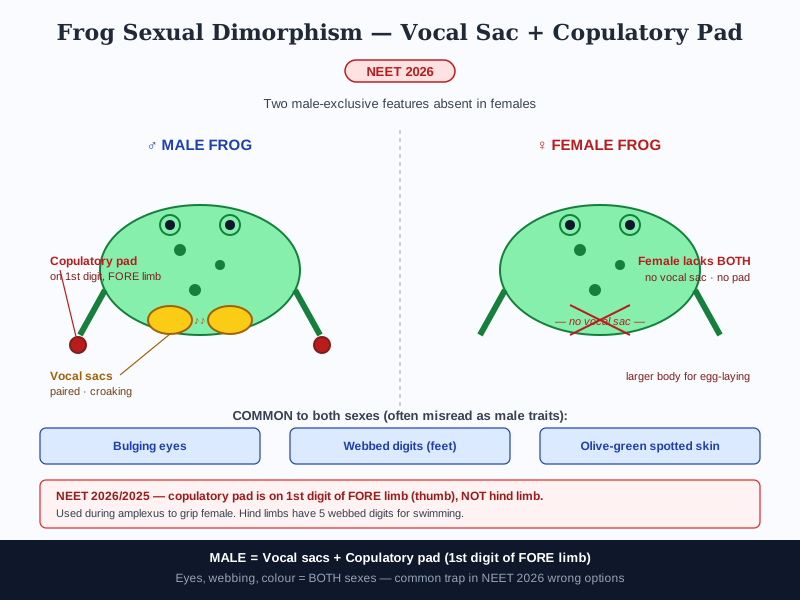
Frogs exhibit sexual dimorphism — males can be distinguished from females by two unique structures absent in females. Male frogs have: (1) Sound-producing vocal sacs (paired), which produce the characteristic croaking sound, and (2) A copulatory pad on the first digit (thumb) of the fore limbs, which helps grip the female during amplexus (mating embrace). Structures common to BOTH sexes: bulging eyes, webbed digits in feet, and olive-green coloured skin with dark irregular spots. Fore limbs end in 4 digits; hind limbs end in 5 digits.
NEET 2026 and 2025 both tested this same content. NEET 2026 asked which features distinguish males (answer: vocal sacs + copulatory pad = option D with B and D). NEET 2025 asked specifically where the copulatory pad is located (first digit of the fore limb — answer D). The traps in NEET 2026: bulging eyes (common to both), webbed digits (common to both), olive-green skin (common to both) — none of these are male-exclusive. Only vocal sacs and copulatory pad are male-specific.
Bulging eyes and webbed feet distinguish male frogs from female frogs.
Bulging eyes and webbed digits are COMMON to both sexes. Only VOCAL SACS and COPULATORY PAD (1st digit fore limb) are male-exclusive.
MALE = Vocal (sound) + Pad (grip). Eyes + Webs = BOTH. Pad is on THUMB (1st digit) of FORE limb — not hind limb.
- Copulatory pad: on first digit (thumb) of the fore limbs — helps male grip female during amplexus.
- Vocal sacs: present only in male frogs — produce croaking sound for mate attraction.
- Fore limbs: 4 digits. Hind limbs: 5 digits with webbing for swimming.
- Bulging eyes, webbed feet, olive-green skin with dark spots = common to BOTH sexes.
What is Frog Sexual Dimorphism?
What did NEET 2026 ask on Frog Sexual Dimorphism?
What is the most common NEET trap on Frog Sexual Dimorphism?
How do you remember Frog Sexual Dimorphism for NEET?
What are the key components of Frog Sexual Dimorphism?
Through deep analysis of NEET and NTA, 176 of the 180 ReNEET 2026 (June 21) questions were already in the MedicNEET question bank before the exam.
176/180MedicNEET's Biology question bank is built from the same NCERT lines NTA picks repeatedly. Not random MCQs — questions crafted exactly like NTA crafts them.
You just learned this concept. The free app turns it into a daily goal built from your weak topics and brings it back just before you forget it — using active recall and spaced repetition — so it stays till exam day.