
Mesosomes — Plasma Membrane Extensions for Cell Wall Formation and DNA Replication
✅ Asked in NEET 2025A specialised membranous structure in a prokaryotic cell which helps in cell wall formation and DNA replication is: (NEET 2025)
A specialised membranous structure in a prokaryotic cell which helps in cell wall formation and DNA replication is: (NEET 2025)
Answer & NCERT explanation
Correct answer: D — Mesosome
Mesosomes are the correct answer as they are specialized membranous structures in prokaryotic cells that help in both cell wall formation and DNA replication. Cristae are found in mitochondria for respiration, endoplasmic reticulum is absent in prokaryotes, and chromatophores are involved in photosynthesis in some bacteria but not in the mentioned functions.
Read more NCERT concept on the PYQ
They also help in respiration, secretion processes, to increase the surface area of the plasma membrane and enzymatic content. In some prokaryotes like cyanobacteria, there are other membranous extensions into the cytoplasm called chromatophores which contain pigments.
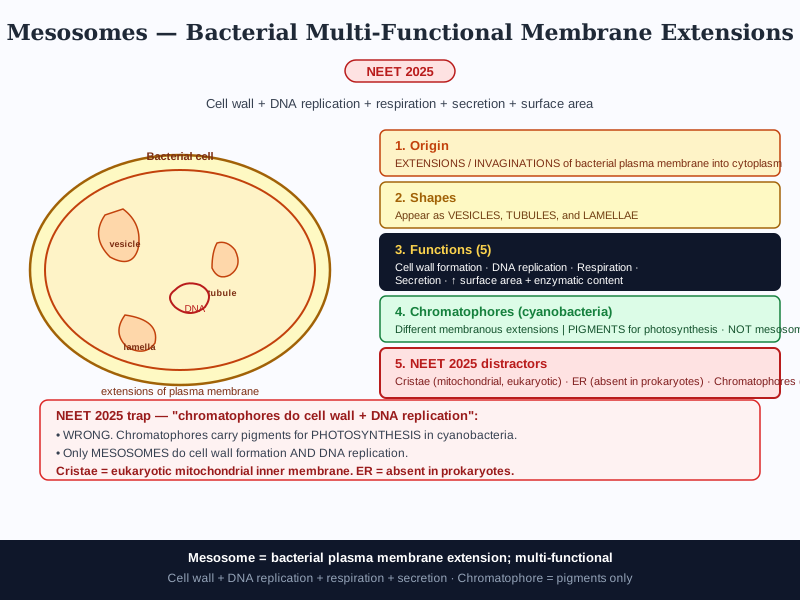
MESOSOMES are specialised membranous structures in PROKARYOTIC (bacterial) cells, formed by EXTENSIONS or INVAGINATIONS of the PLASMA MEMBRANE into the cytoplasm. They appear as VESICLES, TUBULES and LAMELLAE. Mesosomes have MULTIPLE FUNCTIONS: (1) help in CELL WALL FORMATION; (2) assist in DNA REPLICATION (provide attachment sites for bacterial DNA); (3) participate in RESPIRATION processes (house respiratory enzymes); (4) involved in SECRETION; (5) INCREASE THE SURFACE AREA of the plasma membrane and enzymatic content. In some prokaryotes like CYANOBACTERIA, other membranous extensions called CHROMATOPHORES contain pigments (used in photosynthesis). Mesosomes are EXCLUSIVELY prokaryotic and compensate for the absence of mitochondria, Golgi, and ER.
NEET 2025 direct: 'specialised membranous structure in prokaryotic cell that helps in cell wall formation AND DNA replication' → MESOSOME. Distractors: CRISTAE (mitochondrial inner membrane, eukaryotic), ENDOPLASMIC RETICULUM (absent in prokaryotes), CHROMATOPHORES (cyanobacterial pigment-bearing membranes, photosynthesis, NOT cell wall/DNA). Memory rule: mesosomes do 4-5 things (wall, DNA, respiration, secretion, surface area) — they're the prokaryotic 'multi-purpose organelle'. Chromatophores ≠ mesosomes.
Cristae or chromatophores are the prokaryotic structures responsible for cell wall formation and DNA replication.
MESOSOMES are the bacterial plasma-membrane extensions that help in cell wall formation AND DNA replication. Cristae are mitochondrial (eukaryotic); chromatophores carry pigments in cyanobacteria.
Mesosome = bacterial multi-tool: cell wall + DNA replication + respiration + secretion + surface area. Chromatophores = pigments (cyanobacteria only).
- Mesosomes = EXTENSIONS/INVAGINATIONS of the bacterial plasma membrane into the cytoplasm.
- Appear as vesicles, tubules, and lamellae.
- Functions: cell wall formation + DNA replication + respiration + secretion + increase surface area & enzymatic content.
- Chromatophores (in cyanobacteria) are different — they contain PIGMENTS for photosynthesis; not the same as mesosomes.
What is Mesosomes?
What did NEET 2025 ask on Mesosomes?
What is the most common NEET trap on Mesosomes?
How do you remember Mesosomes for NEET?
What are the key components of Mesosomes?
Through deep analysis of NEET and NTA, 176 of the 180 ReNEET 2026 (June 21) questions were already in the MedicNEET question bank before the exam.
176/180MedicNEET's Biology question bank is built from the same NCERT lines NTA picks repeatedly. Not random MCQs — questions crafted exactly like NTA crafts them.
You just learned this concept. The free app turns it into a daily goal built from your weak topics and brings it back just before you forget it — using active recall and spaced repetition — so it stays till exam day.