
Microsporangia to Pollen Sacs — Longitudinal Anther Architecture
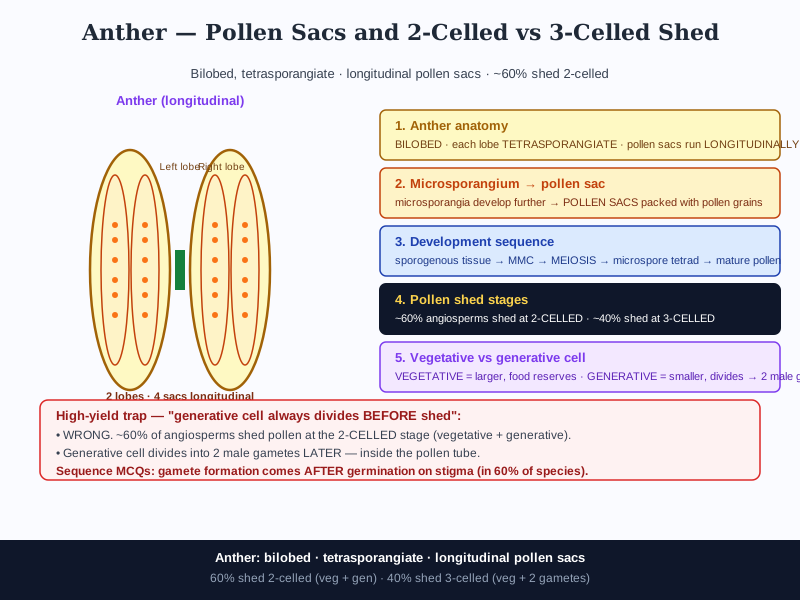
📚 Practice ConceptThe microsporangia develop further and become pollen sacs. They extend longitudinally all through the length of an anther and are packed with pollen grains.
The generative cell divides into two male gametes before the pollen grain is shed from the anther.
About 60% of angiosperms shed pollen at the 2-CELLED stage (generative + vegetative). Generative cell divides into two male gametes LATER (in the pollen tube or after germination).
Pollen shed = mostly 2-celled (60%): VEGETATIVE (larger, food reserves) + GENERATIVE (smaller). Gametes form later — in 60% inside pollen tube, in 40% before shedding.
- Microsporangia → POLLEN SACS, extending longitudinally through anther length, packed with pollen grains.
- Each anther is BILOBED with each lobe TETRASPORANGIATE (4 pollen sacs per lobe → 4 sacs per anther typically).
- MMC undergoes MEIOSIS → MICROSPORE TETRAD → pollen grains after anther dehydration.
- Pollen shed: about 60% angiosperms shed at 2-celled stage; 40% at 3-celled stage (after generative cell division).
Arrange the following events in the correct chronological sequence, from male gametophyte development to pollen-pistil interaction: I. Microspore tetrad formation through meiosis II. Generative cell divides to form two male gametes III. Differentiation of floral primordium into androecium and gynoecium IV. Pollen tube entry into a synergid via filiform apparatus V. Dehydration of anther leading to microspores dissociating and maturing into pollen grains VI. Pollen grains deposited on the stigma and germination through germ pore VII. Formation of sporogenous tissue within microsporangium
View bonus solution & explanation
Correct answer: C — III, VII, I, V, VI, II, IV
Correct sequence: III (floral primordium → androecium + gynoecium) → VII (sporogenous tissue inside microsporangium) → I (MMC meiosis → microspore tetrad) → V (anther dehydrates → microspores mature into pollen) → VI (pollen lands on stigma + germinates via germ pore) → II (generative cell divides into two male gametes inside the pollen tube) → IV (pollen tube enters synergid via filiform apparatus). Answer C. Key trap: generative cell division (II) happens AFTER germination (VI) in the 60% of angiosperms that shed at the 2-celled stage.
What is Microsporangia to Pollen Sacs?
What did NEET previous years ask on Microsporangia to Pollen Sacs?
What is the most common NEET trap on Microsporangia to Pollen Sacs?
How do you remember Microsporangia to Pollen Sacs for NEET?
What are the key components of Microsporangia to Pollen Sacs?
Through deep analysis of NEET and NTA, 176 of the 180 ReNEET 2026 (June 21) questions were already in the MedicNEET question bank before the exam.
176/180MedicNEET's Biology question bank is built from the same NCERT lines NTA picks repeatedly. Not random MCQs — questions crafted exactly like NTA crafts them.
You just learned this concept. The free app turns it into a daily goal built from your weak topics and brings it back just before you forget it — using active recall and spaced repetition — so it stays till exam day.