
Pollen and Nectar Robbers — Visitors That Consume Without Pollinating
📚 Practice ConceptWhy don't you observe some flowers of the following plants (or any others available to you): Cucumber, Mango, Peepal, Coriander, Papaya, Onion, Lobia, Cotton, Tobacco, Rose, Lemon, Eucalyptus, Banana? Try to find out which animals visit them and whether they could be pollinators.You'll have to patiently observe the flowers over a few days and at different times of the day. You could also try to see whether there is any correlation in the characteristics of a flower to the animal that visits it. Carefully observe if any of the visitors come in contact with the anthers and the stigma as only such visitors can bring about pollination. Many insects may consume pollen or the nectar without bringing about pollination. Such floral visitors are referred to as pollen/nectar robbers. You may or may not be able to identify the pollinators, but you will surely enjoy your efforts!
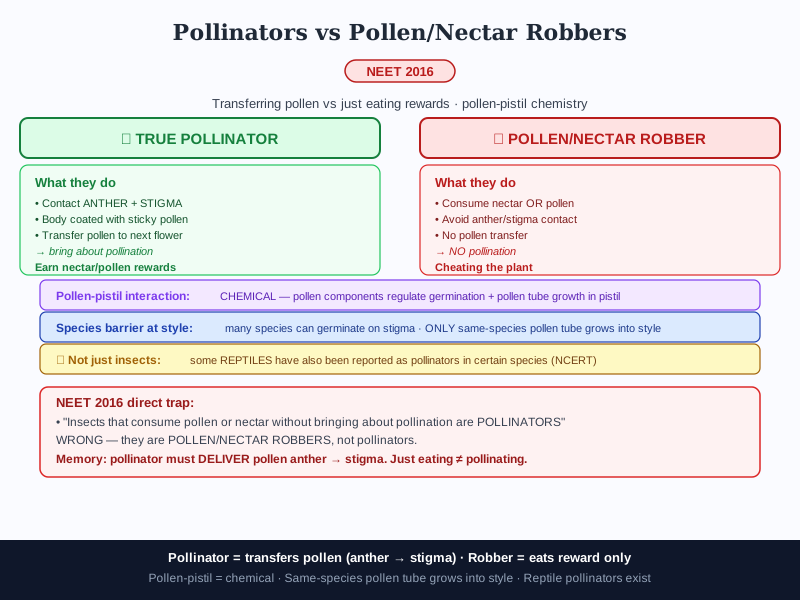
Insects that consume pollen or nectar without bringing about pollination are also called pollinators.
Such visitors are called POLLEN/NECTAR ROBBERS. Only insects that contact both anthers and stigma and actually transfer pollen are true POLLINATORS.
Pollinator = transfers pollen anther → stigma. Robber = eats pollen/nectar without transferring. Reptiles CAN be pollinators in some species.
- Pollen/nectar robbers = floral visitors that consume rewards without pollinating.
- True pollinators must contact both anthers AND stigma to transfer pollen.
- Pollen germination and pollen tube growth are regulated by CHEMICAL components of pollen and pistil.
- Many pollen species can germinate on a stigma, but only SAME-SPECIES pollen tube grows into style (species barrier).
Which of the following statements is NOT correct? S1: Pollen germination and pollen tube growth are regulated by chemical components of pollen interacting with those of the pistil. S2: Some reptiles have also been reported as pollinators in some plant species. S3: Pollen grains of many species can germinate on the stigma, but only one pollen tube of the same species grows into the style. S4: Insects that consume pollen or nectar without bringing about pollination are called pollinators.
View bonus solution & explanation
Correct answer: D — S4 only
S1 CORRECT: NCERT — pollen-pistil interaction is chemical. S2 CORRECT: NCERT mentions reptiles as pollinators in some species. S3 CORRECT: Multiple species can germinate, but only same-species pollen tube grows through the style — the chemical species barrier. S4 INCORRECT (NEET 2016 answer): Floral visitors that consume pollen or nectar WITHOUT pollinating are POLLEN/NECTAR ROBBERS, NOT pollinators. The terminology in S4 is wrong → answer D.
What is Pollen and Nectar Robbers?
What did NEET previous years ask on Pollen and Nectar Robbers?
What is the most common NEET trap on Pollen and Nectar Robbers?
How do you remember Pollen and Nectar Robbers for NEET?
What are the key components of Pollen and Nectar Robbers?
Through deep analysis of NEET and NTA, 176 of the 180 ReNEET 2026 (June 21) questions were already in the MedicNEET question bank before the exam.
176/180MedicNEET's Biology question bank is built from the same NCERT lines NTA picks repeatedly. Not random MCQs — questions crafted exactly like NTA crafts them.
You just learned this concept. The free app turns it into a daily goal built from your weak topics and brings it back just before you forget it — using active recall and spaced repetition — so it stays till exam day.