
Pollen-Pistil Interaction — Chemical Dialogue for Recognition and Acceptance
📚 Practice ConceptIf the pollen is of the wrong type, the pistil rejects the pollen by preventing pollen germination on the stigma or the pollen tube growth in the style. The ability of the pistil to recognise the pollen followed by its acceptance or rejection is the result of a continuous dialogue between pollen grain and the pistil. This dialogue is mediated by chemical components of the pollen interacting with those of the pistil. It is only in recent years that botanists have been able to identify some of the pollen and pistil components and the interactions leading to the recognition, followed by acceptance or rejection.
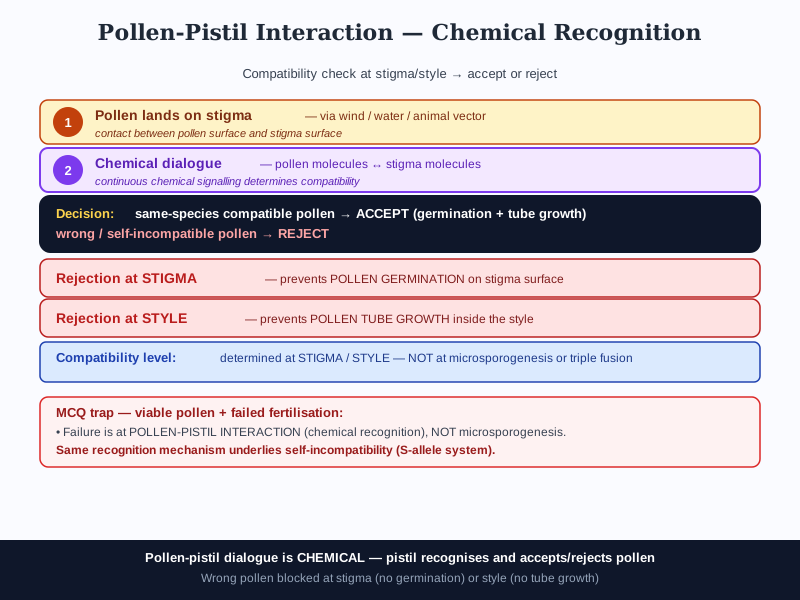
If a bilobed dithecous anther with viable pollen fails to fertilise, the affected level is microsporogenesis or triple fusion.
If pollen is viable but pistil rejects it, the affected level is POLLEN-PISTIL INTERACTION — compatibility is determined at the stigma/style by chemical recognition.
Pistil recognises pollen by CHEMICAL DIALOGUE. Wrong pollen → blocked at stigma (no germination) OR style (no tube growth). Compatibility = pollen-pistil interaction.
- Pistil recognises pollen via chemical dialogue between pollen and pistil components.
- Wrong pollen is rejected by preventing pollen germination on STIGMA or pollen tube growth in STYLE.
- Compatibility is determined at the STIGMA/STYLE level — NOT during microsporogenesis or triple fusion.
- Recognition prevents inter-species hybridisation; same mechanism underlies self-incompatibility.
A bilobed, dithecous anther with viable pollen fails to fertilise an ovule because the stigma recognises and rejects the pollen. At which biological level is the failure determined?
View bonus solution & explanation
Correct answer: D — Pollen-pistil interaction
D CORRECT: The pollen is VIABLE (microsporogenesis succeeded), so failure occurs LATER — at the pollen-pistil recognition step. NCERT exact: pistil rejects wrong pollen by preventing germination on stigma or pollen tube growth in style. A WRONG: Microsporogenesis already produced viable pollen — that step succeeded. B WRONG: Pericarp formation is post-fertilisation (fruit wall development) — not relevant when fertilisation never occurs. C WRONG: Triple fusion requires successful pollen tube entry — it never reaches this stage. Compatibility is determined at the stigma/style → answer D.
What is Pollen-Pistil Interaction?
What did NEET previous years ask on Pollen-Pistil Interaction?
What is the most common NEET trap on Pollen-Pistil Interaction?
How do you remember Pollen-Pistil Interaction for NEET?
What are the key components of Pollen-Pistil Interaction?
Through deep analysis of NEET and NTA, 176 of the 180 ReNEET 2026 (June 21) questions were already in the MedicNEET question bank before the exam.
176/180MedicNEET's Biology question bank is built from the same NCERT lines NTA picks repeatedly. Not random MCQs — questions crafted exactly like NTA crafts them.
You just learned this concept. The free app turns it into a daily goal built from your weak topics and brings it back just before you forget it — using active recall and spaced repetition — so it stays till exam day.